 |
The hardy Abutilon such as .A.vitifolium don't always look like Abutilons in the same way that
the hardy Hibiiscus syriacus doesn't really look like the Hibiscus I imagine lining the streets of Shangri-La
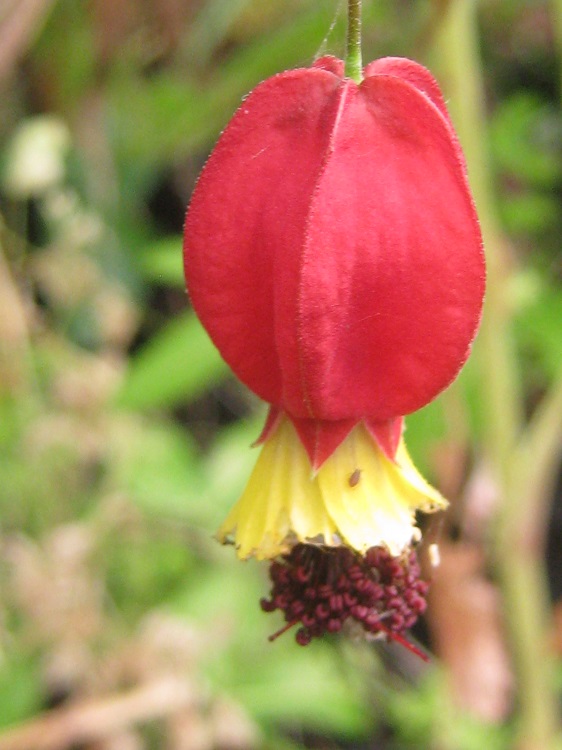
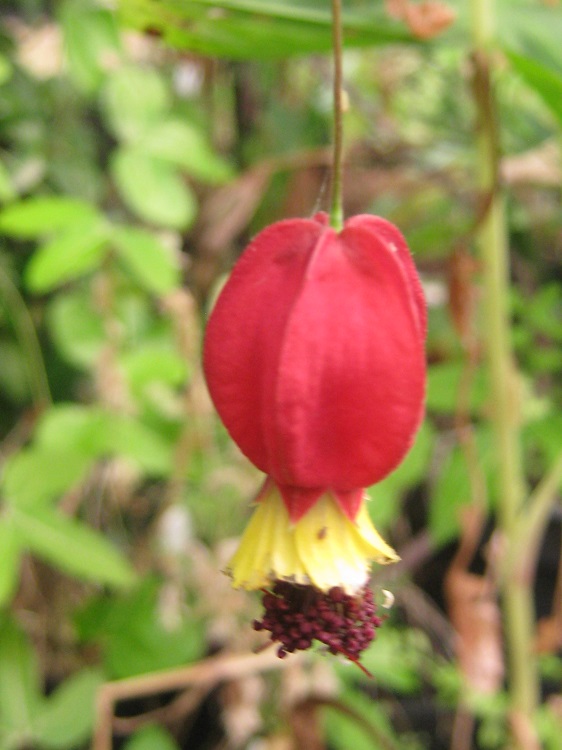
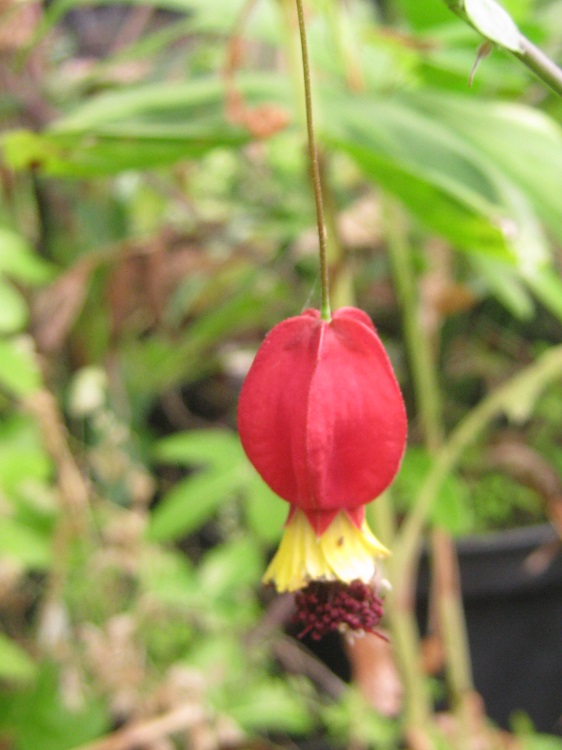
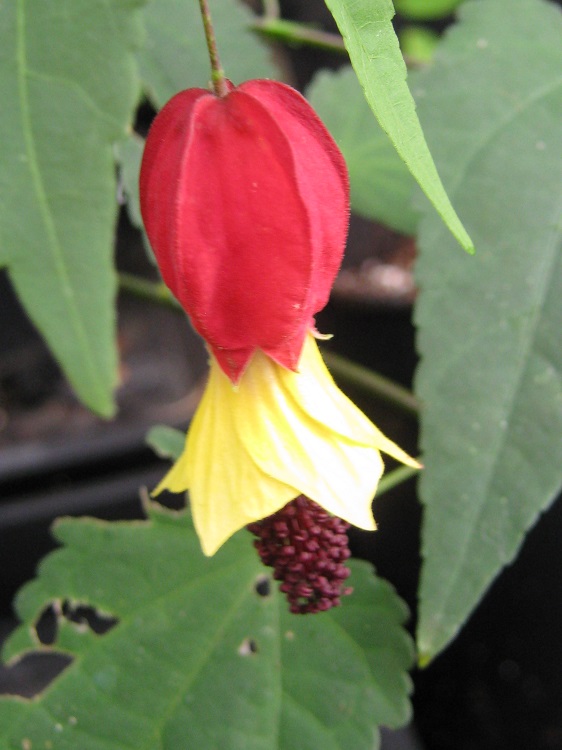
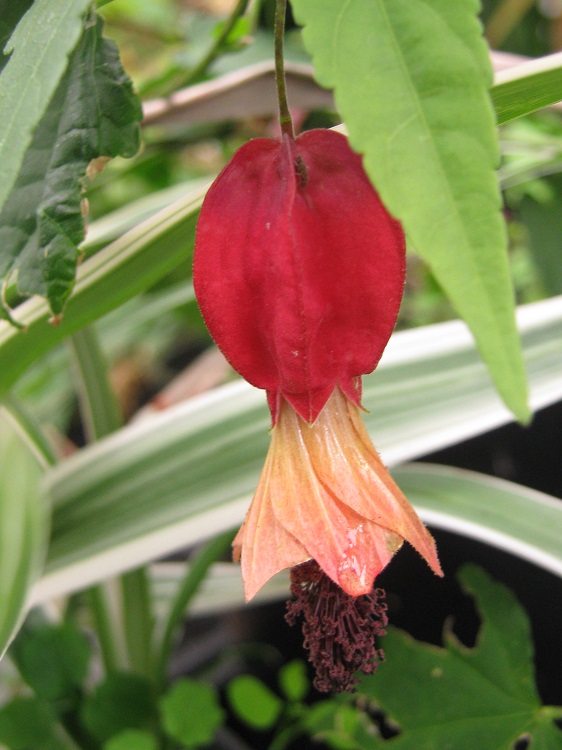
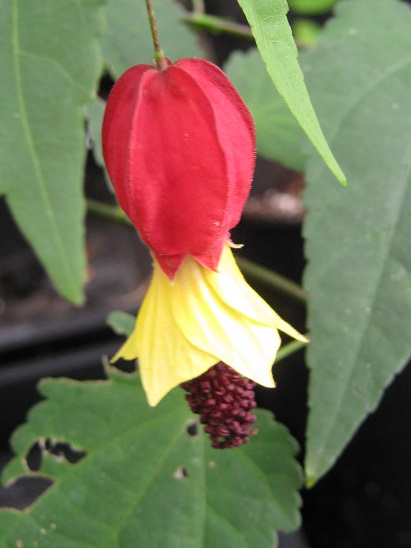
and enticing the ministrations of chalcedine hummingbirds. Fortunately Abutilon megapotamicum is a freak, both hardy and exotic. Abutilon megapotamicum comes from the southern end of Brazil, Argentina and Uraguay where it forms low twiggy shrubs in dryish ground. Unquestionably hardy because we choose not to question it, not because of its hardiness it is reliable enough on a south wall and easy to propagate if some insurance is required. Currently growing in a pot in the greenhouse because I can't imagine where I am going to plant it. Fortunately my lack of imagination does not represent a significant obstacle to cultivation. Grow tropicals say: "The Abutilon megapotamicum, known as the Trailing Abutilon, Brazilian Bell-flower or Chinese Lantern, is one of the most charming wall shrubs you can grow for a long, exotic display. A lax, arching, semi-evergreen shrub from Brazil, it carries slender stems hung with dainty pendent lanterns, each a rich red calyx opening to clear yellow petals and a tuft of protruding purple stamens. The flowers appear from early summer well into autumn and are magnets for bees, making it a standout in any exotic border or trained against a warm wall. This is a plant that rewards a little thought about position. Rated RHS H3, it is borderline hardy in the UK and happiest in mild, coastal and city gardens. Position matters here because it is a cold, wet winter, not simple cold, that does these plants in: waterlogged ground together with frost is what kills them, not a dry chill. Grow it against a warm, sheltered south or west facing wall with sharp drainage, or plant it in a pot that can be moved to a bright, frost-free place over winter, and it will sail through where a soggy, exposed plant would fail. " |
|
| 11th September 2011 | ||