 |
One of the great joys of moving to Cornwall was the chance to grow a whole new range of plants
that would not have been possible in my Essex garden. Among them were the Acacia. I tried a few
species from seed and grew some large plants in pots, but this was the only one
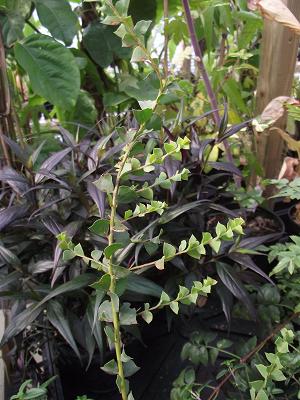
that really prospered outside in the garden. Prefers good light and makes a compact prickly bush. I had a fried a couple of miles down the road who grew it into a magnificent entrance archway. Sadly a series of cold winters have killed most of them. I was missing having it in the garden so I was really grateful for this seedling and really sad when it was killed in the greenhouse last winter. When we finally return to mild winters I will try again - they weren't all killed locally so it isn't a hopeless exercise. Ironically, this seedling came from a garden in Kent, where it was self sowing. It is an Australian species, from Victoria and parts of New South Wales. There is probably some variation in hardiness over the range - seed from the southern part of Victoria might produce the hardiest plants for the UK. I have dozens of pictures of this delightful plant from other gardens but only this one from mine! Trees and Shrubs online says: "A shrub or small tree to about 20 ft, of graceful habit, with slender, angled branchlets. Phyllodes set densely on the stem, 1⁄4 to 1⁄2 in. long and wide, triangular-obovate or unequally four-angled; venation prominent. Flower-heads rich yellow, globular, only 1⁄6 in. or so wide, arranged in long compound racemes. Flowering time March to April. Native of Victoria and New South Wales. There is a good example of this acacia at Ilnacullin (Garinish Island), Co. Cork, about 24 ft high. At Malahide Castle, near Dublin, it proved hardy in the winters of 1961–3 and is now some 12 ft high on a garden wall. It is remarkable for its very lop-sided phyllodes, set edgeways to the shoot. Although not reliably hardy near London, this species is fast-growing, flowers when young, and sets good seed. In Mr R. C. Barnard’s garden at Bovey Tracey, Devon, some plants even survived the very cold winter of 1962–3. He suggests that this species may vary in hardiness (The Garden (Journ. R.H.S.), Vol. 103 (1978), p. 294)." In Australia, the Gardening with Angus blog says: "Acacia pravissima grows to a large shrub or small tree, and has been known to grow in unusual shapes and forms, providing interest in the garden as well as delightful golden blooms from winter to spring. The flowers are lightly scented. It can be used as a windbreak or for shelter also. Pruning after flowering is necessary to keep a denser habit. It can tolerate long dry periods and also withstands frosts. It can also tolerate some exposure to coastal conditions. Preferably planted in a full sun or part sun position, Ovens Wattle can also grow in dappled shade." |
|