 |
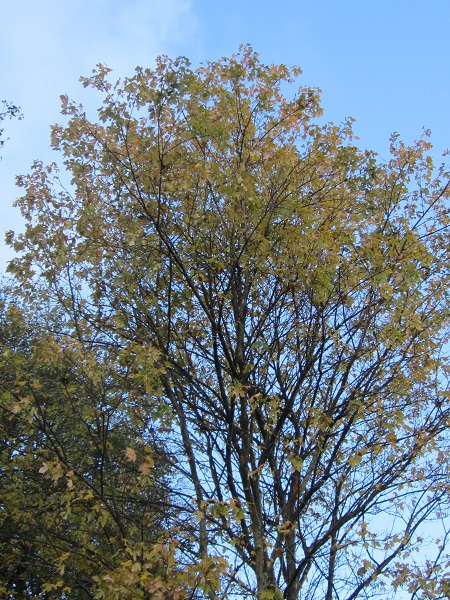
Growing as a large tree in the garden. This was the best of a group of 10 seedlings I grew, in terms of autumn colour, but it hasn't performed all that well since ( although it
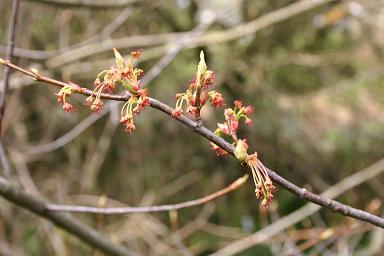
has grown to 35 feet in the process.) I wish it still produced the scarlet autumn leaves it had as a youngster. Now it is a mature tree the limited autumn colour is carried way above my head and that is it's most significant asset. Trees and shrubs online says: "At its best, Acer rubrum ranks among the finest large maples for autumn colour, and in its native eastern United States is considered ‘second in splendor [sic] only to the sugar maple’ (Peattie 2013). Now a common tree throughout its native range, before European settlement it was considered only a minor component of eastern forests, where it was found mainly in poorly drained areas (Abrams 1998). Acer rubrum’s adaptability has made it popular in horticulture and it enjoys broad use in the urban environment, particularly in its native North America. Following the near-total loss of elms and concerns about the invasiveness of Norway Maple A. platanoides, A. rubrum has become the most popular street tree across the United States (Dirr & Warren 2019). While its leaves often turn red in autumn, both the common name and epithet rubrum refer to the red flowers, produced before the leaves in late winter or early spring. Though individual plants are typically either male or female, variation has been observed among wild plants, with apparent males producing female flowers (though usually without subsequent fruit development) and vice versa (Primack 2004; Sternberg 2004). " |
|