|
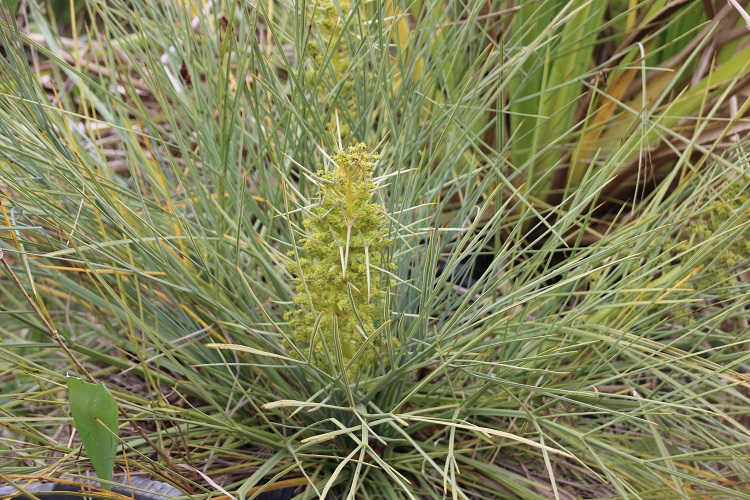
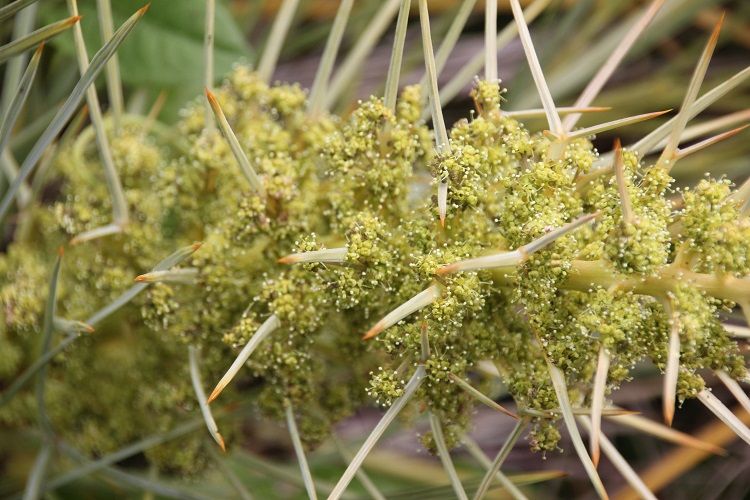
A second Aciphylla species to try. This one also comes from the North Island of New Zealand though it ranges to the south of South Island. Makes a grey tuft
of leaves like one of the better furnished Yuccas but preferring cooler conditions. The time came to stop messing about with little pots. I have planted a group of three in a big tub in the sun, and given them a big rock to cuddle up to. Almost overnight they looked happier and they are fattening up in the centre in a very satisfying way. Mustard yellow flowers went on to produce copious seed, but none of it has germinated. Fortunately the plant wasn't monocarpic but grew away again after flowering. Quoted on Plant Lust, Cistus Nursery say: "Fabo member of the “carrotaceae”...from the chilly hinterlands of NZ looking ravishingly xeric. Clumps, 18” x 3 ft, of evergreen, dagger-like leaves tinted a lively blue support umbelled, pale cream flowers in mid summer. Prefers mineral soil, good drainage, bright light and cool feet - say on a north slope with gravel cover for coolth and even moisture. Frost hardy to USDA zone 8 on the West Coast." In 2013 Chiltern Seeds wrote: " 'Wickedly intriguing' are the words one of our suppliers has used to describe these unusual plants, quite unlike any other members of the family Umbelliferae. With their large and handsome tussocks of mediaeval weaponry (and when we say spear-like etc., we don't just mean the shape - they are, so we are told, capable of inflicting a painful wound "on the unwary") and noble spikes of flowers, they should make a handsome and interesting addition to the border. As we say, quite unlike Cow Parsley. Somewhat less aggressive than some of its spear-carrying peers, this is a delightful perennial for your border, forming clumps of soft and delicate, very narrow, feathery, silver blue-grey leaves, and bearing in late summer, narrow 18in. spires of yellow-green flowers." |
|
| 1st April 2012 | ||