|
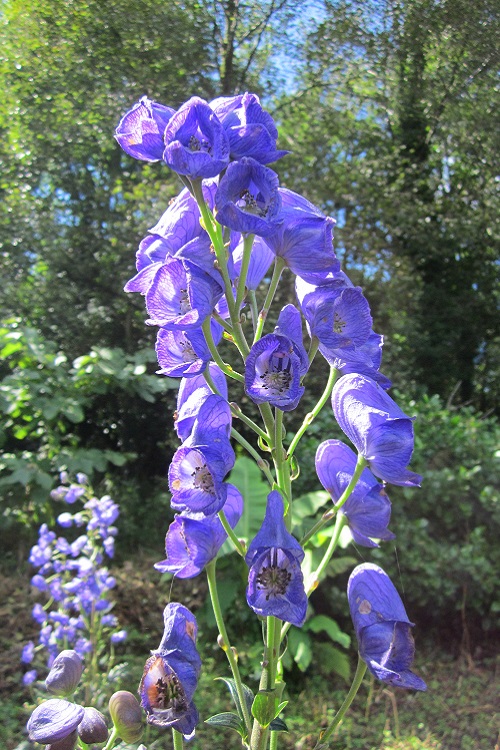
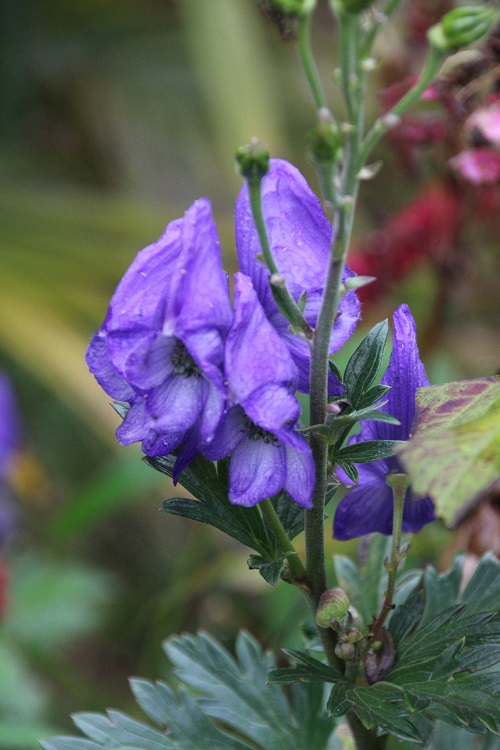
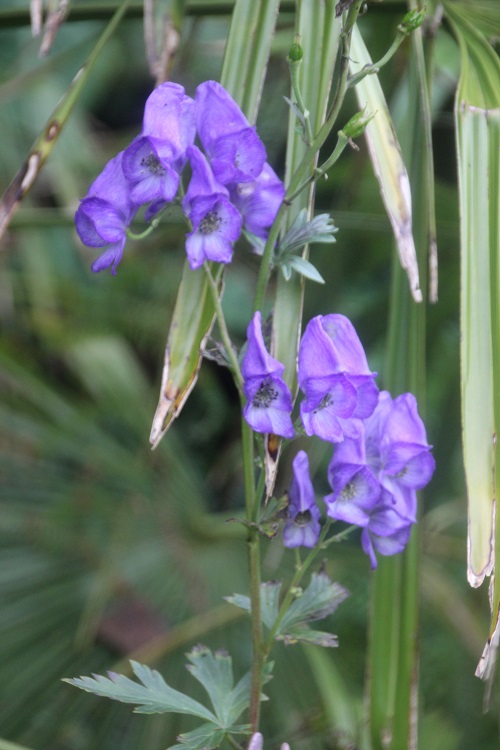
A selection with lavender blue flowers through the height of summer. I bought it in spring 2012 as part of my accidental exploration of the genus. It has been a stunning beauty in the garden, all blue and dark and sinister and enthusiastic. It is making a fat clump in the middle of the herbaceous border and manages to make an impact among the dying stems and detritus of autumn. Raised by J. Barker of Kelmscott near Ipswich in the days when people still grew Aconitum seedlings with roaring glee for the pleasure of the unexpected. It has survived decades of fleeting fashion, rising every year to crown the summer with azure splendour (or possibly it has killed all of its detractors). Bressingham Gardens said in their 1983 catalogue: "A fine plant for autumn, with lofty spikes of deep blue. 200cm." Ballyrobert Gardens say: "Aconitum carmichaelii (Wilsonii Group) 'Kelmscott' produces lots and lots of blue flowers, is quite tall, and has the RHS award of Garden Merit. Carmichaelii is named after the plant hunter Captain Dugald Carmichael (1772–1827). Like most carmichaelii it will tend to flower later in the year. Raised by J. Barker. Presumably named for Kelmscott Manor - a limestone manor house in the Cotswolds village of Kelmscott, in West Oxfordshire, southern England. It dates from around 1570, with a late 17th-century wing, and is listed Grade I on the National Heritage List for England. It was the home of craftsman and writer William Morris (1834-1896). I have also read that J. Barker,credited with raising the first double Aconitums in the 1930s, was from Kelmscott near Ipswich. But I can't find it on any map!" Cambridge University Botanic Garden say: "The erect spires of this aconite add late interest to the Herbaceous Beds. A member of the buttercup family (Ranunculaceae) the genus Aconitum numbers approximately 100 species of perennials and biennials from the mountains, grasslands and scrublands of the northern hemisphere. All have lobed leaves and hooded flowers, in which the sepals take the form of the hood, and the petals are adapted to form nectaries hidden beneath the hood. It is from these that the plant takes its common name. Aconitum carmichaelii occurs in China and North America, where it grows in woodland margins, grassy slopes and mountains at altitudes up to 2200m. This species is named in honour of the plant hunter Captain Dugald Carmichael (1772–1827), and the cultivar ‘Kelmscott’ was raised in the 1930’s and commemorates Kelmscott manor in Glocestershire. It is a tuberous, erect perennial to 2m in height, and produces panicles of striking violet-blue flowers in autumn. All parts of Aconitum are highly toxic if ingested and care should be taking when handling plants." |
|
| 11th October 2012 | ||