 |
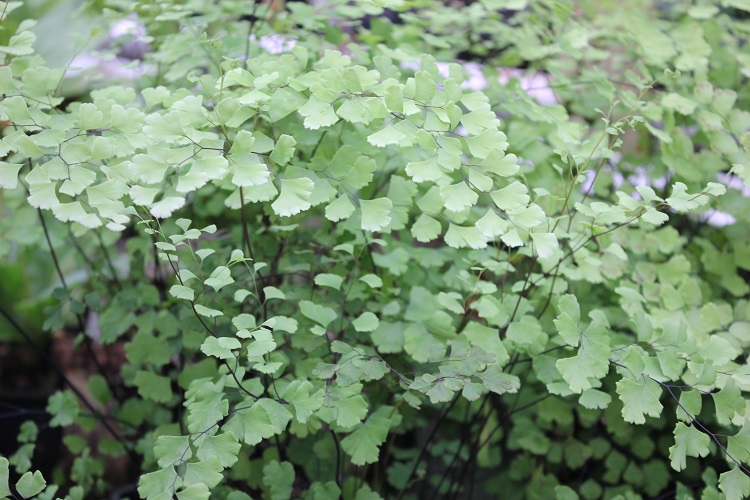
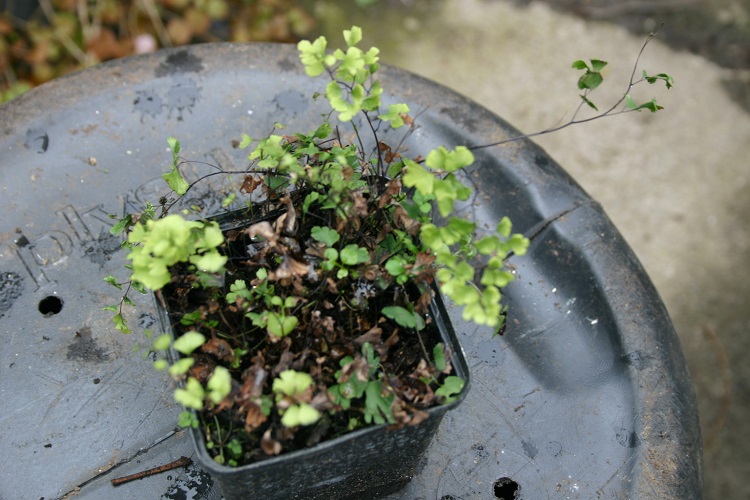
Probably the hardiest of the hardy Adiantum species. Unfortunately, it is not the most elegant, at least not under my conditions.
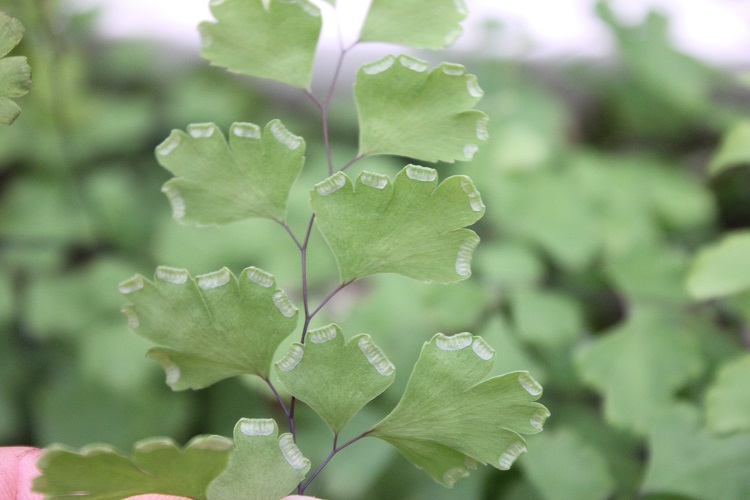
I keep trying to make it a bit happier, and I keep failing. Eventually I will move it into the greenhouse to see if it will grow vigorously enough to try in the garden again. Sue Olsen says: "The rhizome is short-creeping. Plum-black stipes are grooved and usually one-third of the frond length. The triangular blade is bipinnate with dark-stalked, wedge shaped, drooping pinules. A touch of the dark color radiates into the base of the foliage. Forked veins extend to the minute marginal teeth. Sori are elongate bars and marginal on then inrolled segments of the false indusia. The species reproduces with ease (and at random) from spores and willingly from divisions. One of the world's most widely distributed maidenhairs, Adiantum capillus-veneris is native to tropical and warm-temperate zones as well as sites where cool winters are balanced by hot summers. Sites reported in the seriously cold zones of South Dakota and British Columbia are associated with hot springs. Plants are partial to limestone where they especially delight in moist seeps. This species is often seen on walls, such as in Zion National Park, as pendulous curtains of green lace." The BSBI says: "A semi-evergreen fern found in areas with an oceanic climate on wet, calcareous cliffs where its rhizomes are protected in crevices, or tufa encrustations; in the Aran Islands (West Donegal) and the Burren (County Clare) it grows in grikes in limestone pavement. Many inland records in sheltered warm sites, such as damp mortared walls, railway bridges and canal locks, are likely to have arisen from spores derived from cultivated plants. It is an outcrossing species, but most populations in Britain (the northernmost extremity of its range) show little or no genetic diversity. Lowland. In the 19th century native populations were jeopardized by collectors, with most native site losses before 1930. There have been few recent losses and very many gains, some close to natural sites, but most in sheltered urban habitats which are more likely to have derived from colonization from horticultural sources. Assigning status to any of these populations is problematic in the absence of genetic evidence but in general new colonies on man-made structures have been treated as introductions." |
|
| 20th May 2005 | ||