 |
I have an old fascination with Aeschynanthus and indeed all of the tropical gesneriads so I am mildly
astonished to discover that there are a few species that are cold hardy. So astonished that I haven't yet
dared try them outside but they propagate rather easily so it isn't a question of having spare material. It is a matter
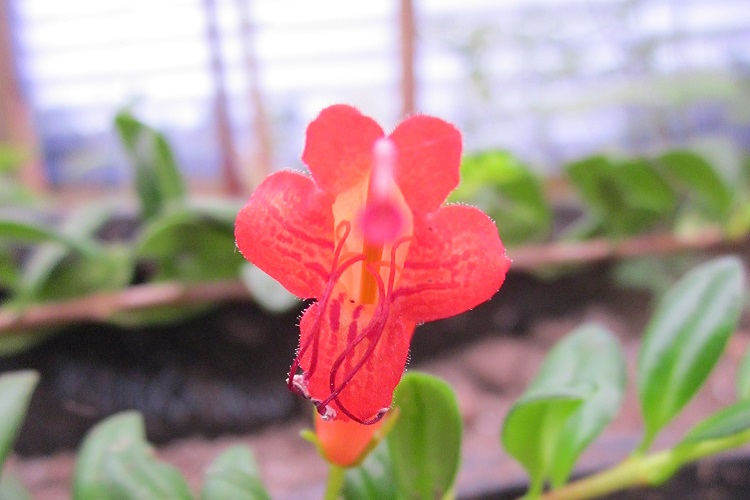
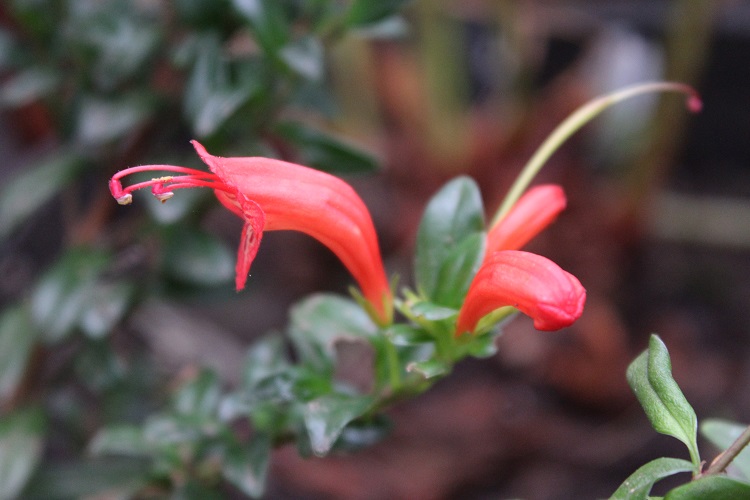
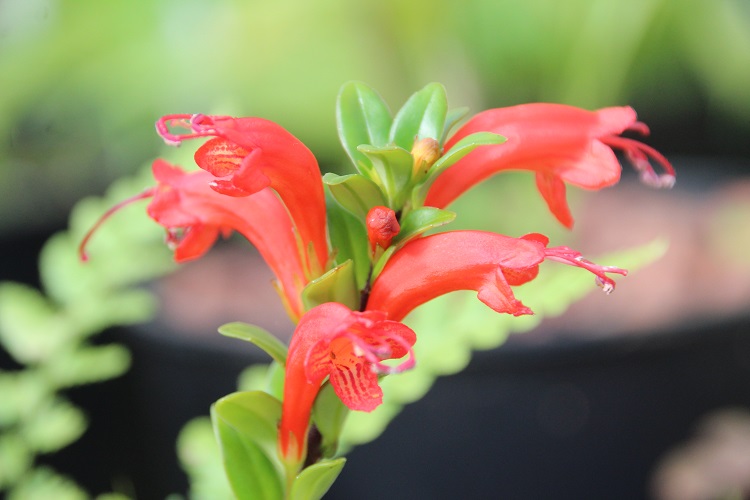
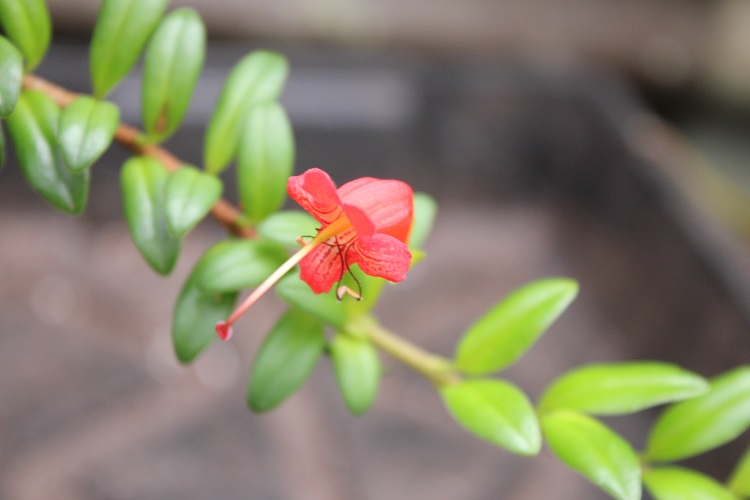
of believing the impossible. This is the best of them in my experience, vigorous with dense foliage and large bright scarlet flowers produced throughout the summer. The trailing stems root where they touch the ground. My current plant comes from a collection made by Keith Rushforth in Vietnam under the number KR7798. It is not the only Vietnamese collection in cultivation. I briefly grew (didn't grow would be more accurate) cuttings of a plant from China that had thinner stems and finer growth. It was also said to have purple-blue flowers but since I am not sure it ever grew roots, I am not surprised that it never flowered. The Aberconwy Nursery label says: "Choice and rare gesneriad with attractive tubular red flowers nestling amongst glossy spires of dark green foliage. Flowering Oct-Dec. 30-40cm tall. Requires some degree of protection from frost in the winter." Trees and Shrubs online says: "As a striking, showy member of the Gesneriaceae, with the allure of potential hardiness, the species inevitably attracts attention. It forms a tuft of more or less erect stems – their final length is uncertain, but none more than 40–50 cm or so have been observed by the author, densely clad with the small Buxus-like leaves that provide its specific epithet. The bright orange-red flowers are freely produced during the northern summer and autumn. The precise parameters of its hardiness remain under experimentation. Elsewhere it is very easily grown in a cool greenhouse or conservatory. In suitable conditions of persistent high humidity it could be grown on a mossy log, rock, or even a tree fern trunk, otherwise an open, free-draining, humus-rich medium is required. Raised beds are ideal to provide the requisite drainage, though ample moisture should be provided in the growing season." |
|
| 23rd February 2006 | ||