 |
Many years ago I bought a handful of year old seedlings of Aesculus indica, and I gave a number away, but finally I was left with two rather fatigued
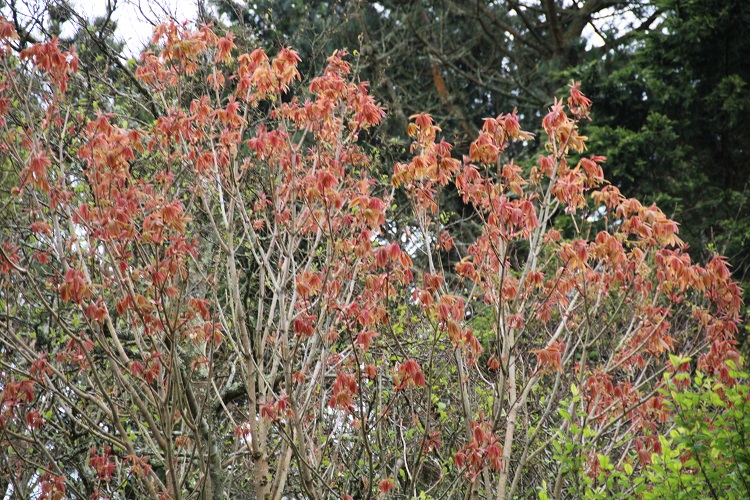
young plants that were trying to burst out of their pots, so they got planted out in the top of the garden. They are now getting established, producing pretty new foliage
and standing up well to the wind.
Wind tolerance is a useful attribute up there - during the winter three large Leyland cypress were blown down, and the first one to go smashed a chunk off one of the
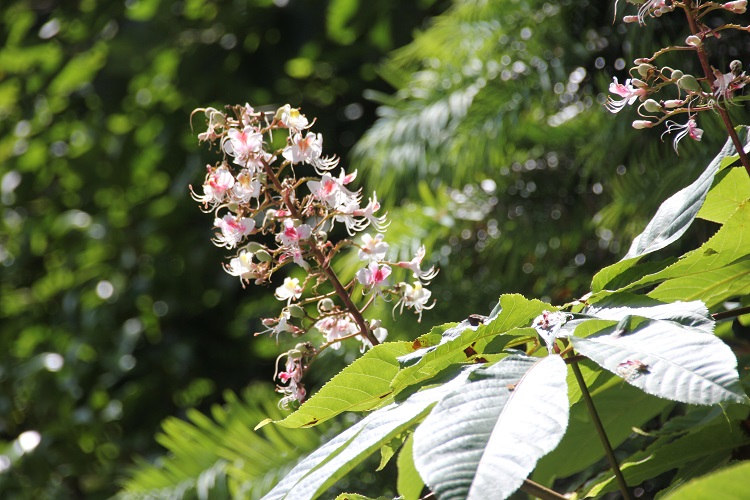
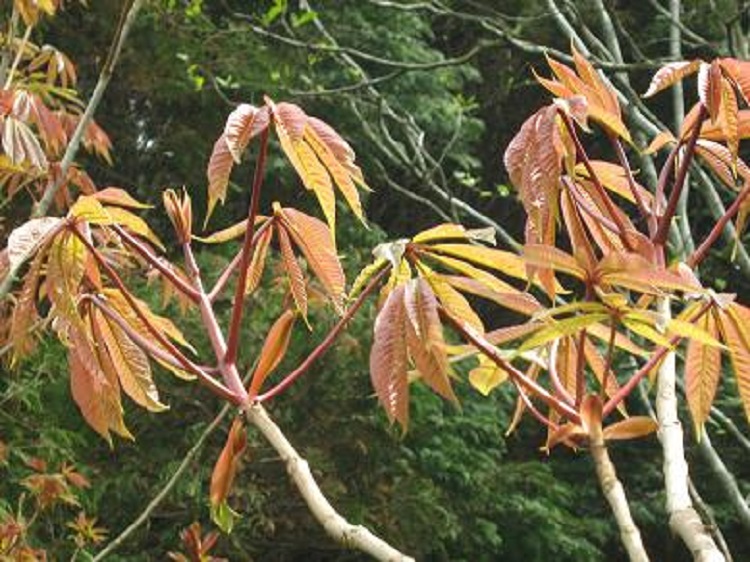
Aesculus as it went. On the plus side, there is a lot more space for it to grow into now. The pale spring foliage looks delicate, but seems to withstand all that the wind can throw at it, so I hope it will eventually make a windbreak in its own right. It has taken a few years, but it has finally started to flower. It is now rather too tall to get a decent photo and too far up the garden for me to carry a ladder and get a better look. Both plants are now young trees and looking back over the years, it seems that the first week of May is their best moment. The salmon foliage and bright red petioles are striking, even from below. Writing in 'The Plantsman' in 1984, David Wright says: "North east Himalaya. Introduced 1851. Over 30m high (100ft) in the wild and the best examples in cultivation areb 18 - 21 m high (60-70ft); often low-branching from a stout trunk or multi-stemmed from ground level, especially in drier areas such as Cambridge. The bark on old trees may be rough and peeling; leaves consisting of (usually) 7 leaflets, much darker, smoother and glossier than those of the A. hippocastanum which this species much resembles in flower. A further attraction is the ezquisite beauty of the unfurling spring foliage (a feature rarely noted in the garden literature), this being pinkish bronze, deepening to chocolate, shiny and metallic in texture...In summer, the leaves are a deep rich green, changing in autumn (at least after a good summer) to amber, orange or butter-yellow. As a young tree, it may suffer from spring frosts on unprotected sites but tolerates all types of soil. However, its Himalayan origin gives the clue to the fact that it both enjoys and requires more moisture (and some tree canopy) than do the American species." |
|
| 3rd May 2008 | ||