 |
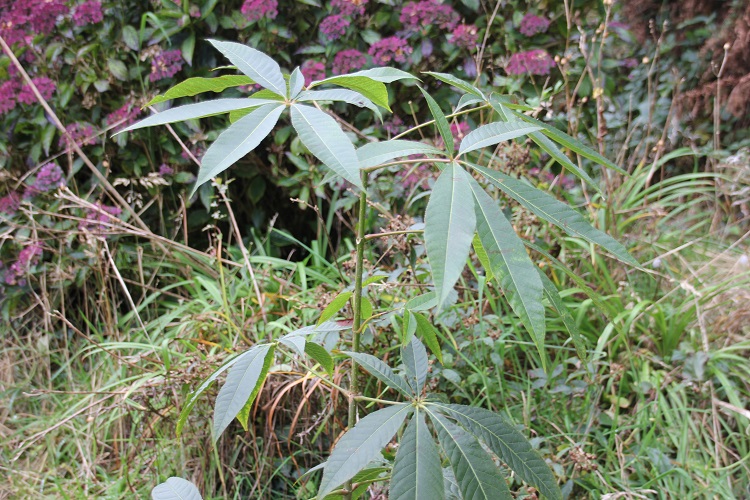
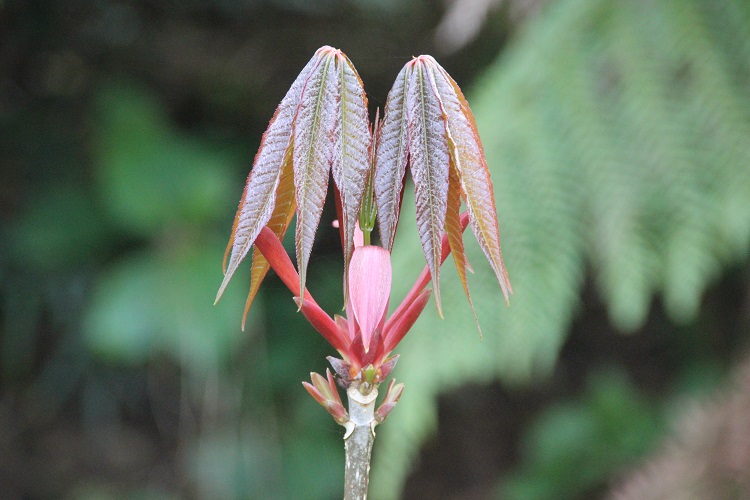
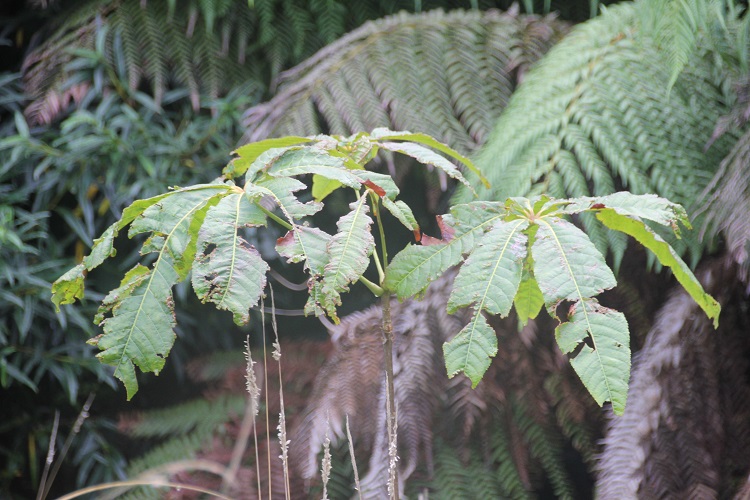
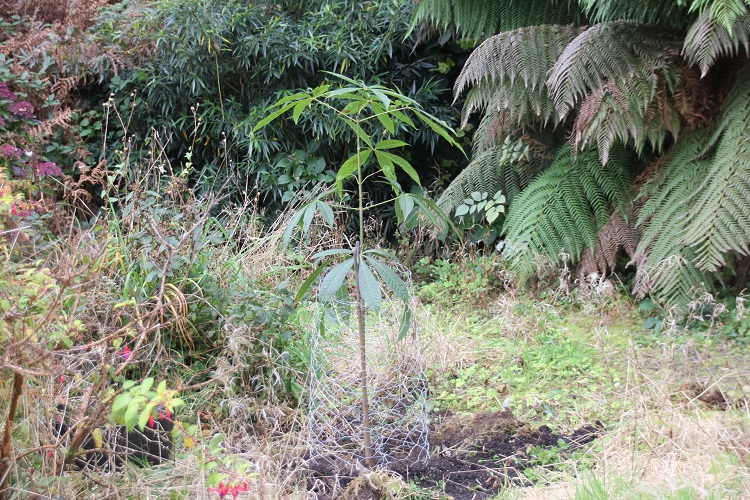
I was given a two year old seedling of Aesculus wangii grown from a giant conker collected in Vietnam.
I thought it was best to get it straight into the garden. Plants of the World online says that the name is a synonym of A. assamica and says: "The native range of this species is E. Himalaya to China (W. Guangxi). It is a tree and grows primarily in the temperate biome." Dan Hinkley wrote in the Washington Park Arboretum Bulletin: "The focus of this article, though, is on one remarkable, misunderstood and, as yet, unpublished taxon, Aesculus wangii. It is found naturally—and rarely—in a highly restricted area of northern Vietnam, in the uplands between the Black and Red Rivers (Sông Đà and Sông Cái, respectively). Its specific epithet honors Professor Wencai Wang (1926–2022), a famous Chinese botanist from the Beijing Institute of Botany. Furthermore, I did not become aware of Wang’s chestnut in the usual manner— namely, stumbling upon a specimen along a trail or reading of it in some outdated flora of the region. Instead, quite unromantically, it was in a somewhat seedy hotel in Taipei, Taiwan, in October of that year, that my friend and celebrated Welsh nurseryman Bleddyn Wynn-Jones gave me a parcel of extremely large, glossy, mahogany- colored seeds, each the size of baseballs. He had collected them in northern Vietnam, just prior to the trip he and I were about to make together in the mountains of Taiwan. It should be noted that though these may have been among the first seed of this species to have been successfully collected, U.K. plantsman Keith Rushforth and colleagues had already established at least four specimens in England by grafting scions (young shoots) they collected as early as 1991. The first of these to flower was at the Ness Botanic Garden in Liverpool in 2019. In both foliage and flower, Aesculus wangii somewhat resembles the common horse chestnut, Aesculus hippocastanum, which is a popular street tree in Seattle. The leaves of Wang’s horse chestnut are palmately compound and rich green during the growing season, transitioning in late autumn to welcome tints of yellow and orange. Its narrow, erect spikes—up to 20 inches long— of creamy-white flowers with yellow throats in early summer also fit the "norm." The seed that Bleddyn shared with me in 2007 had come from what is now considered a haloed, isolated grove of one of the last stands of Aesculus wangii in Vietnam, near the village of Khoang, approximately 25 miles northeast of the hill town of Sa Pa, at an elevation of 6000 feet. Other small populations of the species exist in Vietnam, however it is considered among esteemed botanists of that country to be extremely rare. By continuing to study these few remaining trees—both in the wild and ex situ in gardens—a more accurate taxonomic picture for the species will unfold. Currently, Aesculus wangii is treated as a synonym for the closely allied species, Aesculus assamica, which has a widespread distribution across southern Asia." |
|
| 2nd October 2025 | ||