 |
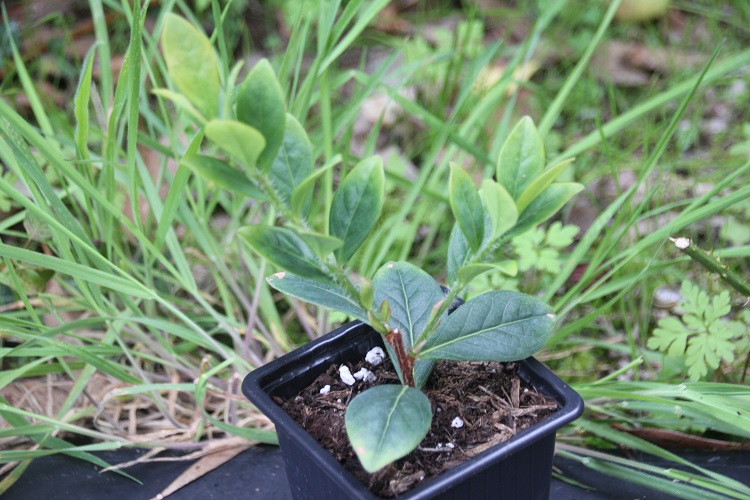
A young plant I got from Lower Kenneggy Nurseries. Writing in 'The Plantsman' in 1986, Argent and Woods say: "In its typical form, A. smithiana has a corolla less than 1.5cm long (9/16 in), narrowly cylindrical or tubular-urceolate, wider towards the base and narrowing gradually towards the mouth. According to Airy Shaw (1958, p.489) this species was originally known only from a few herbarium collections from Sikkim and by a colour drawing in the Kew Herbarium of a plant collected by H. J. Elwes also in Sikkim, in 1886 which had been cultivated at Kew and which flowered in 1918. It is represented at Edinburgh by two living collections made in Bhutan in 1982 by Grierson and Long (No.3075) of which the original herbarium collection has kleaves c. 3 x 1.1 cm (1 3/8 x 7/16 in). oblong or oblanceolate, longer and narrower than the plants in cultivation which have leaves c. 2.5 x 1.5 cm (1 by 2/3 in) ovate ot obovate." Quoted on Plant Lust, Cistus Nersery say: "Enchanting small shrub, to only 3' tall and a bit wider, with small, leathery leaves tightly held on the arching stems and lovely yellow, tubular flowers that droop from the stems particularly in spring but any time of the year. Found in the mountain forests of the Himalayas, these are slow growing in bright light and well-drained soil with protection from frost where temperatures drop below freezing. Very successful in containers. Frost hardy to 30 °F, USDA zone 10." Far Reaches Botanical Conservancy say: "Agapetes smithiana APA 022 Picotee Calyx is one that has honed its craft in the development league here for quite a few years after growing on from a bunch of wild-origin seedlings shared with us by plant legend Steve Hootman. The "smiths" are a talented group, with the worst of them easily being the best in other species. This is an epiphytic species with edible fruit closely related to Vaccinium – blueberries, The yellow flowers in this form have an extra large calyx that sports an alluring dark eyeliner margin that really elevates its game. These are blooming now and in the wild, grow in the trees of the temperate Himalayan cloud forests, where they literally play above the rim." |
|
| 26th September 2026 | ||