 |
I got my plant as Agave scabra but Plants of the World online now treats this as a synonym of A. asperrima.
A tall growing Mexican species closely related to A.americana with imposing large rosettes of steely grey leaves.
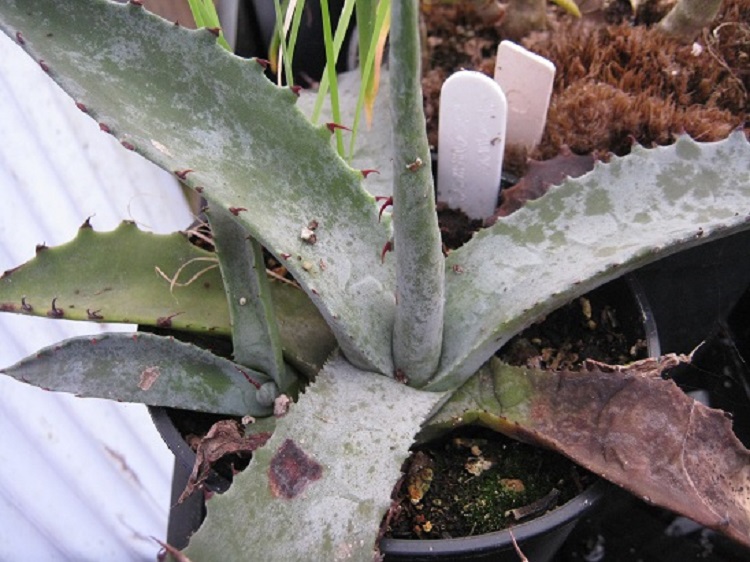
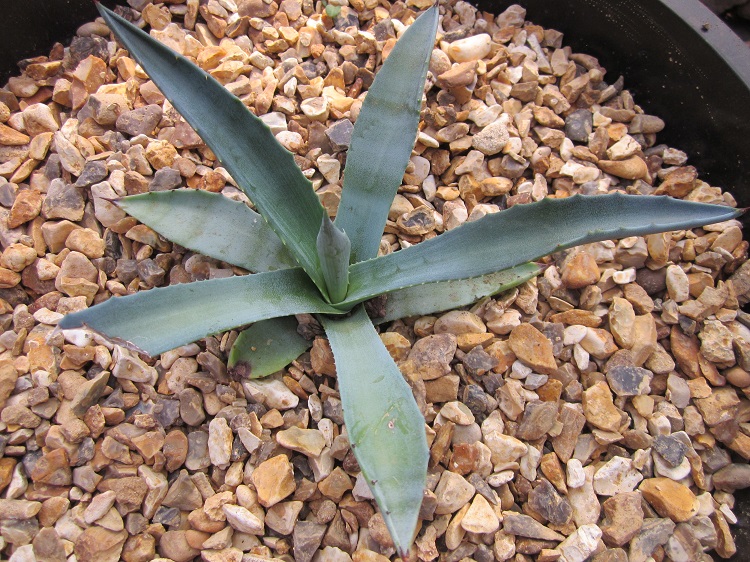
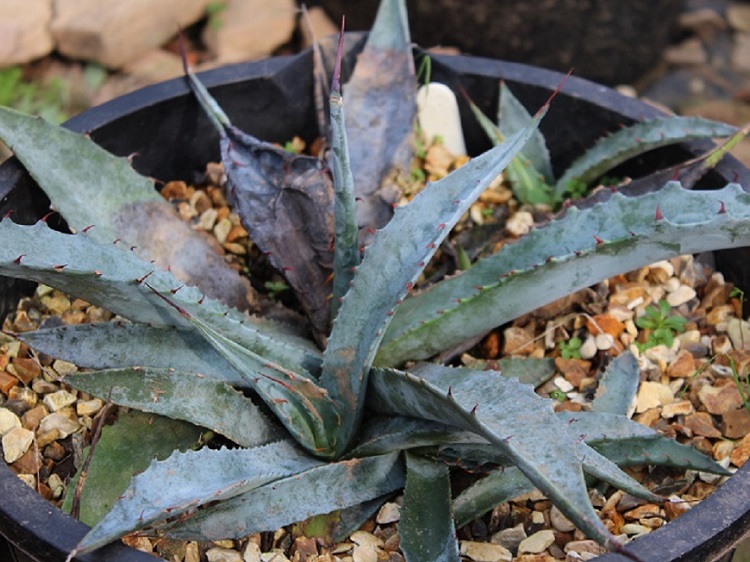
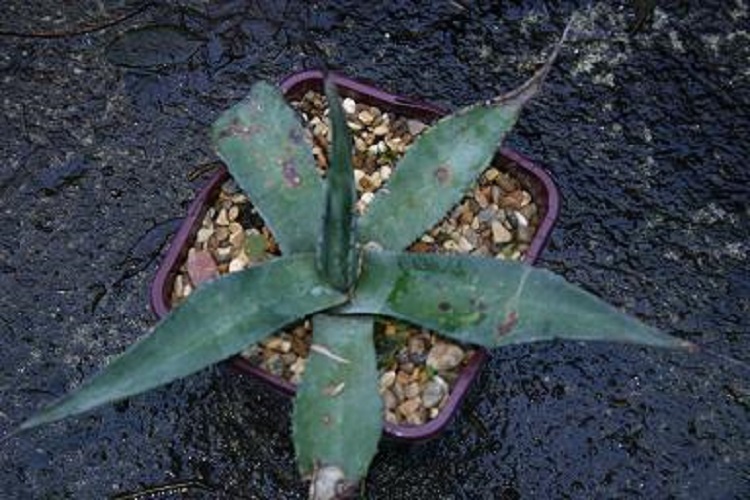
I have two plants, this one that has produced offsets but been damaged slightly in the winter, and another that hasn't and wasn't. Gentry says: "Agave scabra, next to A.lechuguilla, is the most widely spread and abundant Agave in the Chihuahuan Desert of northern Mexico. It is unusual among wild agaves in that it inhabits the broad valleys and plains as well as the stony slopes of the mountains. It grows in the driest areas of the desert the desert, generally between 1,200 amd 1,900 m elevations, and seems fond of limestone and caliche subsoils." San Marcos Growers say: "A medium sized agave growing to about 4 feet tall with thick blue-gray 3-foot-long leaves that are 4 to 6 inches wide at the widest point towards the middle and deeply guttered lengthwise with a tapering tip ending in a long dark brown spine and with large teeth along the margins. The flowers are bright yellow in peduncles of a 15- to 20-foot-tall spike. The flowers attract nectar feeding birds but as with other agave it doesn't bloom often (in this case after about 15 years) and after it does, the flowering rosettes dies but is replaced by new plants (suckers) emerging at the base. Agave asperrima comes from 4,000 to 7,200 feet elevations in the Chihuahuan desert in southwestern Texas and northern Mexico. This plant was long called Agave scabra but due to a bit of a taxonomic mix up caused partially by the synonymizing of two previously thought to be distinct species and the incorporation of Mangave into the genus Agave (there was also a Manfreda scabra), the name Agave asperrima took precedence. Confusingly, there are many who still list this plant under the name Agave scabra, which rightfully now is a name for the plant that used to be called Manfreda scabra. The specific epithet comes from the Latin word 'asper' meaning "rough" in reference to the sandpaper-like texture of the leaf surface and its previous name, derived from the Latin word 'scabrum' meant the same." |
|
| 21st January 2007 | ||