 |
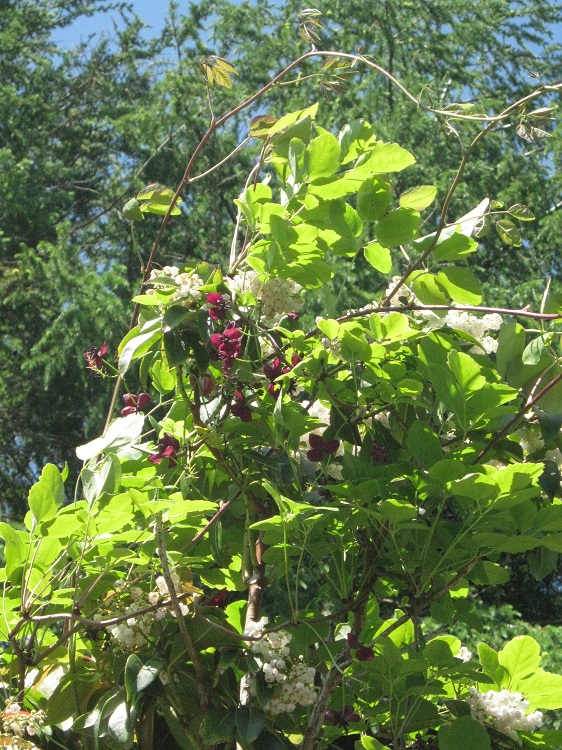
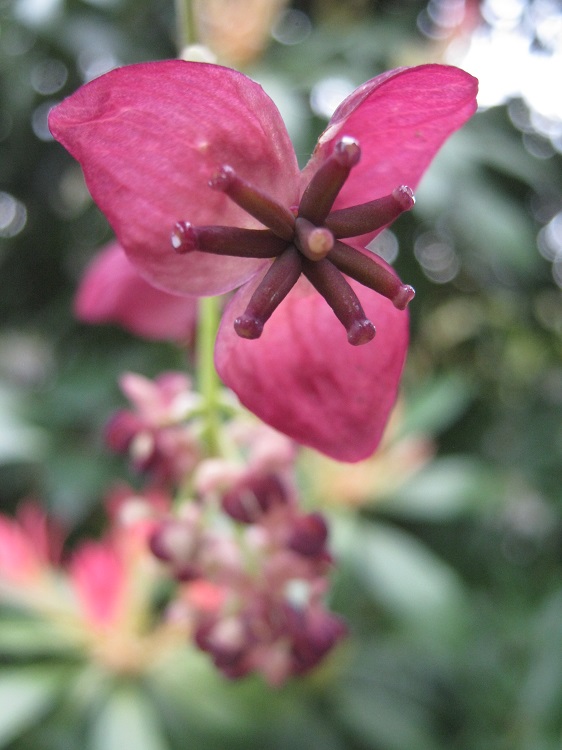
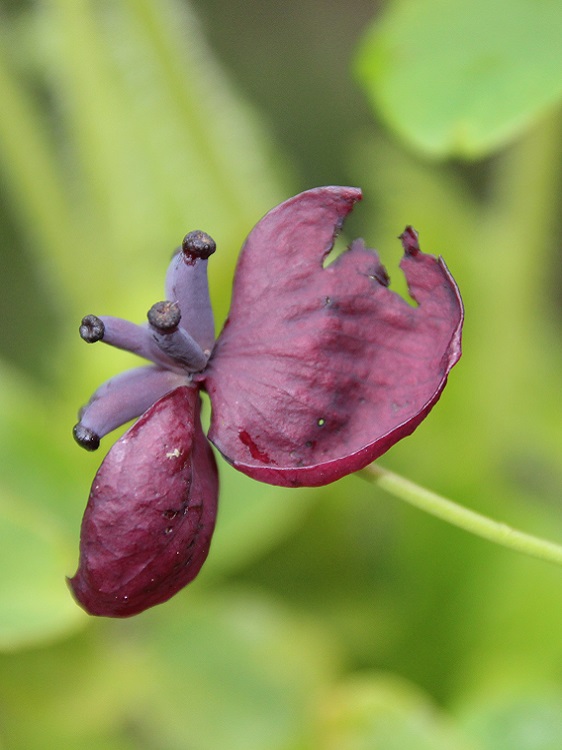
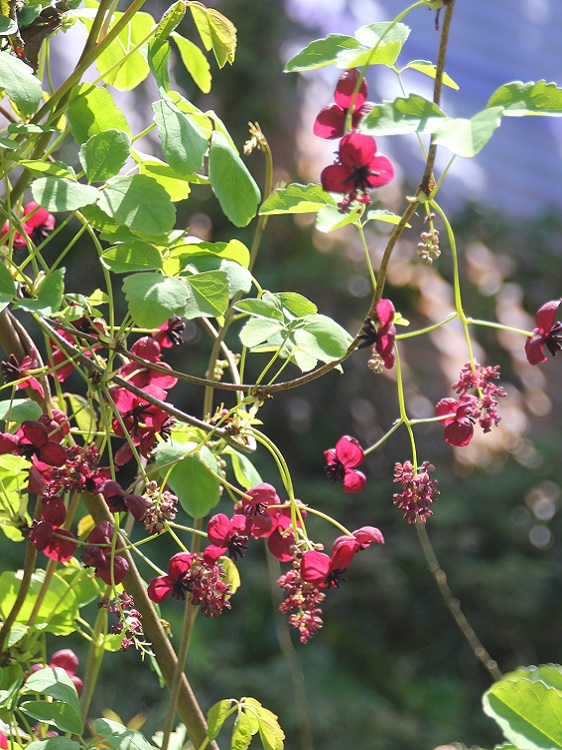
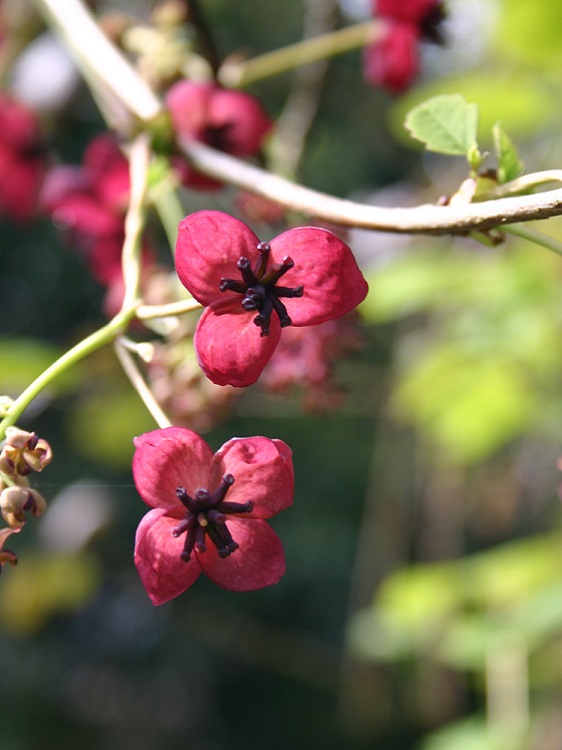
This is a wonderful, vigorous climber, that flowers for weeks in the spring with these racemes of purple brown flowers. I have never planted it (though I have planted the white form) -
this one planted itself. Back in the years when I still propagated stuff commercially, I stood three rooted cuttings out on a gravel bed for a few months. They rooted through into the
gravel, and twenty years later I still have it. In the meantime, I have dug it up, cut down the tree it was growing up, uprooted the stump, and used a JCB to remove two feet of
topsoil from the site. I still have Akebia quinata, growing from a stem that had layered itself about forty feet away. It is very beautiful, but don't say I didn't warn you! Trees and Shrubs online says: "First introduced in 1845 from the Island of Chusan by Robert Fortune, this climber has since been found to be native also of Japan, China, and Korea. It is perfectly hardy in a sheltered dell at Kew, but does not develop its handsome fruit out-of-doors. In the south-western counties it succeeds admirably, and is valued for the charming, spicy fragrance of its flowers, at times perceptible yards away from the plant, although even there the fruit is never abundantly borne. The failure to fruit would be understandable if, as is quite possibly the case, the individual plant is partly or wholly sterile to its own pollen and hence to that of any other plant of the same clone. The remedy would be to grow two or more plants known to be of diverse origin." Crug Farm Plants say: "Woody-stemmed very hardy, twining climber with five ovate dainty semi-evergreen leafleted leaves, purple flushed in spring. Vanilla-scented, large palest purple female and smaller male flowers appear in spring in congested inflorescences. Followed by sausage shaped, purplish fruits when pollinated by another clone. For fruit you must have two clones (seedlings) i.e. not cuttings from the same plant as are normally offered in Western cultivation. Best grown in full sun to part shade in moisture retentive drained soil." |
|
| 21st April 2006 | ||