Home Index Web Stuff Copyright Links Me

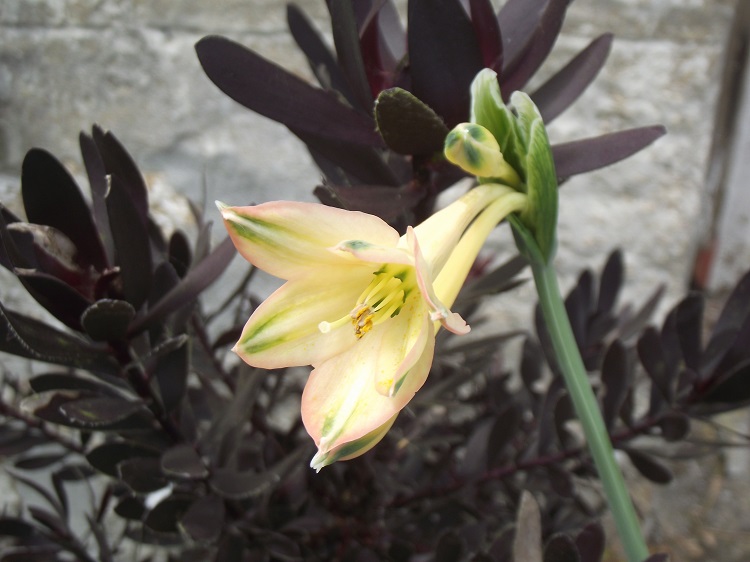
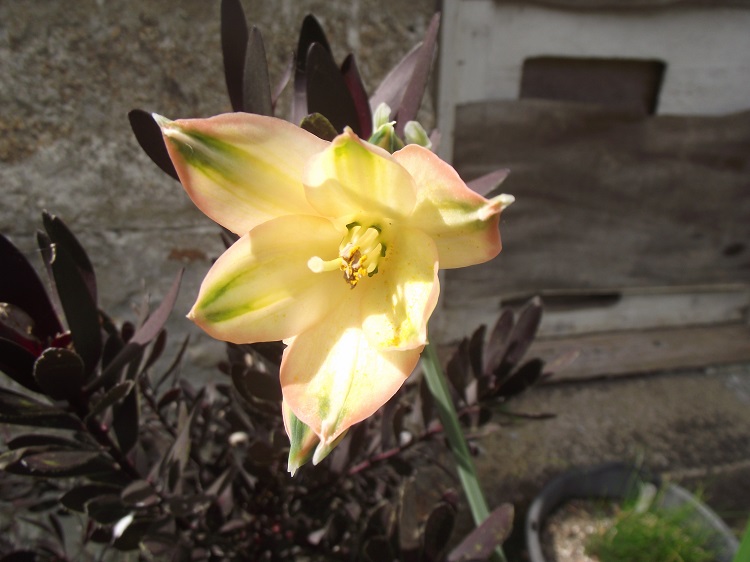
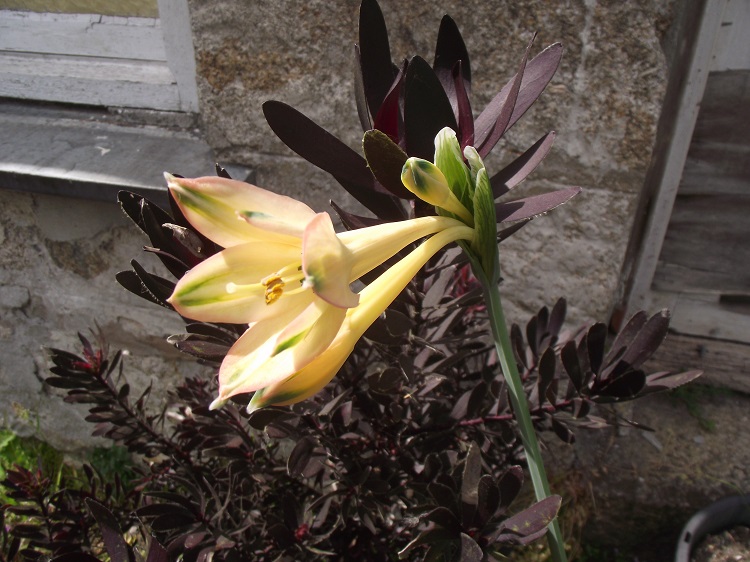
Clinanthus variegatus


Archive entry 04.06.23

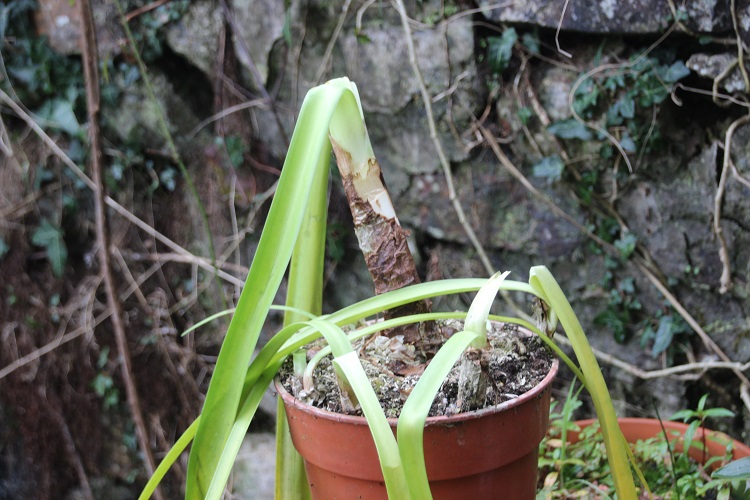
I have been growing it for a few years but it doesn't thrive. When offered a large established plant I took the chance to try it in a warmer greenhouse and see if I could improve its performance. A Peruvian species previously grown as Stenomesson variegatum.
It is said to require a distinctly dry winter rest which is difficult to arrange here. It grows very well but I have only flowered it once and I have no idea why it chose to. There are a number of colour forms in circulation.

Plants of the World online say:

"The native range of this species is Peru. It is a bulbous geophyte and grows primarily in the seasonally dry tropical biome."

There seems to be some confusion over names in Clinanthus but Plants of the World online shows a picture that is very like my plant.

Strange Wonderful Things say:

"Clinanthus (formerly Stenomesson) is a summer-growing bulb that usually goes dormant in winter. It has long, strap-like leaves that grow to 2 feet long. At some point between late spring and early autumn, the plant sends up a large, 2-foot flower spike, and 6 to 12 blooms spill out one at a time. The flower color can appear more like salmon or coral, depending on the temperature and lighting.
It comes from high elevations in the Andes, where the climate is mild all year and nights are cool. It grows fine in warmer conditions though. It grows well indoors in a 1 gallon (4 liter) pot. During the summer growing season, give it mostly-sunny conditions. Some afternoon shade might be needed in warmer climates."


5th November 2018

San Marcos Growers say:

"A large bulb with flat strap-shaped gray-green arching 30" long leaves. In summer into fall appear the 2 foot tall thick upright leafless stems bearing open umbrella shaped clusters of 3-4 inch long trumpet shaped orange flowers with dark green petal tips. The newly emerging inflorescence emerges just prior to the leaves but the leaves persist long after the flowers so this bulb seems nearly evergreen. Many small offset bulbs are produced, increasing the size of a planted colony. Easy to cultivate. Plant in full sun to light shade (requires shade inland). Water well when inflorescence is first noticed as this is a signal that new leaves are about to emerge. Hardy to at least 20 F and a bit below this. Great for pots or in the ground in mild climate areas. Endemic to the Andes in Peru where it inhabits grasslands between 7,500 to 12,000 ft. First described in 1931 by the legendary Harvard field botanist J. Francis Macbride from his Flora of Peru Series. From Greek 'stenos' meaning "narrow" and 'messos' meaning "middle" from the shape of the flower. In 2000, Alan Meerow, CHARLES L. GUY and QIN-BAO LI, SI-LIN YANG published a paper titled "Phylogeny of the American Amaryllidaceae based on nrDNA ITS sequences", in Systematic Botany that split the plants previously included in Stenomesseae Tribe into two separate groups with a resurrected name of Clianthus to be used for the species, like Stenomesson variegatum, that had strap-shaped leaves. Clinanthus, a name first used by William Herbert in 1821 to describe Pancratium luteum comes from 'klitus' meaning "a mountainous declivity" and 'anthos' meaning "a flower" in reference to the downward inclination of the flowers. This makes the correct name for this plant Clinanthus variegatus (Ruiz & Pav.) Meerow but we await wider usage of this name before changing our listing. Our thanks to John Bleck for sharing with us this beautiful bulb."


1st April 2023 1st April 2023 1st April 2023


References:
  • Plants of the World online, https://powo.science.kew.org/taxon/urn:lsid:ipni.org:names:1019104-1 , accessed 11.12.2025.
  • Strange Wonderful Things, https://www.strangewonderfulthings.com/220.htm , accessed 11.12.2025.
  • San Marcos Growers, https://www.smgrowers.com/products/plants/plantdisplay.asp?plant_id=2533 , accessed 11.12.2025.