 |
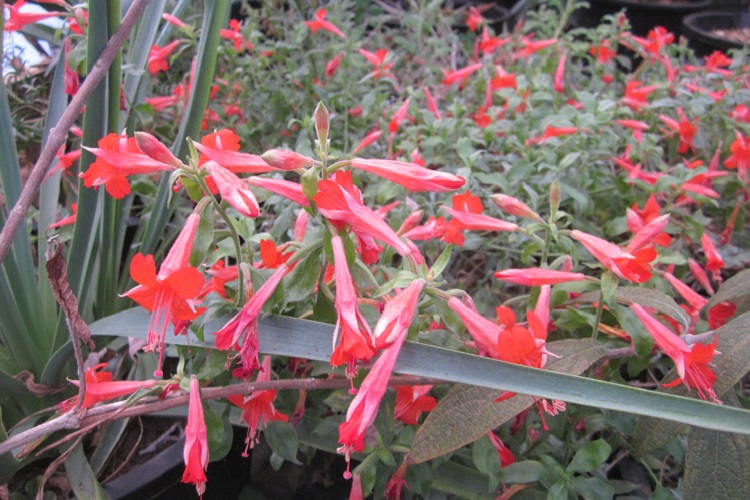
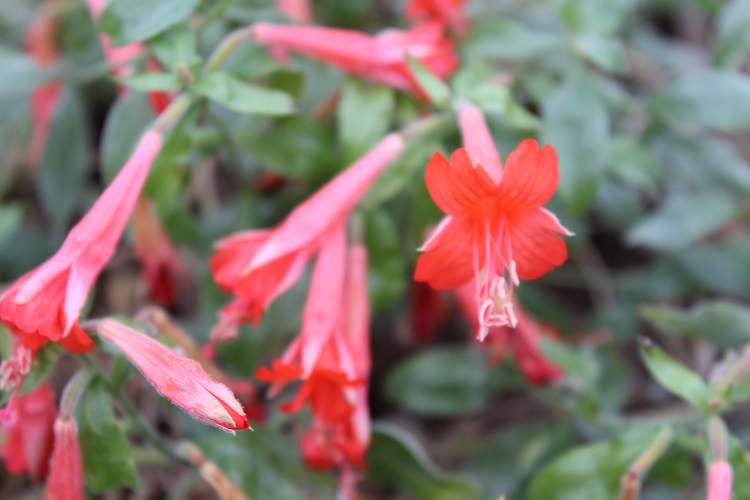
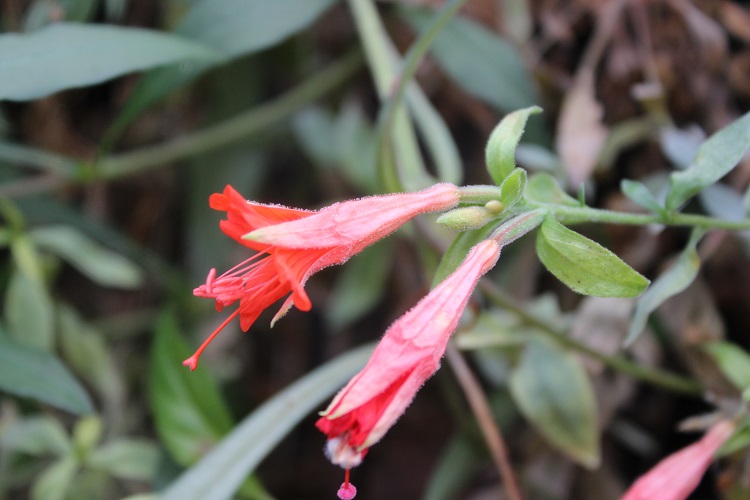
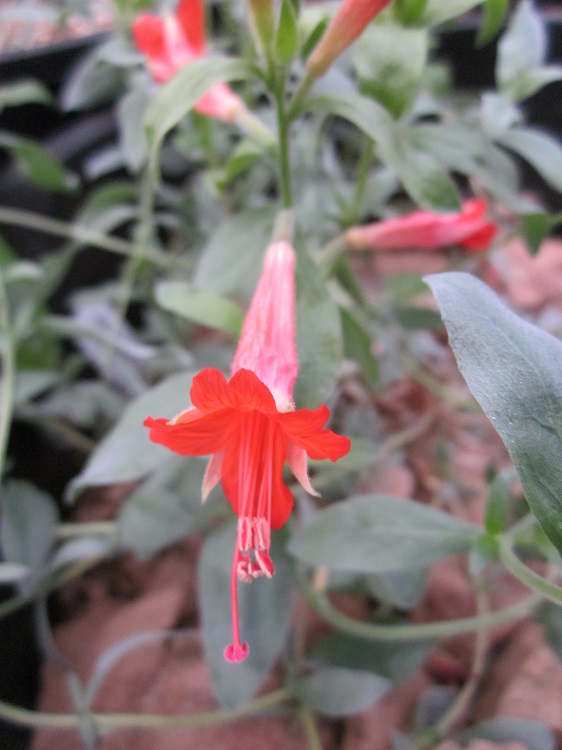
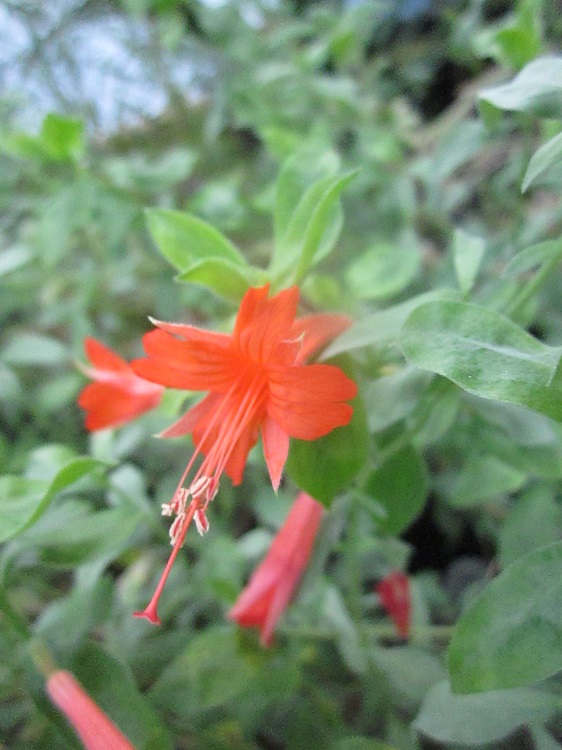
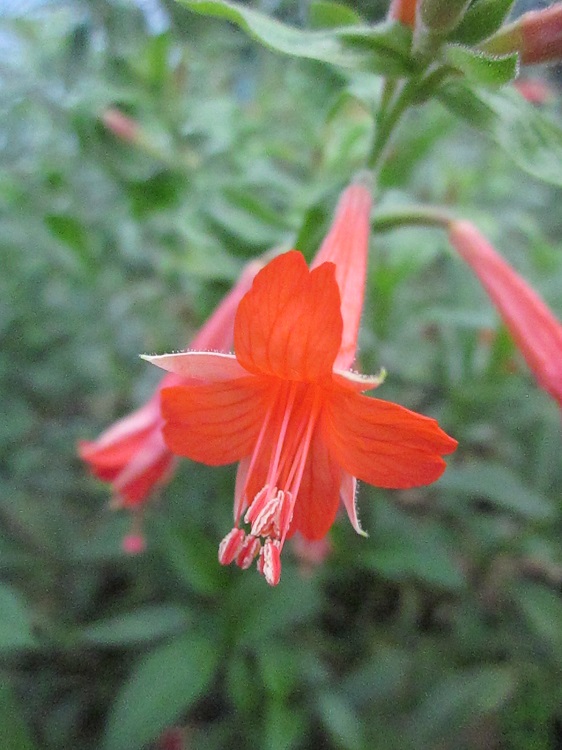
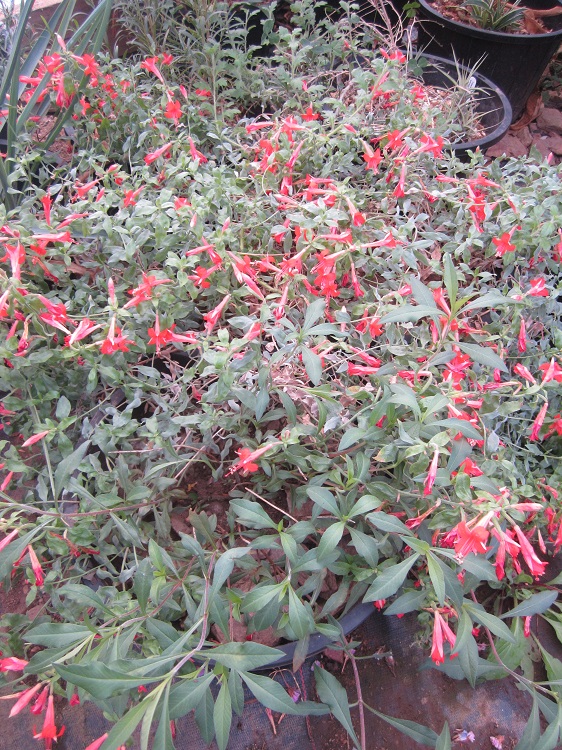
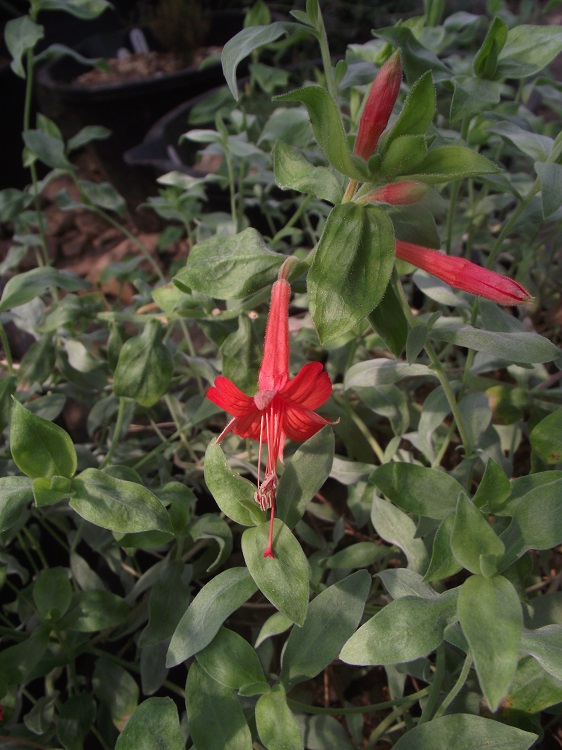
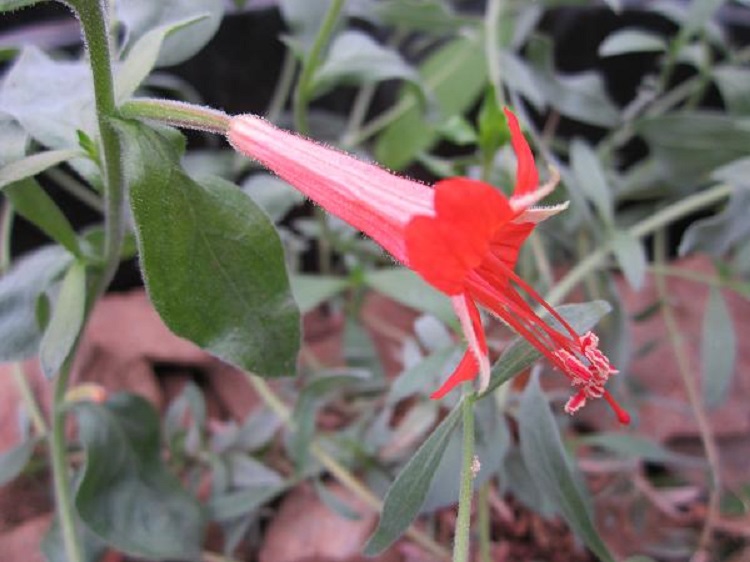
A rare species endemic to Northern California Coast Ranges. It has the shiniest silver leaves of any species I have seen. The red western American Epilobium (that were Zauschneria) do not seem to prosper here outside for long in the wet climate so this one is planted in the Agave house until I have some to spare. I bought it from Aberconwy ursery and their label says: "Dwarf species from dry shady places & open conifer forest in California.Low, rounded mounds of silvery foliage. Short stemmed red flowers in summer and early autumn. For gritty, well-drained soil in an open position." Writing in the Journal of the RHS in 1993, Jack Elliott says: "Zauschneria septentrionalis (E. septentrionale) has recently been introduced and promises to be one of the best. It is the most compact mat-forming deciduous species, only 8 to 10cm (3 to 4in) high but increasing in width by several centimetres each year. The hairy leaves are pale green when they first appear and during wet spells, but they soon become more silver. The colour of the flowers is typical of the genus, and seed is set if there is plenty of sun during the flowering period. So far it has proved perfectly hardy in a sheltered position in my garden." Far Reaches Farm say: "Humboldt County CA selection of Epilobium septentrionalis (Zauschneria). This has vermillion-orange flowers and amazing silver foliage with a capacity to take the hottest sun and crappiest soil and still put on an unexpected floral display with no water from you once established." |
|
| 27th September 2013 | ||