 |
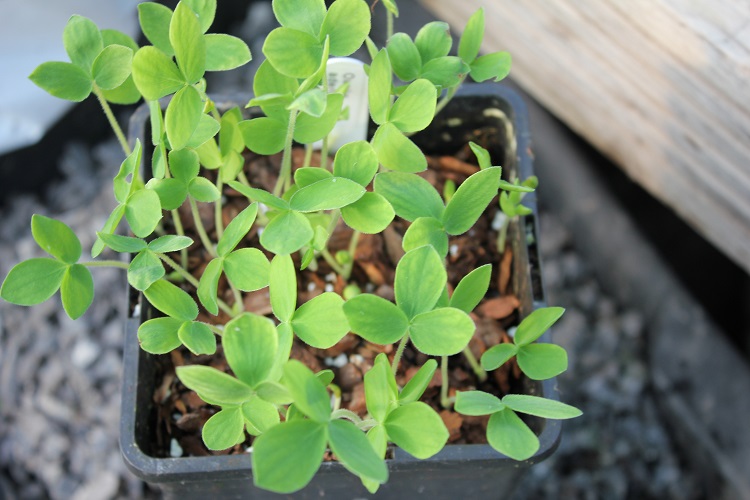
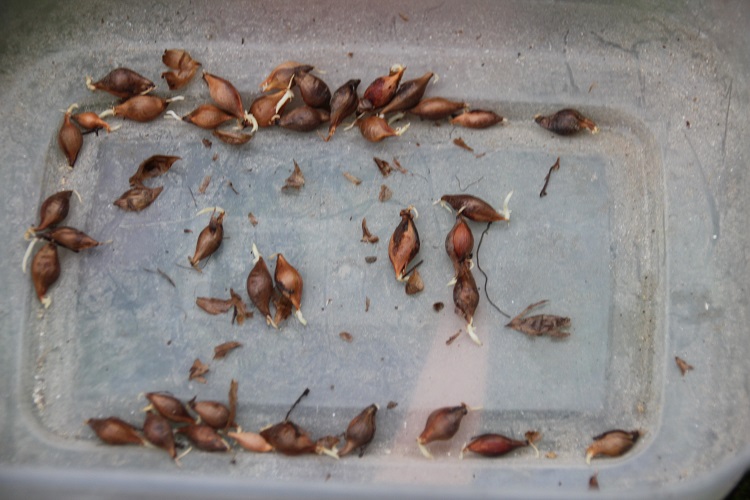
One of the winter flowering Oxalis from South Africa. I was given an envelope of bulbils and now I am waiting to see what happens.
In habitat I think it is probably adapted to extremely dry conditions with high light level.
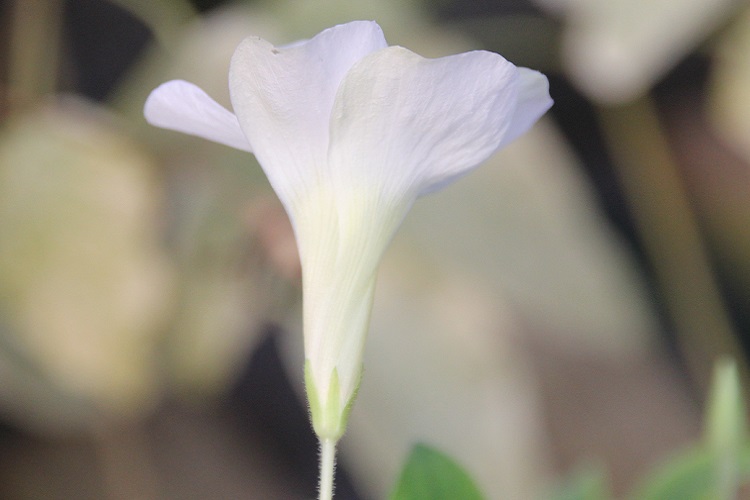
In the greenhouse it has been lush and almost lank. Plants of the World online says: "The native range of this species is N. Cape Prov. It is a tuberous geophyte and grows primarily in the desert or dry shrubland biome." Huntington Botanical Gardenms say: "At first glance, Oxalis adenodes may not look like an Oxalis at all. Oxalis is a diverse genus and this one is not so atypical, after all, with trifoliolate leaves from subterranean bulbs. However, the leaves are a pale green and the leaflets, each about 1.25 cm (1/2 in) long, are ovate with acute tips. These have a few scattered, white hairs while the margins are ciliate with thicker, pinkish hairs. The undersides of the leaflets are glabrous but have silvery cells lining the semi-palmate veins. Magnification may be required to see these features. The lateral leaflets partly overlay the terminal leaflet, giving the more erect tufts of leaves a different look than many Oxalis species. The flowers are typically gorgeous, and large for the size of the plant, to 4.5 cm (1 ¾ in) diameter with satiny white petals joined in a chartreuse throat. These flowers appear in Nov. – Dec. if our rains start early enough, or if supplemental water is given as the nights cool in Oct. The plants grow through winter then go dormant in spring as temperatures warm up and survive the dry summer as subterranean bulbs. " The Red List of South African Plants says: "Oxalis adenodes is a widespread, but rarely recorded species, with an extent of occurrence (EOO) of 6489 km². There are no severe threats to the population, and it is not suspected to be in danger of extinction. It is therefore listed as Least Concern. This species is endemic to South Africa, and is found from Steinkopf to Loeriesfontein. t occurs on rocky hill slopes and streambanks, predominantly on granite. This species is a localized habitat specialist, and although widespread, has been rarely recorded. It is locally common in suitable habitat." |
|
| 20th October 2025 | ||