Home Index Web Stuff Copyright Links Me

Sonchus acaulis


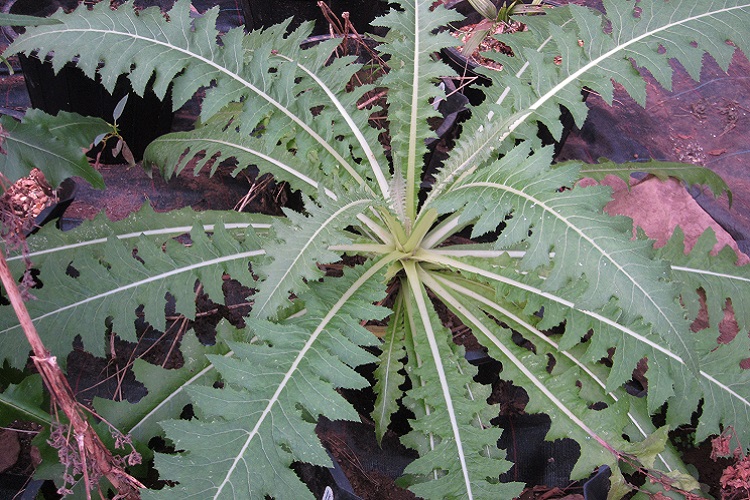
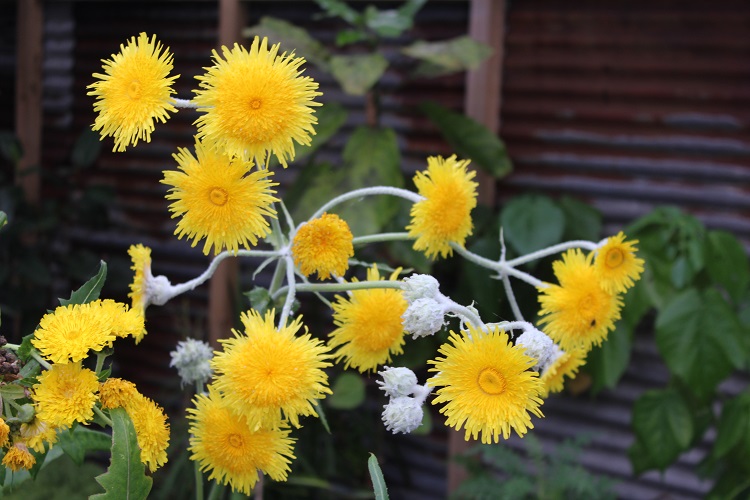
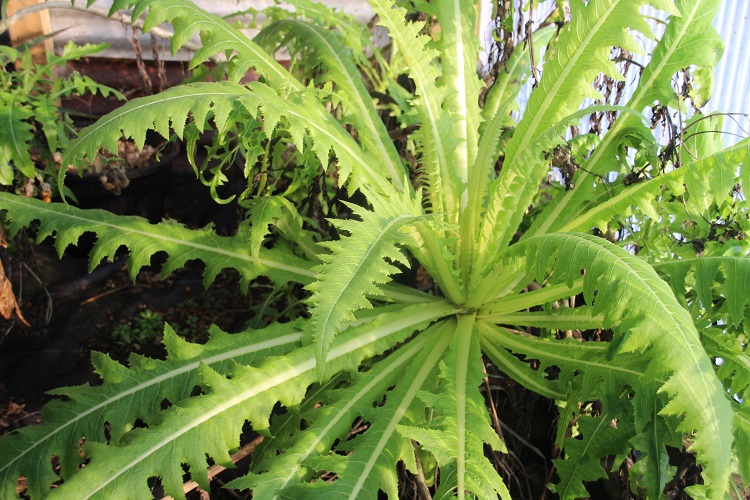
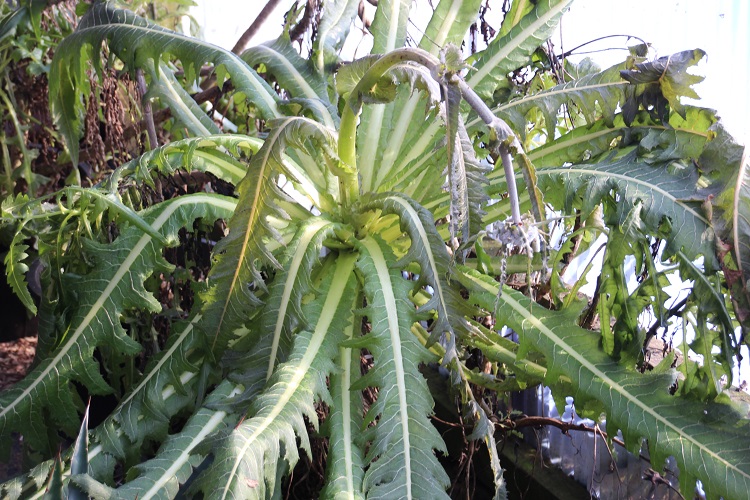
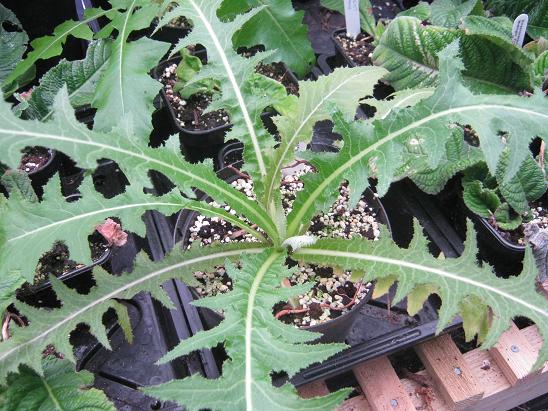
A giant dandelion from Tenerife and Gran Canaria that produces a large leafy rosette. I think it would prefer a richer soil than I give it but it isn't all that hardy so it has to come in for the winter.
I was given this as a seedling, and would like to keep it going so until it produces viable seed it will have to suffer the windowsill treatment.
Now growing in a three gallon bucket, the days of keeping it on the windowsill are long over. Growing in the greenhouse, it will have to take its chances with winter cold.
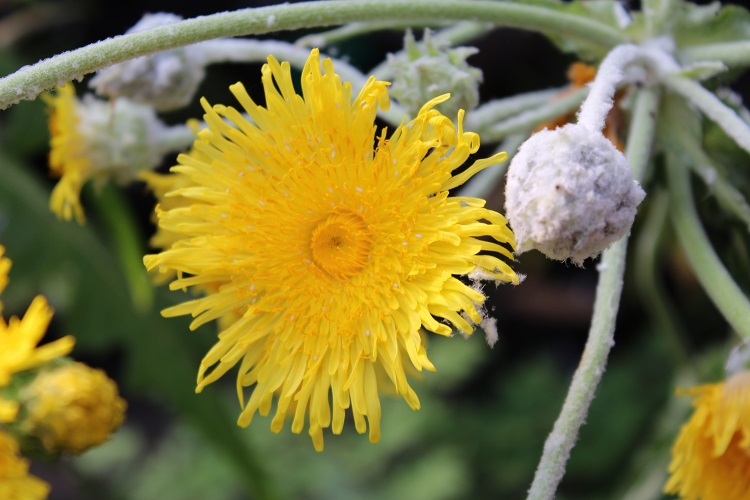
Of the Sonchus species I have grown, this was the one that really impressed me with the quality of its foliage and the size of the flowers. Unfortunately it was badly hit by the early frosts from the 'Beast from the East' event in 2018 and by the time temperatures rose above freezing, in mid-March, it was dead.

Rareplants.de said in their 2012 catalogue:

"Sonchus acaulis 150 (250)cm, is a most ornamental, stemless or short stemmed perennial species with a basal rosette of up to 150cm in diameter of very long and broad, deeply serrated, fresh green leaves and a tall inflorescence of large, brilliant yellow flowers. Native of rich soils in partially shaded to sunny spots in Gran Canaria and Tenerife. For any rich, well drained soil in partialshade (summer) to full sun (winter). Keep drier in winter at a minimum of some 10degC."


14th June 2011

12th March 2014 25th April 2015 23rd May 2015

Geoff Stebbings says in his 'Biking Gardener' blog:

"So it may seem odd that my object of desire today is a sow thistle. But this is not an ordinary one, it is a species from the Canaries.
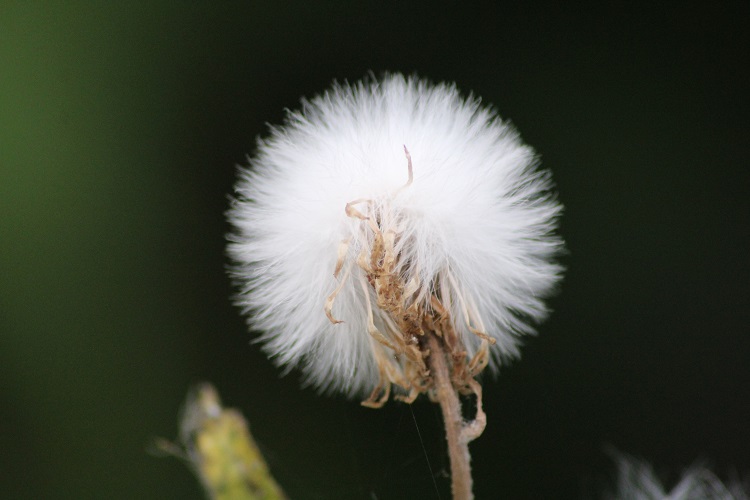
In these, and other isolated islands, plants do odd things and Sonchus acaulis is one of the odder ones. Acaulis means ‘’without a stem’ and this species grows as a large rosette of leaves for several years before sending up a tall flower stem from the centre. It is a growth pattern that is common in harsh, island environments and I find it fascinating that so many, unrelated plants, have all come to the same conclusion as a way to survive; take several years building up a head of steam and then put all your efforts into a huge inflorescence and make lots of seeds all in one season and then die.
But this sonchus is not quite so exaggerated and does not live in the hostile conditions endured by Echium wildpretii on Teide, it grows on steep rocky slopes, often in shade and sometimes on north-facing rocks and always where there is plenty of water. It does not grow in drought conditions with Canarian euphorbias and the toughest aeoniums, though it does grow with other, green aeoniums. I found lots in the Anaga peninsula, in the cool, moist laurel forests of Tenerife. But I grew some from seed collected (legitimately and paid for) in Firgas in Gran Canaria. I was keen to grow them, partly because I have been to Firgas. It is known for its volcanic water that is sold across the Island and I have posted before about the village and its tiled seats. This is curious since some references say that this species is endemic to Tenerife.
So my sonchus has steadily grown into a rosette 2m across with beautiful, jagged leaves a metre long. It is intriguing how the ordinary can seem extraordinary when closely observed and I love to see the fine toothing of the leaves every day. It is just an overgrown lettuce at the end of the day but I have admired its speed of growth and structural muscularity. And then, a month ago, something stirred in the centre of the leaves. A head of buds, cocooned in white hairs, ascended from the crown and is now 1.2m high. Clusters of knotted white buds are slowly separating on stout stems, ready to open into large yellow ‘flowers’.


20th July 2015 11th January 2018 27th February 2018

References:
  • The Biking Gardener blog, https://thebikinggardener.com/2020/02/20/experimenting-with-canarians-2-sonchus-acaulis/ , accessed 27.11.2025.