Home Index Web Stuff Copyright Links Me

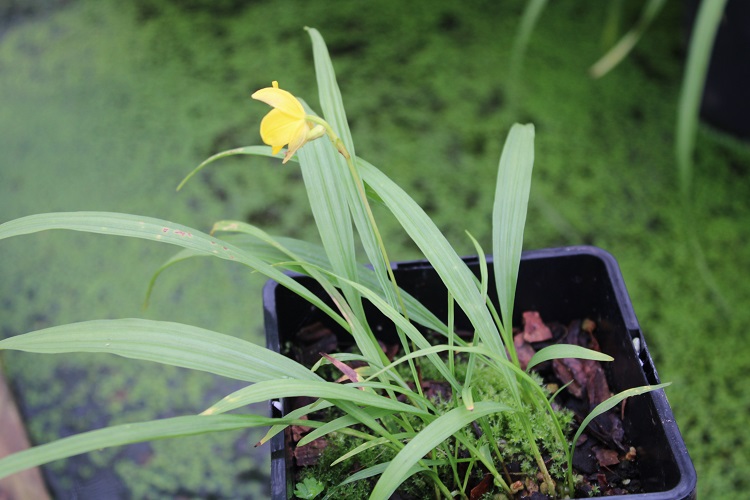
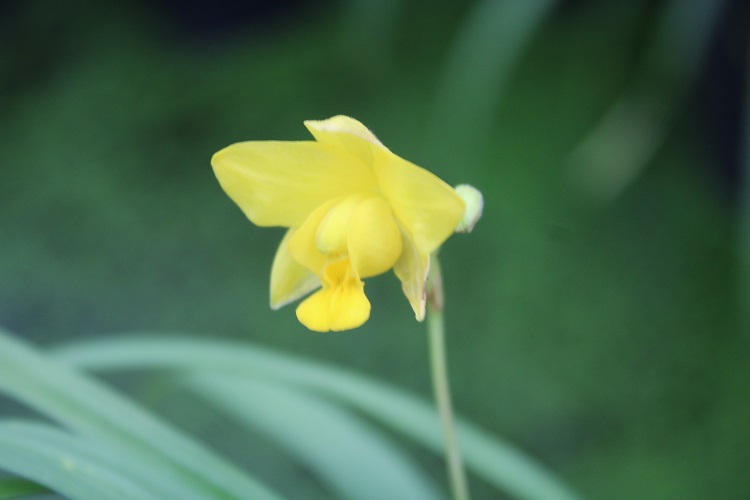
Spathoglottis ixioides


Archive entry 14.07.24
Archive entry 04.08.24

A small growing, yellow flowered orchid from Bhutan and Nepal. I bought five pseudobulbs from Laneside Hardy Orchids when it became available in 2021. I am told that it can be grown in the same way as Pleione although the bulbs are considerably smaller.

In 2019 the species was exhibited at the AGS show, Pershore. I don't have a record of the exhibitor but they provided a useful note beside the exhibit (thank you):

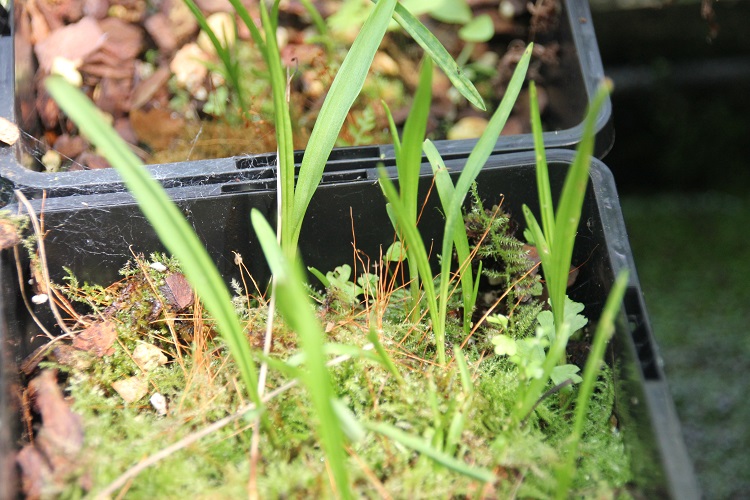
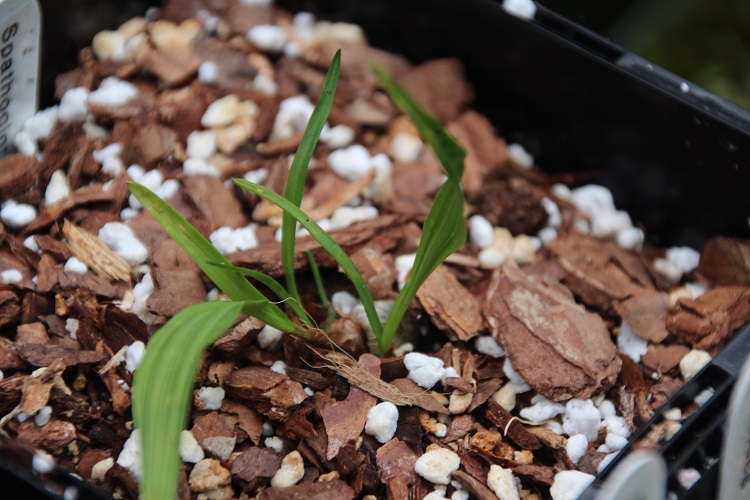
"This is an orchid from the mountainous areas of Bhutan and Nepal, but is quite at home in the UK. It has only recently become commercially available from legitimate sources and is a perfect compasnion for Pleione. The compost is a similar mix of bark, moss and perlite, free draining, but crunchy and airy. Like Pleione, the plants go dormant for the winter and are kept beneath the bench where light frost does not bother them as long as they are completely dry. I repot in early spring, expecting growth to resume in late April or May. Once growth starts the plants are fed weekly with Akerne's Rain Mix, (my fertiliser of choice for all my orchids, tropical and hardy). Unlike Pleione the leaves appear first, then flowers during July. I keep them at the sunny end of the greenhouse until after floweringwhen they go outside in dappled sunlight."

The International Orchid Species Encyclopedia says:

"Found in Xizang province of China, Nepal and the higher eastern Himalayas, Sikkim and Bhutan on moist moss covered rocks in dense mixed forests and on wet roadside banks with scattered scrub at elevations of 1950 to 3650 meters, as a miniature sized, cool to cold growing terrestrial- lithophyte with small compressed, globose-ovoid pseudobulbs enveloped basally by fibrose sheaths and carrying 1 to 2 plicate, distichous, linear to oblong, acuminate, sessile leaves and blooms in the mid-summer on a 4" [10 cm] long, 1 to 3 [rare] flowered inflorescence and drops the leaves in mid September when the plant should be kept dry [just like Pleione] until new growth appears in the late winter to early spring."


9th July 2021

Writing in the Bulletin of the Alpine Garden Society in 1950 about a visit to Sikkim in 1937, D.G.Lowndes says:

"I also found a really beautiful ground orchid. It grew in fair quantity in the tangled masses of a prostrate Gaultheria. This was Spathoglottis ixioides. It formed small pseudo-bulbs among the roots of the Gaultheria from which arose a few narrow leaves and an eight-inch stem bearing one, two or three flowers of good size and a beautiful golden yellow colour. Subsequently I sent plants of this treasure to the Royal Botanic Garden at Edinburgh but unfortunately it failed to survive."

Also in the Bulletin, writing about a trip to Nepal, John Grimshaw says:

"A feature of the lower stages of the trek was the large numbers of orchids, both epiphytic and terrestrial, by the side of the track . ... In fairly shaded places these were sometimes joined by Viola biflora which could make a mossy boulder appear gold-plated from a distance. The most beautiful of all these mossy-boulder plants was a little yellow orchid, Spathoglottis ixioides, which grew in sheets from small pseudobulbs embedded in the moss. I immediately christened it "the daffodil orchid", for in many ways, from colour to height (5in.) it resembles a small Narcissus. I consider it to be the second most pleasing plant I saw on my journey and would like to see it more widely established in cultivation. As it grew at elevatiions of up to about 9,000ft. and in similar positions, I would judge it to be about as hardy as Pleione and, as such, admissible to the alpine house."


31st July 2024 31st July 2024 3rd June 2025


References:
  • Lowndes, D.G. - 'Wanderings of a wayside botanist' , Bulletin of the Alpine Garden Society, Vol.18, p.59 (1950).
  • Grimshaw, John - 'Towards the roof of the world' , Bulletin of the Alpine Garden Society, Vol.58, part.2, p.127 (1990).
  • International Orchid Species Encyclopedia, https://www.orchidspecies.com/spathixiodes.htm , accessed 05.12.2025.