 |
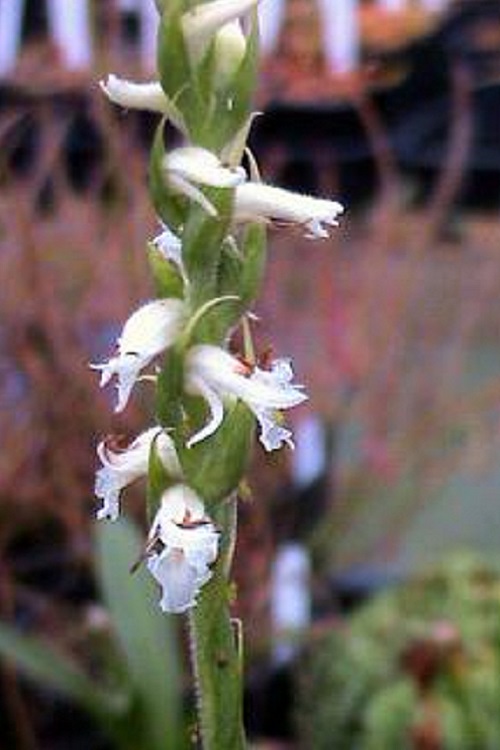
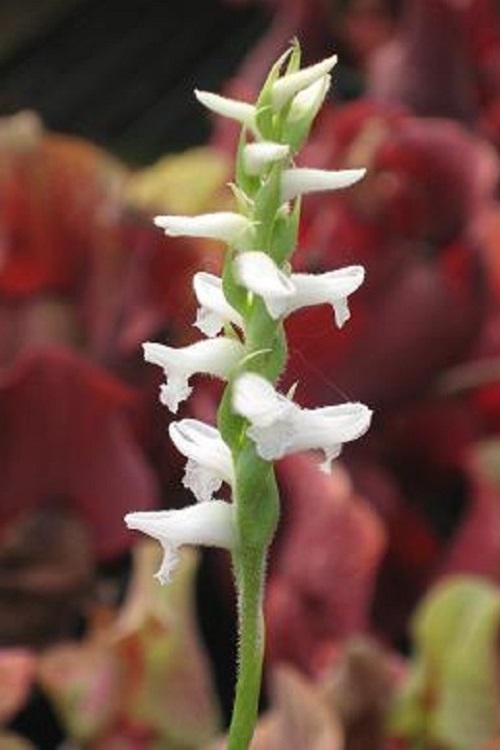
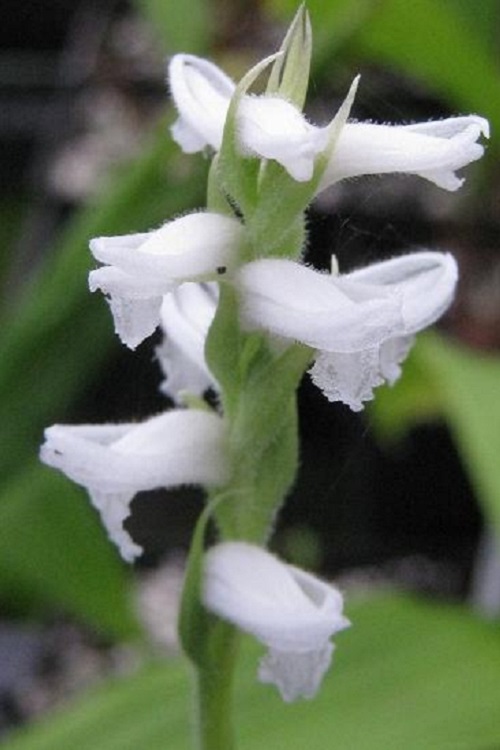
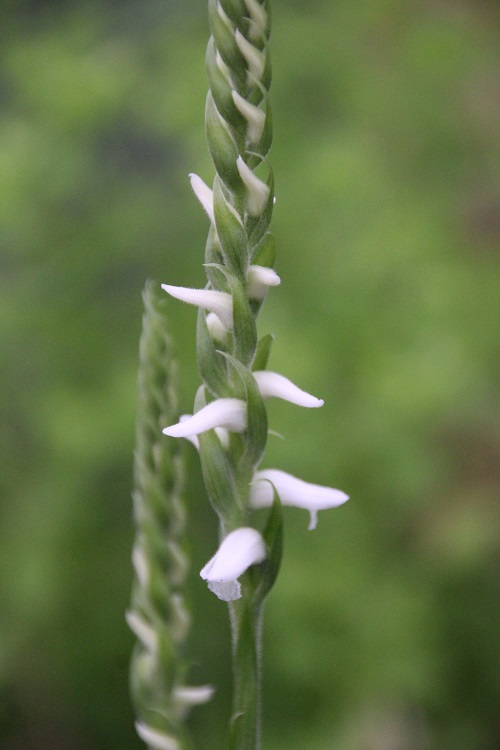
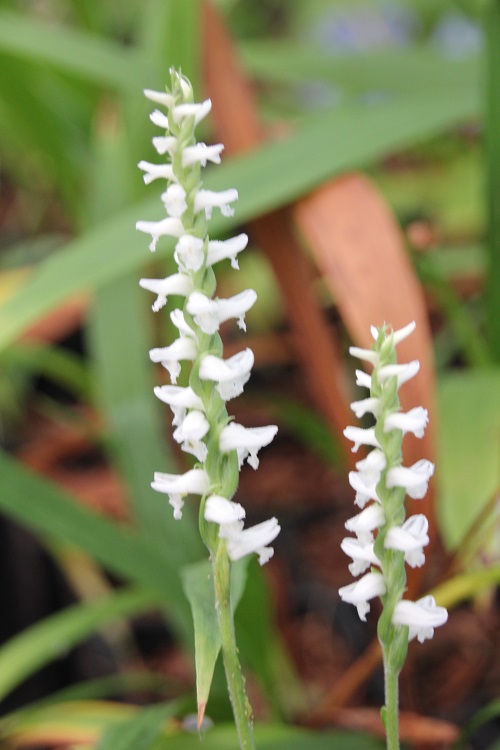
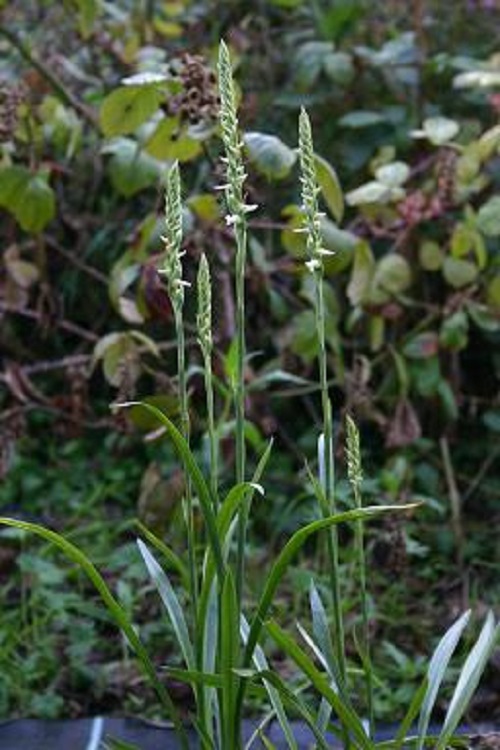
A really easy orchid that is now turning up at many nurseries. Grows well in a standard compost in perfectly ordinary conditions, and divides and spreads with vigour. Small white flowers spiral up the stems in autumn. Writing in the Bulletin of the AGS in 2006, Robert Rolfe says: "The cultivar 'Chadd's Ford', with elegant 20-30 cm tall stems terminating in racemes of white, slightly nodding, intensely fragrant and decent-sized (c. 13 mm) white flowers, was discovered back in the 1960s. The credit goes to Dick Ryan, an American with a passion for native orchids, who made the find in what has been described as a 'wet ditch' close to Bear, Delaware. Sadly, this area, like many other unique types of habitat, has now been lost to a housing development. Somewhat surprosingly, 'Chadd's Ford' is not in Delaware at all; it's the town in Pennsylvania where a Dr Brubacker lived, he being the man who brought it to the wider audience by, in 1973, showing it to the American Orchid Society, who gave it a certificate of Cultural Merit... It makes a wonderful pot subject under cold glass, where its vamilla or jasmine fragrance can best be appreciated when it comes into bloom, any tine from September to November, dependent on the season. Those averse to growing plants in pots will be heartened to learn that it has proved tolerably hardy in a number of garden locations, certainly in southern England. Another encouraging feature of this plant is its propensity to propagate itself by producing numerous adventitious rhizomes, ensuring a good sized colony, when growing well, in a relatively short space of time. There are also several reports of self-sown seedlings being found; these mature rapidly, plants reaching reproductive size in as little as two years, although it should be noted that the clonal name applies only to vegetatively-propagated material of the original discovery." The species to which the cultivar properly belongs has long been a matter of debate. When I first grew the plant it was listed as a cultivar of S. odorata, then that species was reduced to a variety of S. cernua, under which name it was known for many years. More recent investigations have decided that it is a previously unrecognised species and is currently known as S. bightensis 'Chadds Ford'. I will stick with S. 'Chadd's Ford' until the mud settles a bit more. |
|