 |
My garden is like a slow motion accident. There is very little here that unfolds as
expected or which follows the planned path. This Stewartia is trying to be an exception. It was planted because
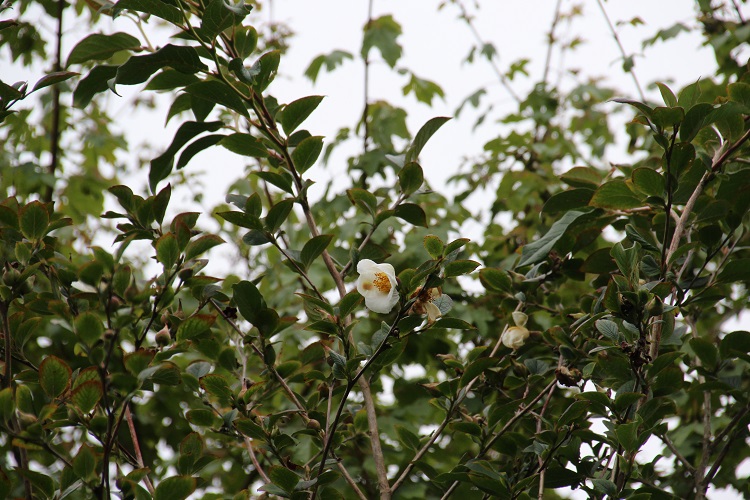
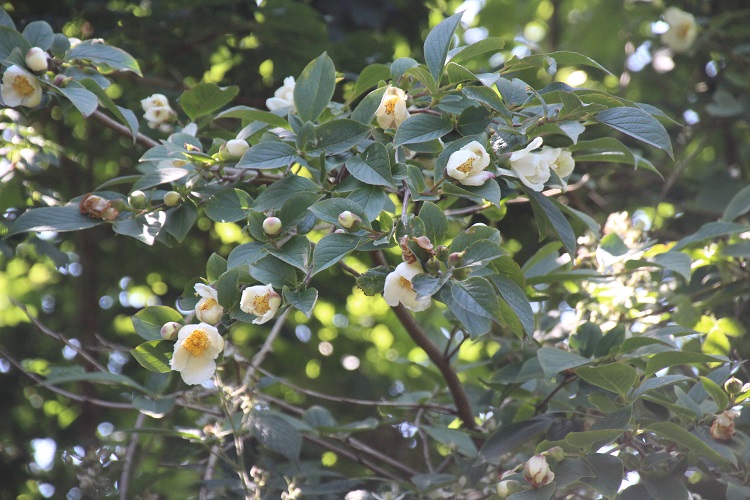
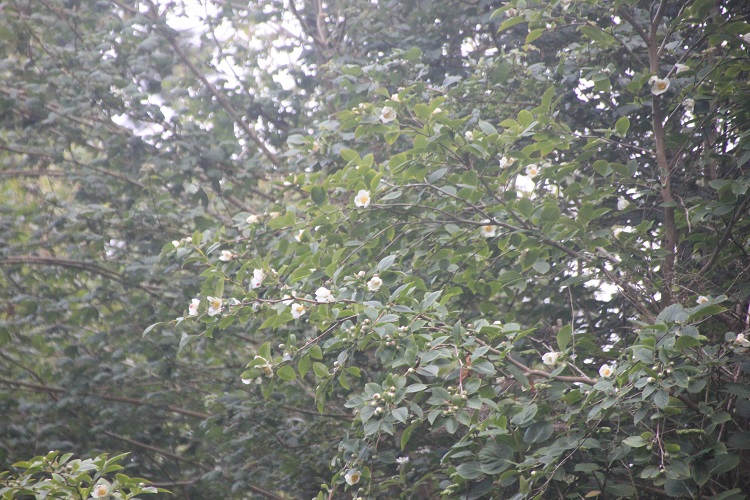
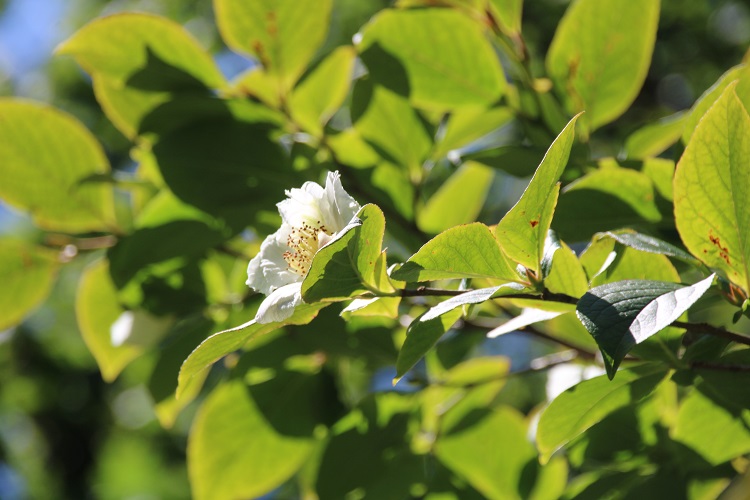
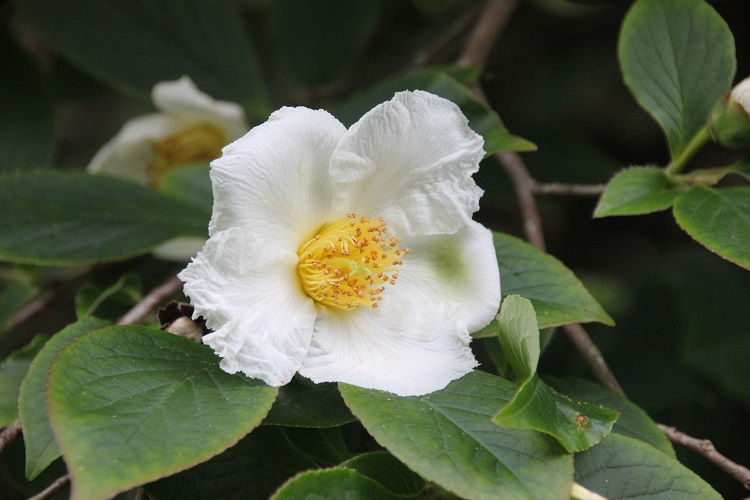
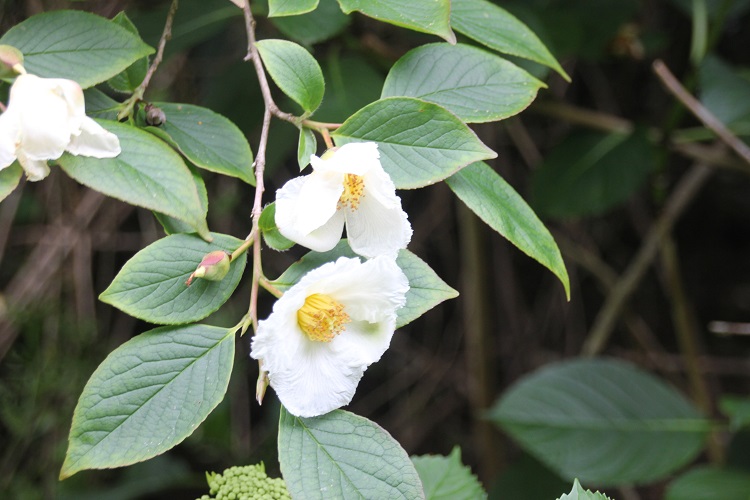
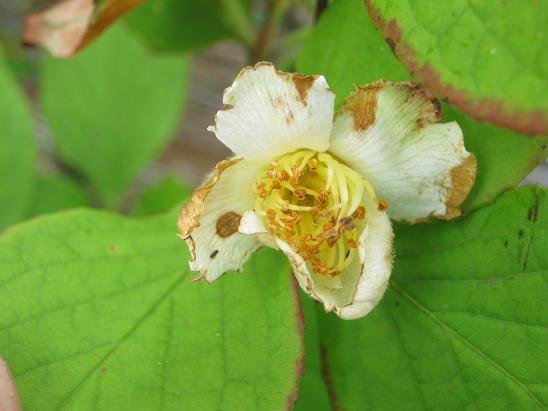
it is a tree that I admire and planting a tiny sapling was the best way to achieve that. My youngster was pot grown and almost as soon as it was planted out it produced a premature flower which was worth photographing even in this rather tatty state. It will be several years before it produces another. I had to wait until 2019 for a repeat flowering. It is out of reach, but worth a distant picture. When I first planted it I was worried that the wind in the garden would be too severe, but the plant has grown sturdily and proved me wrong. Trees and Shrubs online says: "The first material of S. pseudocamellia to be introduced from Korea was seed collected on Chiri San, by Ernest Wilson in 1917, and cultivated at the Arnold Arboretum, where original trees still grow. It was admired there in 1930 by Arthur Osborn of Kew, and material reached England in the following year (Bean 1981). It rapidly became popular and plants of Korean lineage may now have supplanted Japanese stock in general cultivation (Hsu, Boland & Camelbeke 2008). Perceived small differences led to it being described as distinct, and a succession of synonyms has been applied, but it is generally considered that there are no significant distinctions between Japanese and Korean plants. There is some merit in recording the origin for horticultural purposes, however, as Korean trees may be slightly shorter, and are said to have flowers that open more widely than those from Japan; particularly good red autumn colours are also claimed for them (Armitage, Edwards & Lancaster 2014). As they are usually raised from seed they are best treated under the name Koreana Group – which has also been granted the RHS Award of Garden Merit. It has been reintroduced on several occasions in more recent times." The North Carolina Extension Gardener Toolbox says: "The Japanese Stewartia is a small to medium-sized deciduous flowering tree with multi-season interest. It is multistemmed and pyramidal to oval-shaped with low branches. The plant may reach a height of 12 to 40 feet tall and 8 to 25 feet wide. White Camellia-like flowers appear from June to August, and the fall foliage has bright colors. The attractive flaking and peeling bark adds a special interest to the winter garden. The plant is a member of the Theaceae family and is related to the Camellia. The genus's name, Stewartia, is in honor of John Stuart who was a 16th-century Scottish botanist. The spelling was the result of a transcription error. During the 19th-century, the name Stuartia was used; however, the original spelling is now accepted. The species name, pseudocamellia, means "false camellia." |
|
| 10th June 2011 | ||