 |
A low growing plant from the Drakensburg Mountains in South Africa. It grows in seeps of moisture on cliffs.
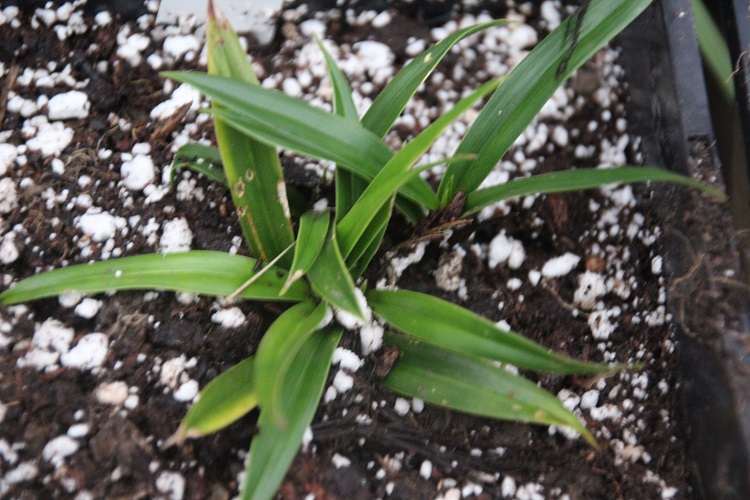
I got seed from Silverhills in 2007 and it grew easily but slowly. The plants have made compact clumps of foliage
that is clearly adequate for the job, but you wouldn't get excited. Seems to be tolerant of some shade, I have
seen comments from the USA suggesting it for ground cover in difficult locations. The same sources suggest that
it is a zone 8 plant (effectively frost free). My plants have come through a series of severe winters in pots
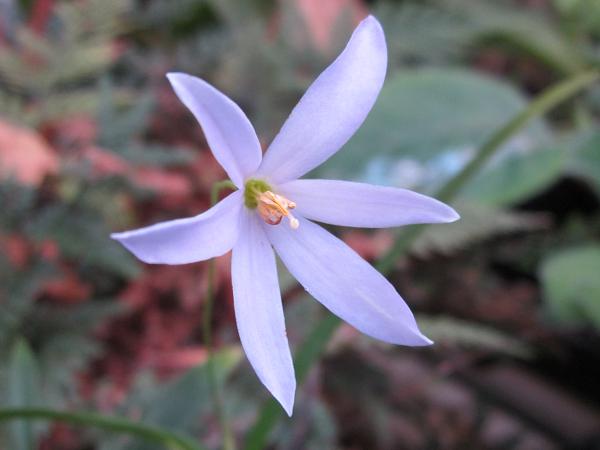
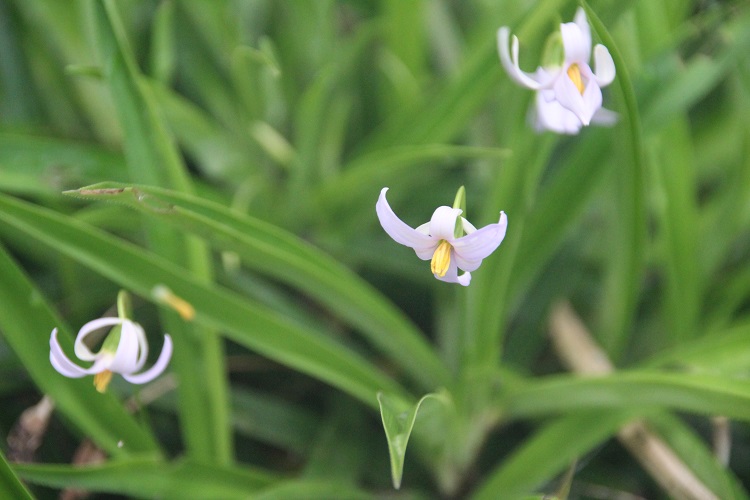
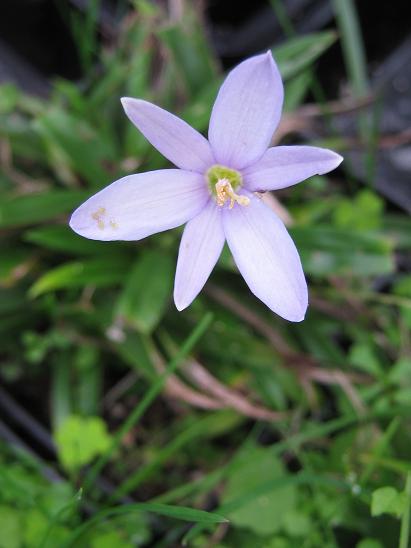
without damage, so I think it is tougher than its reputation. The form commonly cultivated has smallish white flowers. I have grown it, but it died. It may be that this form with larger lilac flowers is also hardier or more tolerant of cultural abuse. If you are planning to write the book "Shakespeare's Microwave Meals" then I suggest you seek out the lilac one. Talbotia has suffered over the years. It isn't quite a bulb, but I grow it in the bulb house. As a consequence it gets too dry in the summer, the leaves start to curl and I find myself rushing at it with a watering can like some fat, horticultural lifeguard bringing succour to the not-drowning. Sadly last year I arrived too late and my Talbotia was dead. Stricken with grief, I realised that it was one of my favourite things. Certainly it was more important to me than raindrops on roses or whiskers on kittens. I looked for more seed, checked nurseries for plants, all without success. And then a few weeks ago the lovely Julian Sutton came to talk to a local group and this is what he brought with him. I was overjoyed. Julian Sutton, another of my favourite things. Right up there with wild geese that fly with the moon on their wings. Random Harvest say: "Talbotia elegans is a hardy, evergreen, groundcover with leathery, narrow leaves that are pleated and lie horizontally to form mats. Beautiful, white, star-shaped flowers are borne on the tips of delicate stems that are held above the leaves from December to March. Plant in amongst rocks in shady areas, as an accent plant or mass-plant in moist conditions under trees or in a container. A beautiful and unusual addition to a shade garden. This plant requires well-drained, compost-rich soil and regular watering as it grows naturally in moist conditions." San Marcos Growers say: "Talbotia elegans grow native in seeps on cliffs in the Drakensberg Mountains of South Africa, where there are reports of other color flowers and larger flowering forms, but the plant that has been in cultivation in California for many years is this smaller white flowering form. It is in the Velloziaceae family and closely related to the Screw Pines, Pandanus sp. (both within the Order Pandanales) from the southern hemisphere (Africa and South America) that was named to honor a Portuguese naturalist named Velloz. Vellozia elegans was the name described by the British botanist John Gilbert Baker for this plant in 1875. The old-world species of the family were reclassified and placed in the genus Talbotia in 1975 in a monograph of the Family in The Kew Bulletin by Lyman Smith and Edward Ayensu (V.29 N1). Interestingly, Talbotia was the name the plant was actually first described as by the Scottish botanist John Hutton Balfour in 1868 with the name honoring the British scientist and Fellow of the Royal Society, the Honorable William Henry Fox Talbot, who bought the specimen of this plant to Balfour from his garden in 1866. It was believed at the time to have been raised from seed from either the Cape or from Madagascar. Plants from the Botanical Gardens at Edinburgh were sent to Kew where it first flowered in 1869. The specific epithet refers to the overall elegant nature of this plant." |
|
| 1st August 2010 | ||