 |
There is some nomenclatural confusion over this plant but this seems to be the correct spelling for the name.
The plant was previously known as T.faeroense and comes from the marvellously exotic Faroe Islands, Iceland, Denmark,
Norway and Sweden... marvellously exotic so far...and France and the UK. Perhaps not so exotic. I have just found a reference
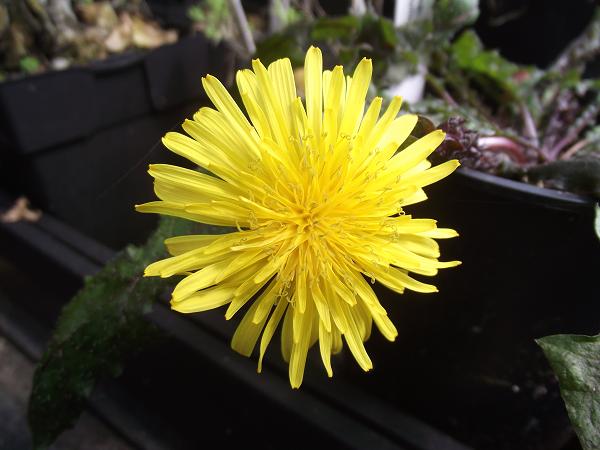
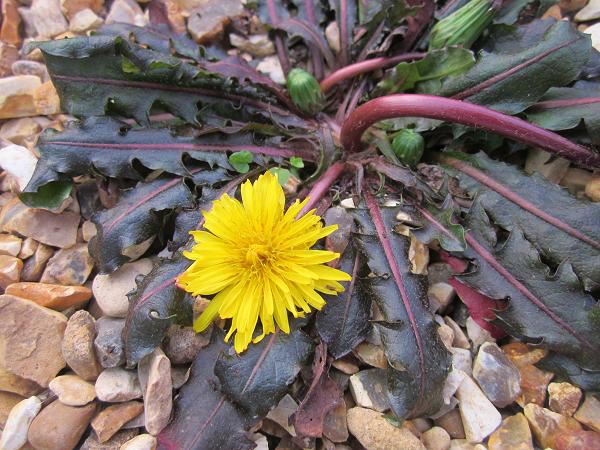
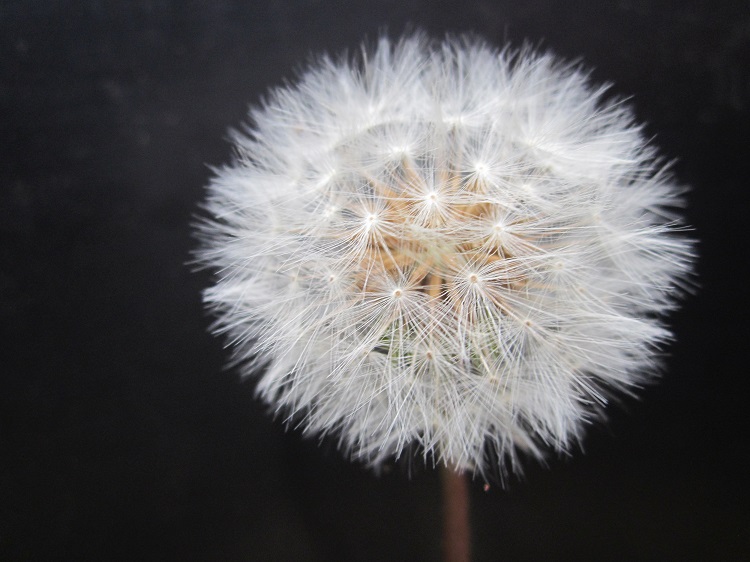
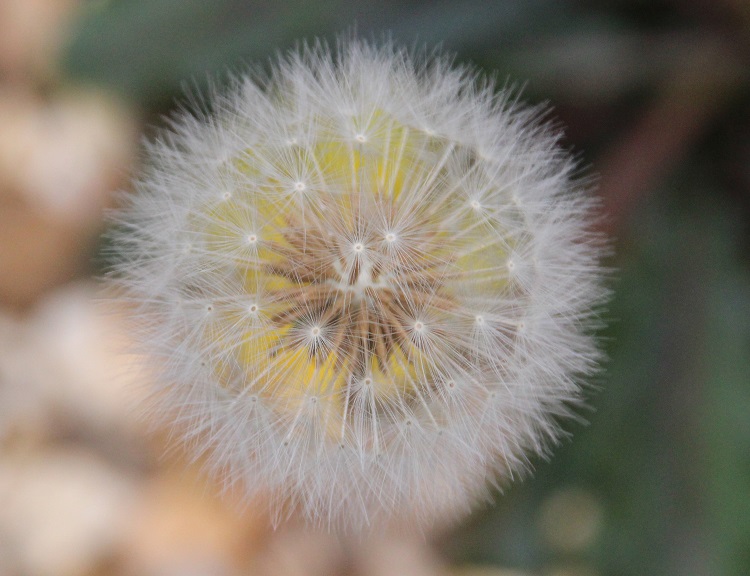
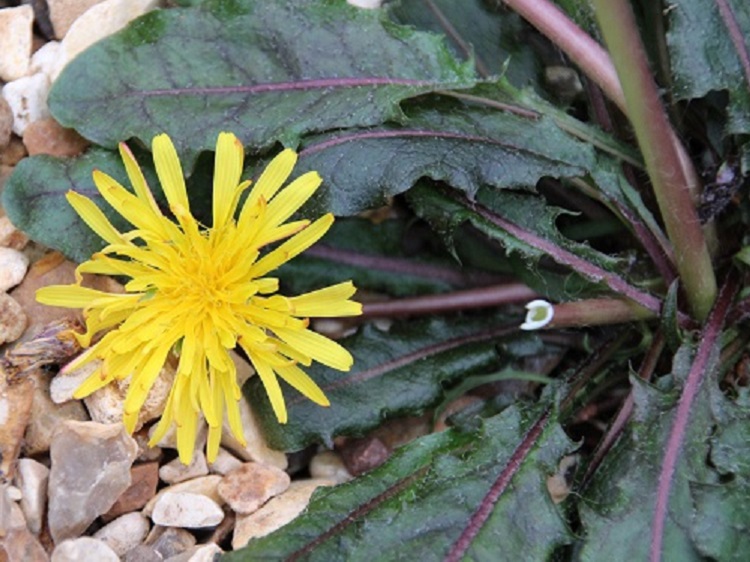
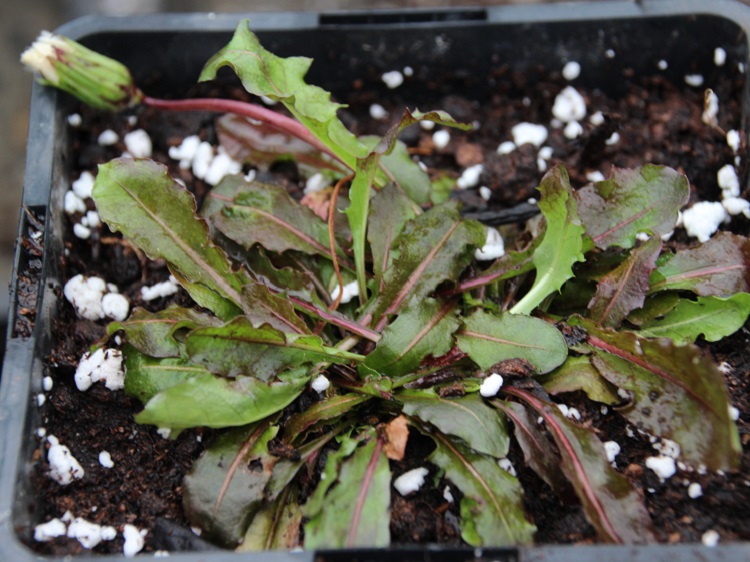
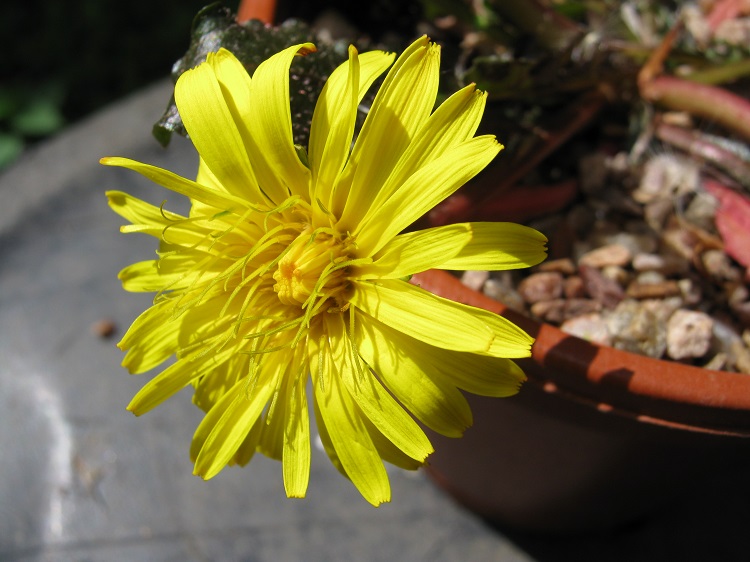
in the Flora of Derbyshire. Perhaps not so exotic in a wild frosty arctic circle way but it is a lovely plant with purple red rosettes and a dandelion on the top. I was surprised it grew so easily but the Flora of Derbyshire describes it as "probably the most widespread dandelion in Britain" so I am going to try it outside. During the summer it produced masses of seed which drifted around the greenhouse. At the time I was happy to see it but perhaps it will become a serious weed. Hans Ollgaard writes: "When Rasmussen described Taraxacum rubifolium he clearly intended to name it after its red leaves (Faroese: Reyð Várhagasólja). His original spelling 'rubifolium' used both in literature and on herbarium labels, means »with leaves like Rubus. Even if the spelling 'rubrifolium' would agree better with Rasmussen's intention no change can be made here without affecting the authority and publication date of the taxon, according to the international rules for botanical nomenclature (ICBN). T. rubifolium was detected by the Faroese botanist Rasmus Rasmussen, along streets through a meadow area about 1 km SW of Tórshavn town center (about 62°00'15"N; 6°46'50"W), between Álaker and Heyggin Mikla/Haraldstrøð, first in 1909 . Recognizing the species as a specialty, Rasmussen in July 1938 sent achenes (fruits) of it to O. Hagerup, Bot. Museum, Copenhagen, to have it cultivated and possibly identified there. As already mentioned, T. rubifolium was found in its type location in 1909 and has been collected there sometimes since then. In 1978, the last year it was seen in nature, road- and building constructions were carried out in that area, threatening a few specimens of T. rubifolium. An amateur botanist, Eyðun Winther, who knew of the occurrence and rarity of T. rubifolium, saved those specimens by digging them out (before the bulldozer did) and transplanting them to his private garden (in Skarvanes, Sandoy). From there specimens have been distributed to the botanical garden (Debesartrøð) in Tórshavn and to some other private gardens, ... Consequently, it is a fact that, at present, all known living specimens of T. rubifolium in the Faroe Isles are offspring of the growth from Rasmussen's original locality. Nurseries in many parts of the world have shown interest for this remarkable dandelion. In the Netherlands it has been sold as T. 'faltonense' (a misreading of handwritten faeroense), otherwise as T. faeroense, eg. from a nursery in Seattle, Washington, USA, where it was said to hail from China. I know of 2 Danish nurseries which grow and sell T. rubifolium, now with correct name. |
|
| 8th May 2011 | ||