 |
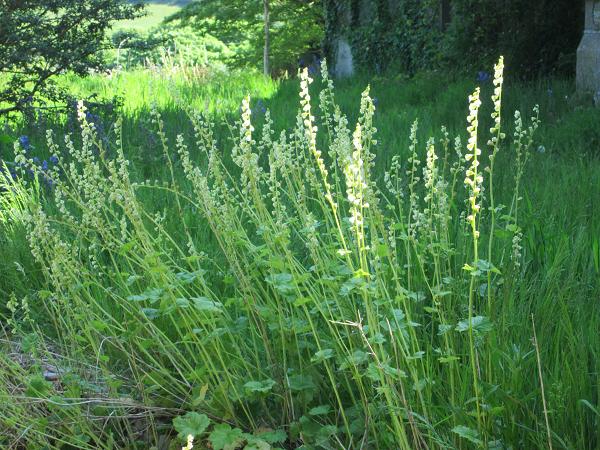
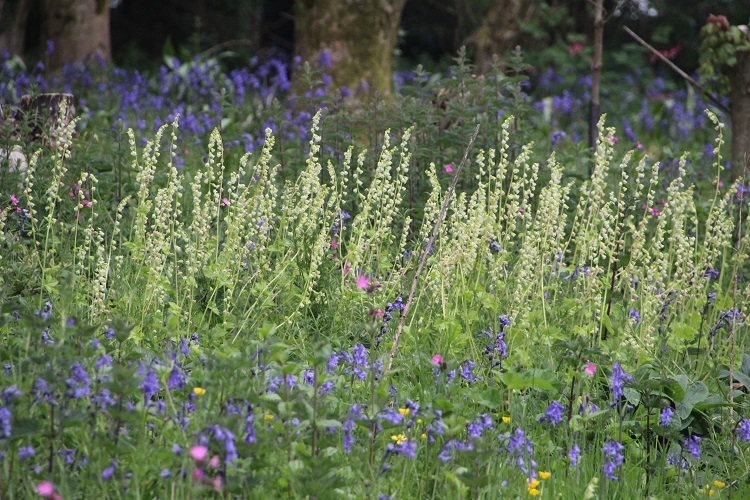
Somehow, this is the first time I have though to include this pretty North American. It is a pernicious weed
with a stunning ability to resist herbicides and avoid being dug up. It is a monster. A very beautiful monster at times, but
still a monster. Difficult to believe I actually bought it originally. Really, I paid money for it and everything.
I have dug out thousands of plants in the wrong place.
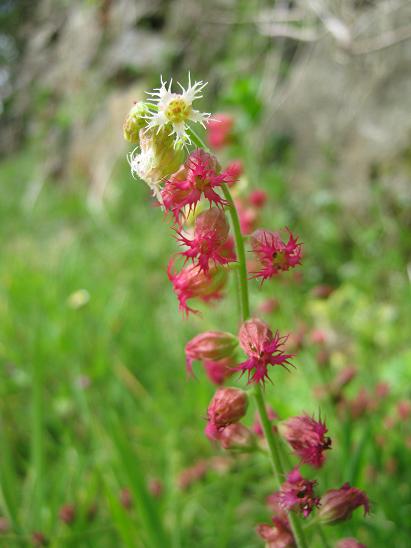
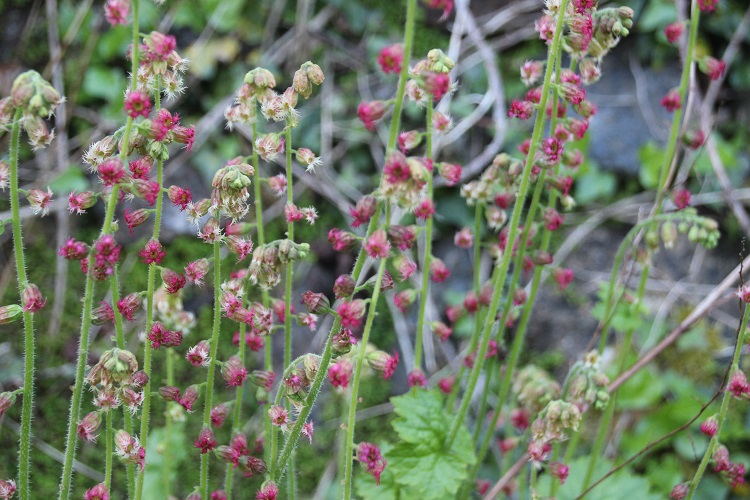
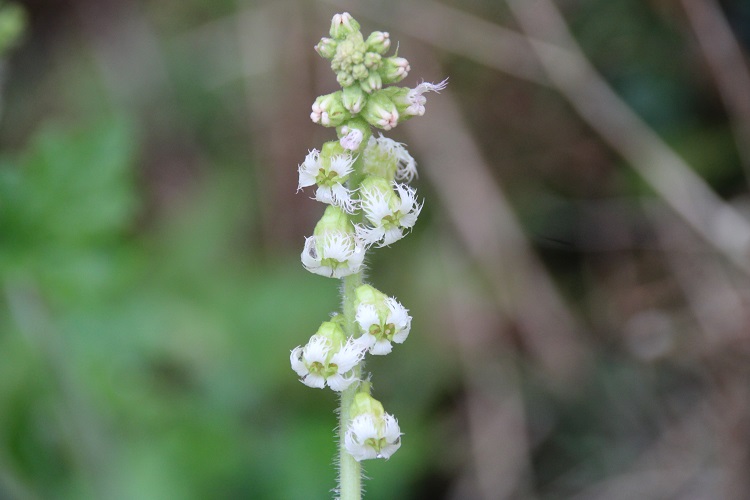
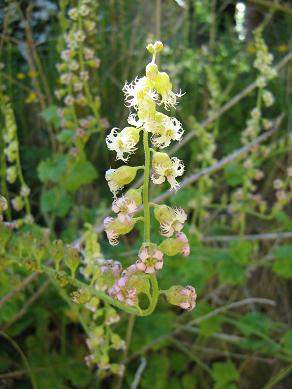
At the same cash value I would have composted several lifetimes income by now. In theory this is the form 'Purpurea' but I have never once seen the 'purple-bronze' leaves that I was promised. At the time I was warned (by the seller, a kind and wise man) that it was an impossible weed. I should have listened. But it is very pretty. Don't plant it. I have never seen a plant with purple leaves in my population, but I get a few with dark flowers. They all get weeded out if I get to them before they seed. Slipping across the meadow like the shadow of a terrible monster on the rampage but it isn't a shadow. This is the terrible monster. The BSBI says: "A winter-green, very shortly rhizomatous perennial herb, widely grown in gardens and found naturalized in nitrogen-rich soils in damp woods, under hedgerows and along riverbanks and streamsides. It is an established garden escape, setting copious amounts of seed. Lowland." The Washington Native Plant Society say: "A perennial from short rhizomes with flowering stems which grows in moist forests, glades, streambanks, thickets, and clearings. This plant grows from Alaska to California (including British Columbia) and east to northern Idaho and western Montana. This plant grows mainly west of the Cascades crest in Washington, but also in northeastern Washington and along the Columbia River Gorge. Fringecup can create thick patches of ground cover, establishing well in disturbed and shady areas (especially along trails), outcompeting invasive weeds. They are easy to divide and propagate, and are fairly easy to grow from seed with a high transplant rate. Once established, they are also slug resistant and evergreen during mild winters." |
|
| 22nd May 2009 | ||