 |
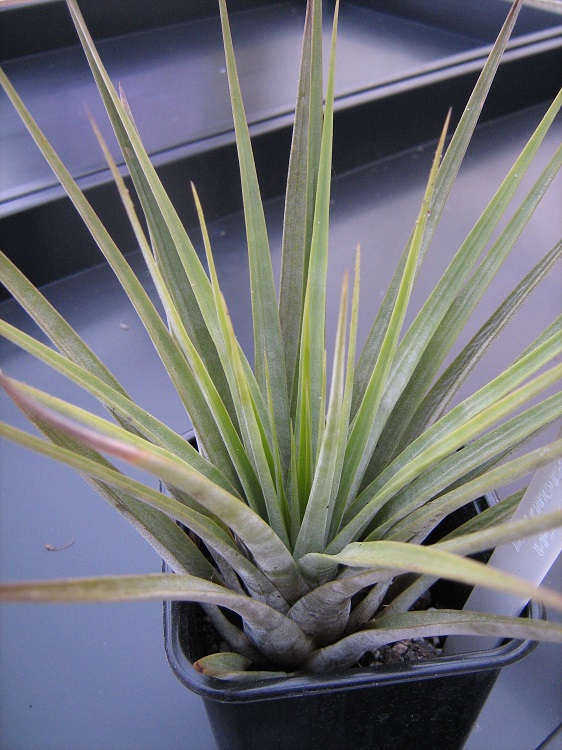
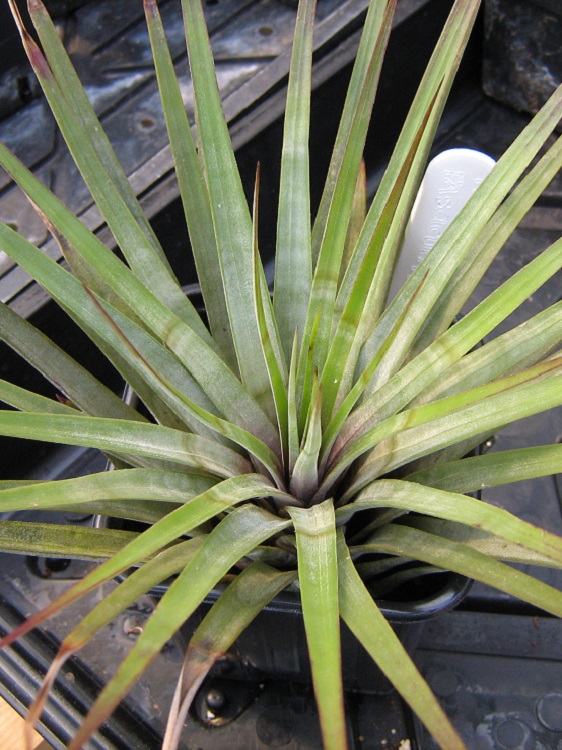
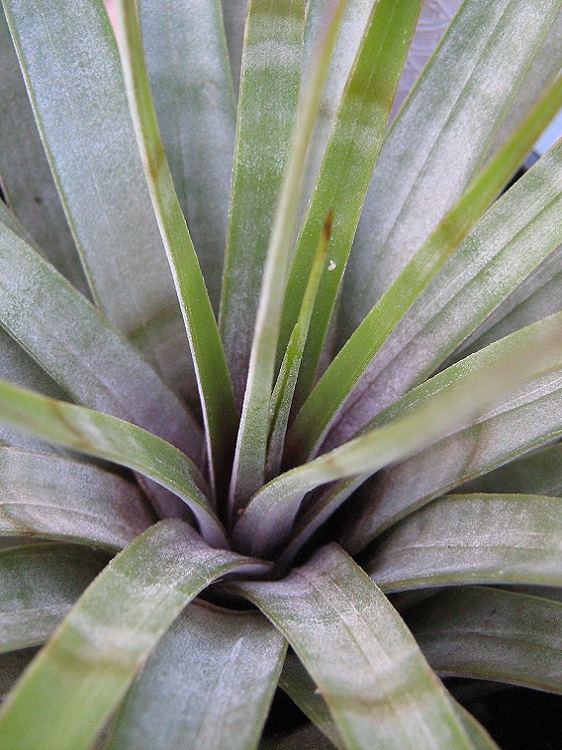
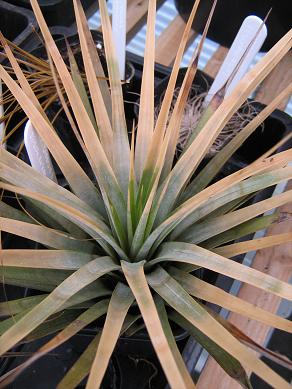
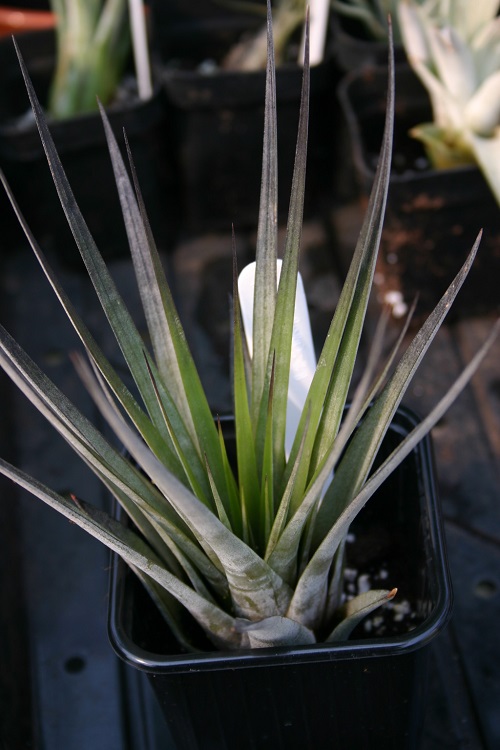
A variable species from Mexico and Honduras. Can form large clusters of rosettes. It didn't like a cold winter, even dry in the greenhouse. Walter Rauh says: "This species is very variable in regard to size, coloration and number of bloom spikes. There are all sorts of transitions between T. concolor and T. fasciculata. From Florida and Mexico to Columbia and Peru; usually epiphytic in dry forests at altitudes of 600-1,900m. Robust, easily grown. Splendid at bloom time. Bloom spikes and their coloration last a long time. Suitable only for larger greenhouses." The Lady Bird Johnson Wildflower Centre says: "An air plant with inconspicuous flowers in the axils of showy bracts, which are usually red. This is the most common air plant (epiphyte), especially on Bald Cypress. Air plants get their nourishment from the air, rain, and minerals leached from the host tree. Among the 15 other erect species of Tillandsia that occur in Florida are Ballmoss (T. recurvata), with narrow leaves forming grayish ball-like clusters on branches of deciduous trees, especially oaks; Needle-leaf Wild Pine (T. setacea), with very narrow, needle-like leaves; T. pruinosa, with a distinctive coat of hoary scales; and Giant Wild Pine (T. utriculata), the largest species in the United States, with leaves reaching 2 feet (60 cm) in length and a flowerstalk up to 6 feet (1.8 m) tall." |
|
| 4th April 2007 | ||