Home Index Web Stuff Copyright Links Me

Trevesia palmata


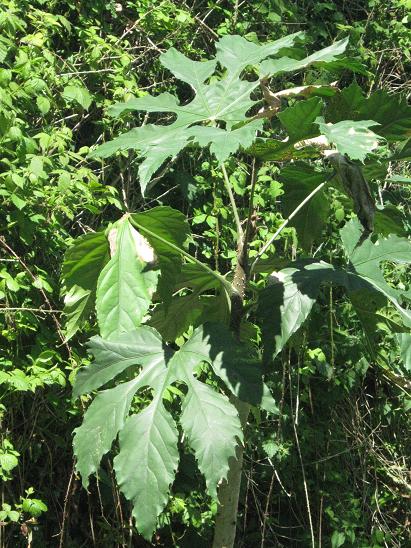
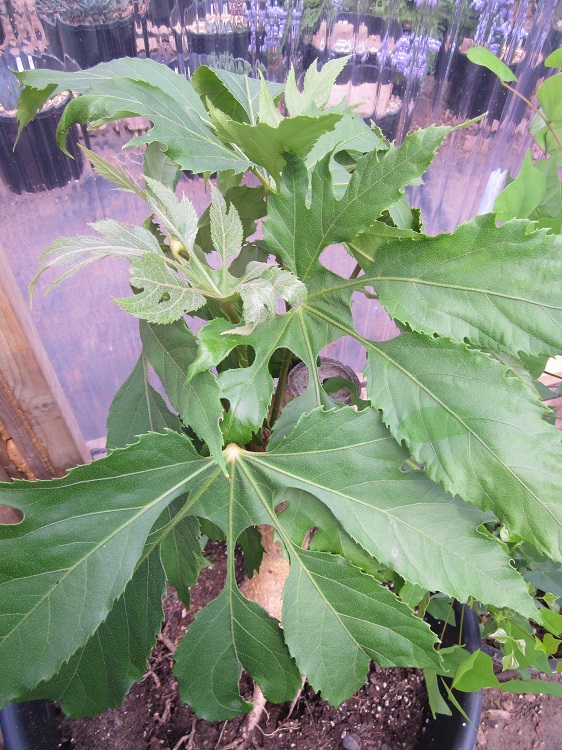
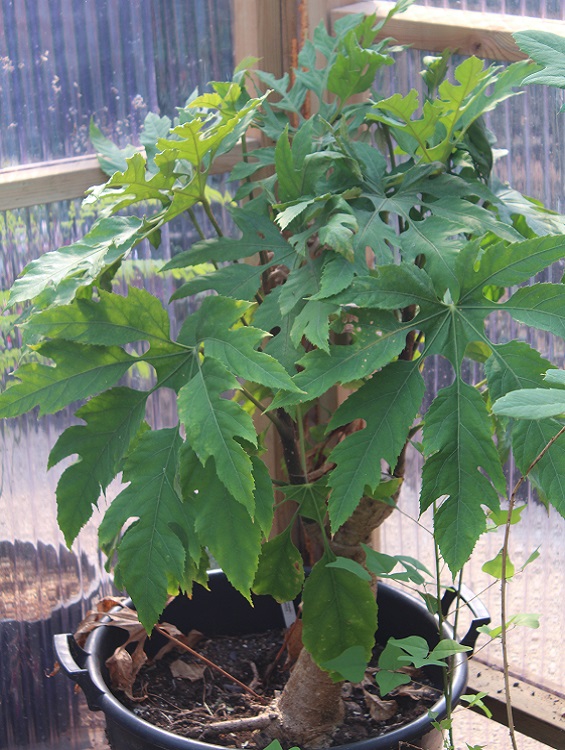
One of my favourite Araliads. Unfortunately it is not very cold hardy, so it lives in the conservatory, with occasional short breaks outside for photography. If I manage to root a cutting, then I will eventually try it outside, but I wouldn't expect it to survive for long. In the meantime, I will enjoy it in the conservatory, and hope that it can be 'managed' clear of the roof.
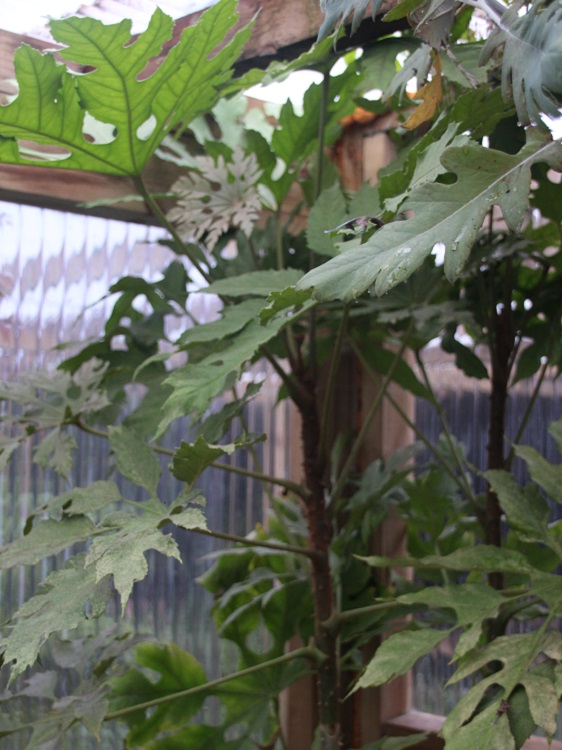
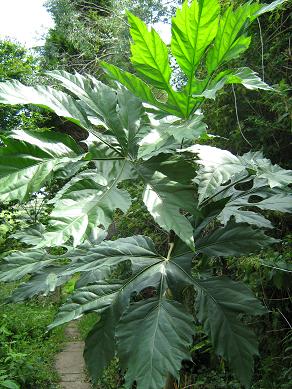
It is a southeast Asian species. It is not a large growing tree - the general concensus is that it will not get much larger than 30 feet (my conservatory stops at 11ft). I have tried cutting it back in the hope that it will branch but it is determined - I still only have a single shoot.
It finally became time to pluck up courage and cut it down. I gave the cut trunk to a friend who chopped it into sections and rooted all of them, so now I have one of them back to grow on. The decapitated stump is now regrowing in the Agave house. If it survives there I may try another one in the garden.

Plants of the World online says:

"The native range of this species is Nepal to China (S. Yunnan, Guizhou, S. Guangxi) to Indo-China. It is a tree and grows primarily in the wet tropical biome."


17th July 2009

12th December 2009 23rd May 2010 11th July 2014 2nd July 2015 29th October 2016


San Marcos Growers say:

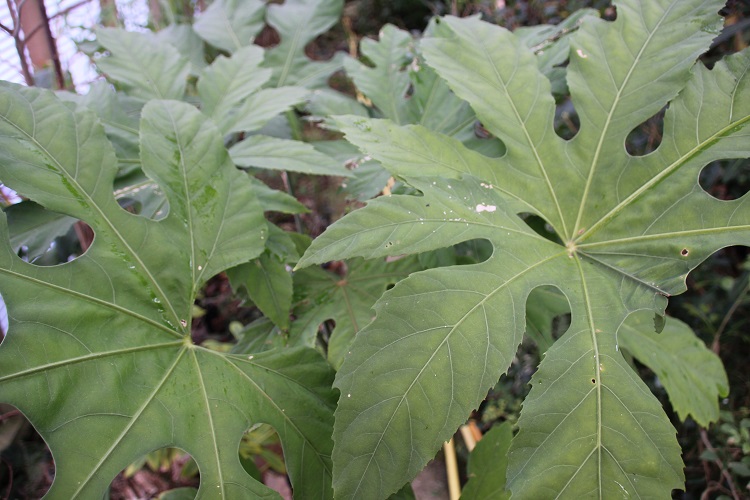
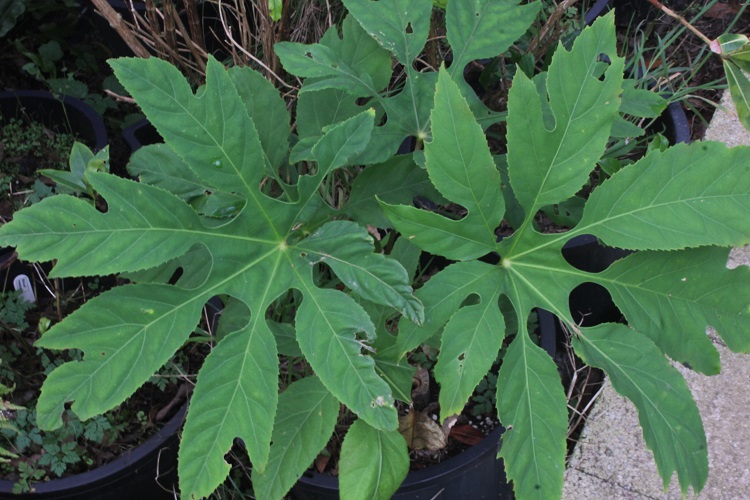
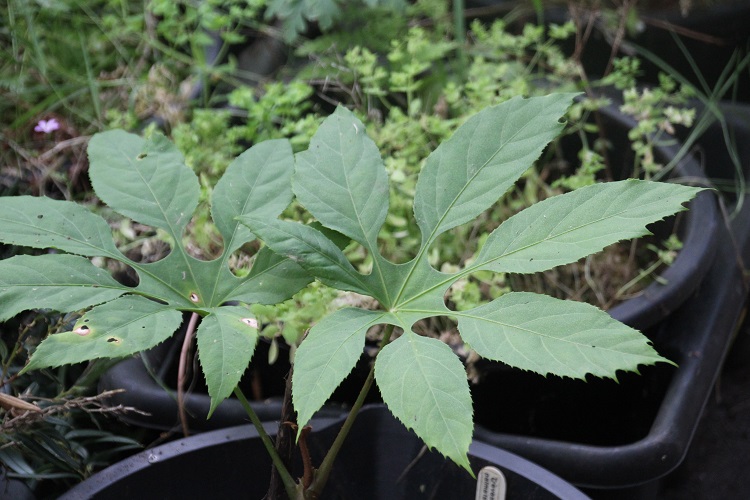
"An evergreen tree to 15-20 feet tall with few or no side branches and topped with a crown of long stalked 1-2-foot-wide leaves that are deeply lobed with each lobe deeply cut, giving the leaf a lacy snowflake look. It is sparsely branched with white pubescent stems and a loose broad canopy of oddly shaped leaves with small yellow flowers that are followed by 1/2-inch fruit in tight ball-like clusters.
Plant in coastal full sun, filtered light or part day sun and irrigate regularly to occasionally. Established plants are surprisingly drought resistant considering this plant's tropical origins but it grows best with at least occasional irrigation. It is cold hardy to 25-30° F.
Trevesia palmata is indigenous to northern India, southern China, Vietnam, and Thailand. In its native habitat this plant can be found growing to 30 feet tall but likely no more than 20 feet in cultivation and more often it is grown as a large shrub. The most attractive aspect of this plant is its 2 to 2 1/2 foot wide, rounded in outline, leaves of a type called pseudocompound, meaning that they look compound but actually are not. The lobes (false leaflets) are attached to a rounded plate-like area at the base of the leaf that attaches to the 2- to 3-foot-long prickly petioles. These lobes themselves are so intricately and deeply lobed themselves that they individually look like pinnately compound leaves.
The genus Trevesia was described by the Italian botanist Roberto de Visiani (1800-1878) in 1840 to honor the family Treves of the Bonfili of Padua, who were great supporters of botanical research. The specific epithet was actually from a name described earlier by the Scottish botanist William Roxburgh (1751-1815) who had described this plant as Gastonia palmata and its specific name transferred with it to Trevesia in 1842 when Visiani segregated Gastonia. This specific epithet is in reference to the leaves being palmately lobed. "


6th February 2018 1st December 2020 27th August 2022

References:
  • Plants of the World online, https://powo.science.kew.org/taxon/urn:lsid:ipni.org:names:92662-1 , accessed 17.01.2026.
  • San Marcos Growers, https://www.smgrowers.com/products/plants/plantdisplay.asp?plant_id=2448 , accessed 17.01.2026.