 |
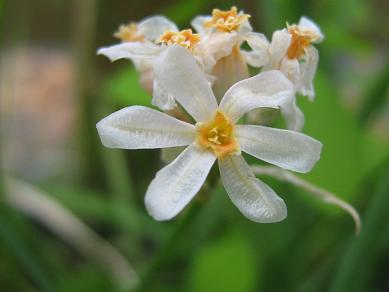
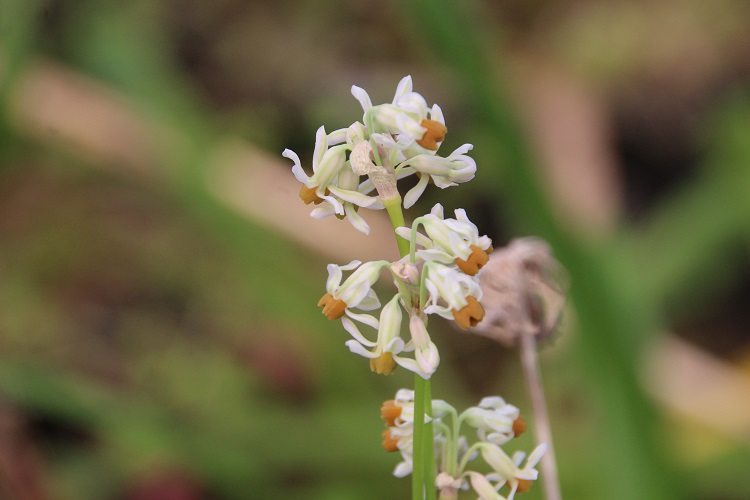
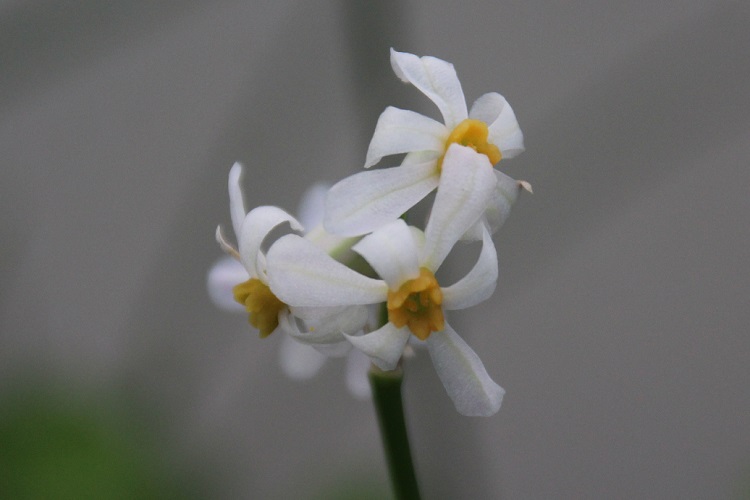
A charming dwarf species which has masses of white flowers with a mustard yellow corona. I was given my plant by Liz Powney
and was very pleased to get the real thing, there are a number of impostors in circulation. Stephen Benham said: "A very attractive delicate species with flowers reminiscent of Narcissus poeticus. Very fragrant and bright green leaves, filiform, erect when young, recumbent with age, strong alliaceous smell when bruised and deciduous. Tulbaghia coddii is a thoroughly desirable species, named in honour of Dr L. E. Codd, former Director of the Botanical Research Institute, Pretoria. The type collection was made by L. E. Codd in the Transvaal, 24S 30E, Pilgrim's Rest, 20 miles north of Graskop, grassland on shallow moist soil at 4,300ft on the 22nd November 1951. Accessiones L. E. Codd 6747. This species is endemic to the Pilgrim's Rest area in the Northern Drakensberg, Transvaal, growing in dampa and marshy grasslands, at 1,300 to 1,400m, and appears to be morphologically closely related to T. natalensis. In cultivation, the lengthy flowering period extends from April until August." Plantzafrica says: "Tulbaghia coddii is assessed as Rare by the Red List of South African plants because it occurs over a small range. This species was considered Vulnerable in the 2009 assessment. In the past, it lost a significant area of its natural habitat to commercial forestry plantations, but currently, more than 80% of the population that remains is in grassland habitats that are well protected and the wild population is no longer declining. Its distribution range in South Africa is between Mount Sheba, Graskop and Mariepskop where it grows in abundance on damp grassland, on the edges of wet and boggy seasonal ponds, in shallow soil over sheet rocks, and in open grassland with clay soil. Tulbaghia coddii is one of the Tulbaghia species that is adapted to wet and boggy conditions, and these species possess unique seed coats that feature flat cells surrounded by ribbon-like sutures that prevents seeds from sinking, and allows the seeds to float in water for extended periods, until the wind or the movement of water itself may carry them to the edge of the streams or seasonal ponds where conditions are favourable for the seeds to germinate." |
|
| 22nd June 2007 | ||