 |
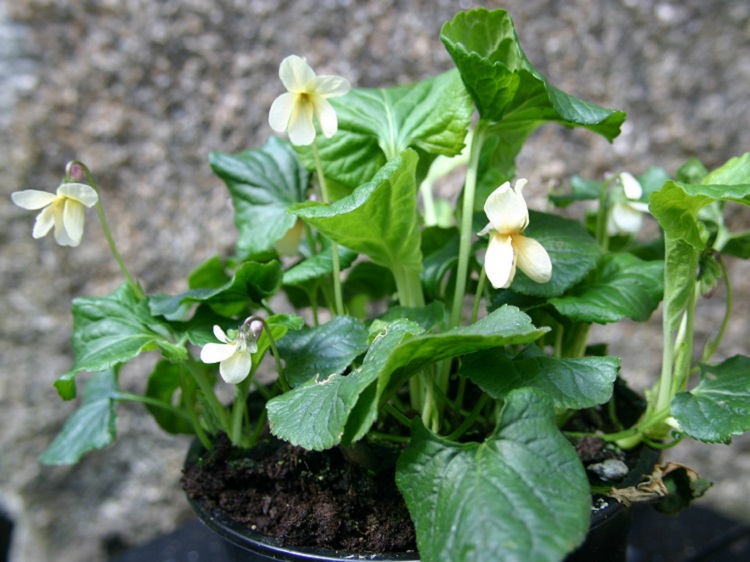
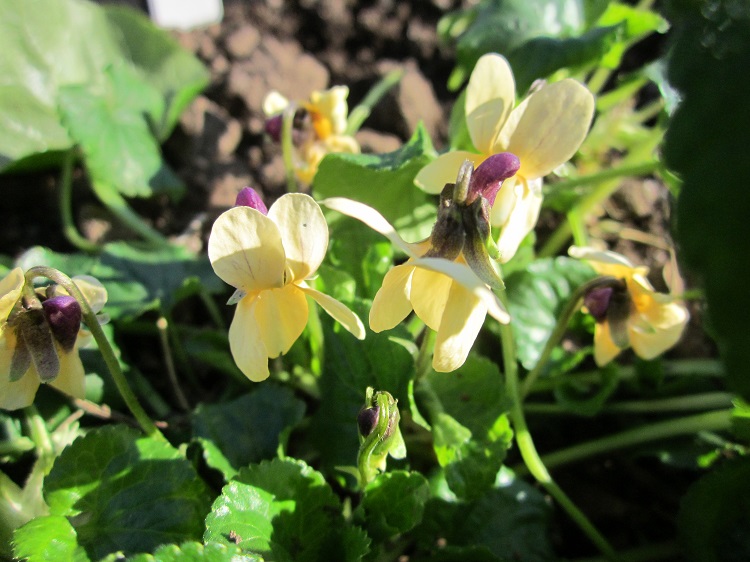
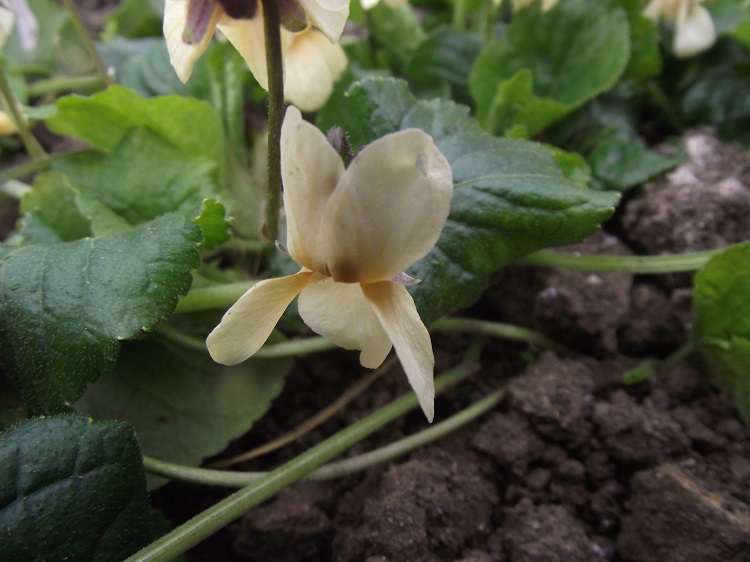
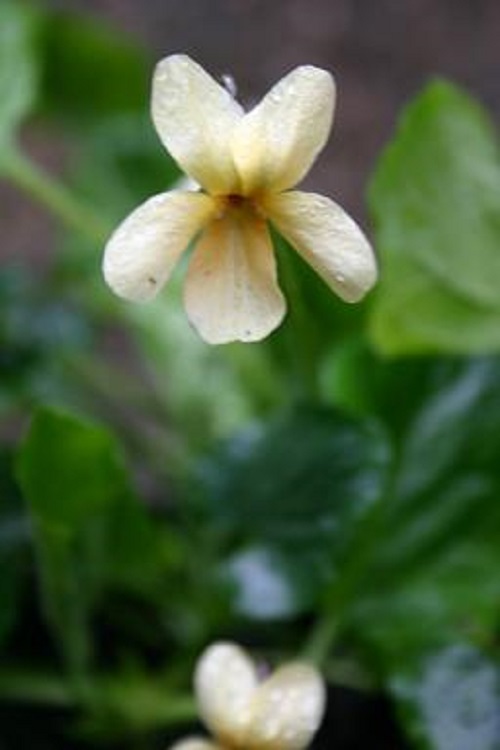
A very lovely yellow flowered violet. It isn't very vigorous here. Mark Griffiths says: "Distinct from V. odorata on at least two counts - the flowers are unscented and a shade of pale primrose suffused with peach. It was first recorded in france in the late 1890s. Later reports of V. 'Sulphurea' alluding to a fragrant, apricot-flowered plant may be mistaken." Roy Coombs says: "'Sulfurea' (France 1896). The so-called yellow sweet violet, which is in fact neither yellow nor sweet. The creamy primrose flowers with deep apricot 8C centres are very attractive and, apart from lack of perfume, resemble the sweet violets. Dark green foliage. It is almost certainly a distinct species and appears in the list of species in Chapter 6. There is a possibility that more than one plant may have been cultivated under this name as W. E. Th. Ingwersen, VMH, writing in 1951, mentioned having been given a buff coloured form with delightfully sweet flowers. See also 'Crepuscule' and 'Phyll Dove'." Grace Zambra writes: "A very poor grower, but of a distinct apricot colour. The quite small flowers are not to be compared with Glabella. I have never discovered and scent in this variety, though I have read that it is perfumed." Nelson Coon says: "This plant with its compact habit is good for the rock garden. It has small, apricot blossoms with little scent." Dorset Perennials say: "Viola 'Sulfurea' ( V. odorata 'Irish Elegance'). This lovely little violet is low growing and does not mound. Its charm comes form the unusual ochre cream shade of its flowers – quite unusual in this species. Unfortunately the colour comes with the price of a poor scent. 20cm. Sun or part Shade, November to April" Dylan Peters writes on Wild Bristol: "I had a root of this variety sent to me from Fairford and grew it on in my garden many years ago. There it hybridised freely with the ordinary blue sweet violet; it also exhibited the familiar characteristic of changing colour in successive years, sometimes fading almost to white and subsequently regaining its full yellow hue. The hybrid is most prolific, but the original root of var. sulfurea disappeared, though descendants of pure blood continued to exist in close proximity." |
|
| 25th April 2006 | ||