 |
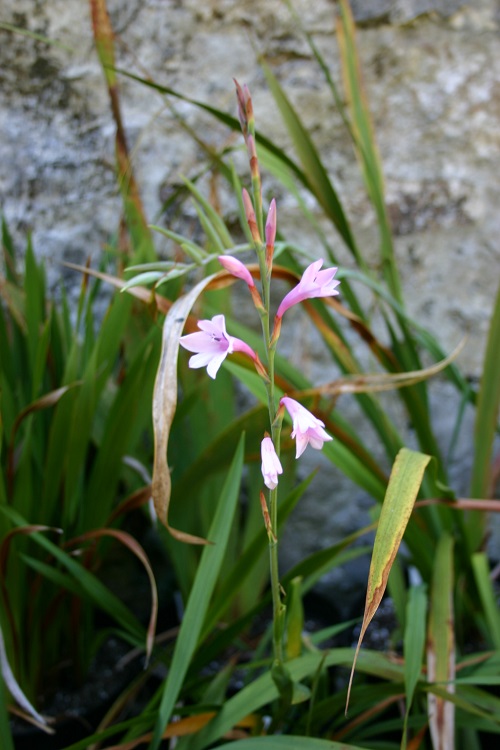
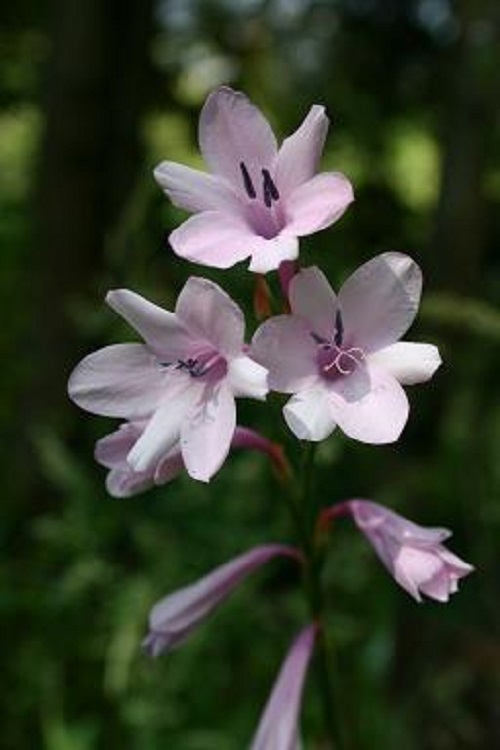
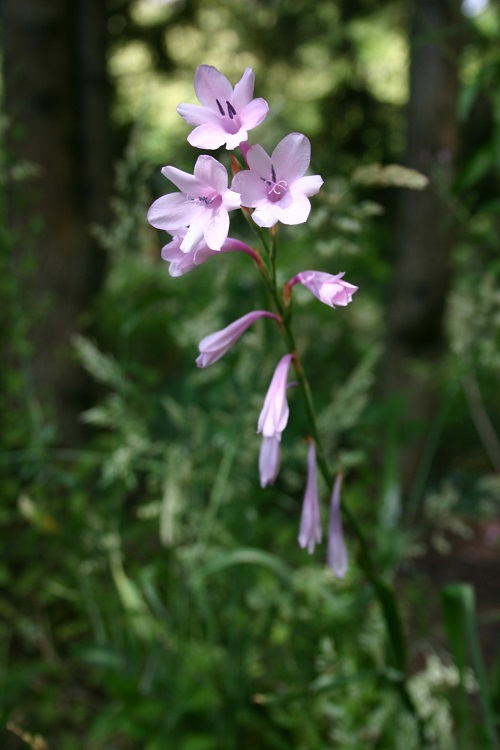
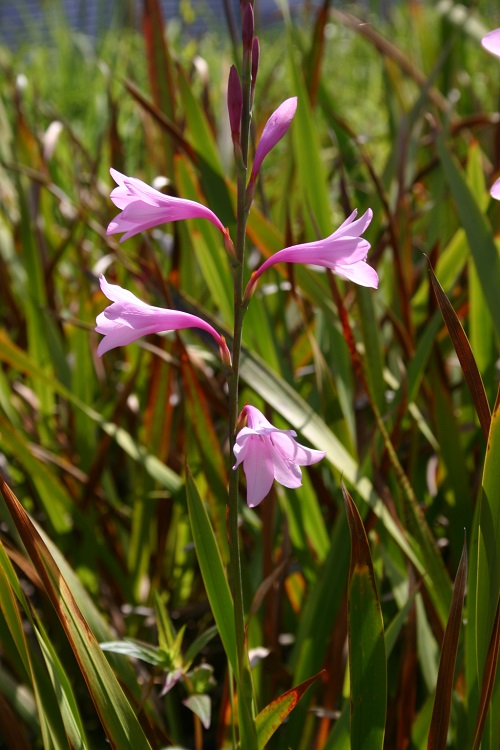
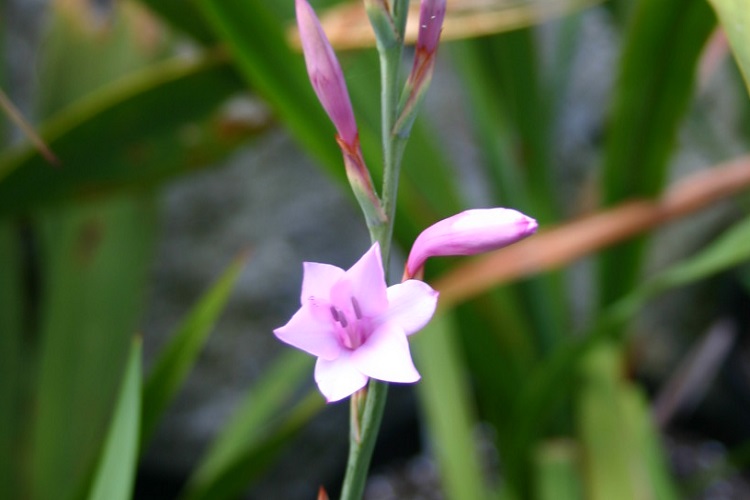
This is fairly typical of the appearance of Watsonia borbonica ssp borbonica. It is an attractive
and vigorous form, that grows well in the open ground here. None of the Watsonias appreciate dry soils,
unlike many South African bulbs, and will sulk and dwindle away unless they have some moisture in the growing season. Plantzafrica says: "This magnificent bulbous plant with tall spikes of rose-pink, trumpet-shaped flowers makes a picturesque display, flowering for up to 4 or 5 weeks - a beautiful garden subject that needs little maintenance. Watsonia borbonica grows in the extreme southwest of the Western Cape, from Tulbagh southwards to the Cape Peninsula and eastwards to Bredasdorp. Its habitat is mainly rocky sandstone slopes or well-drained slopes of clay and granite, and sometimes in deep sandy soil at the foot of the mountains. Being a very conspicuous species, the early botanists visiting the Cape couldn't help but notice it. The first recorded collections were made by Anders Sparrman and Carl Thunberg in the 1770s. Watsonia borbonica is particularly abundant after fires and is known at some sites to only flower in the first and second years following a fire. Abundant flowering after a fire is followed by the production of masses of seed, which increases the number of successful seedlings. In areas that have burnt, Watsonia borbonica provides a major source of food for nectar-feeding insects and birds, and for the various rodents that eat the seed produced." |
|
| 19th June 2006 | ||