 |
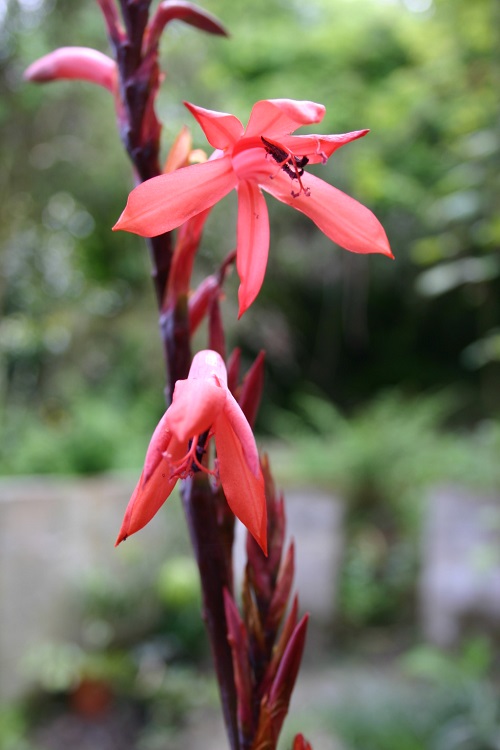
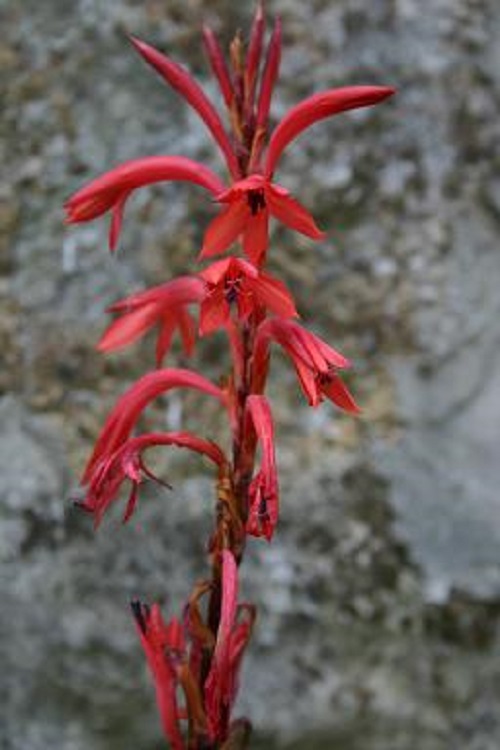
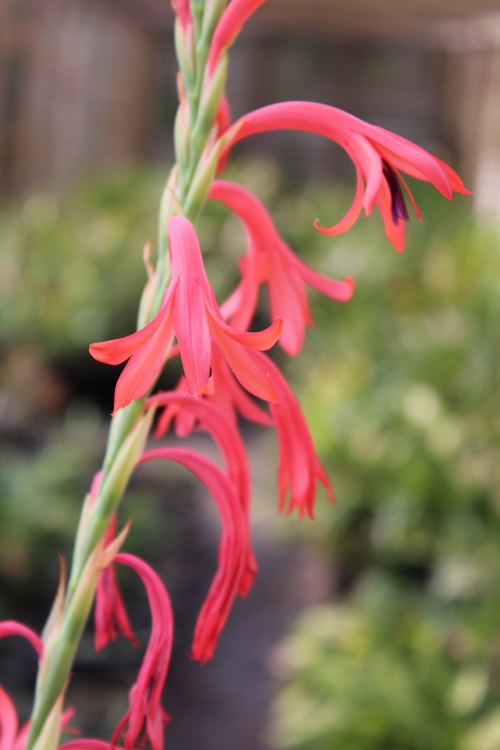
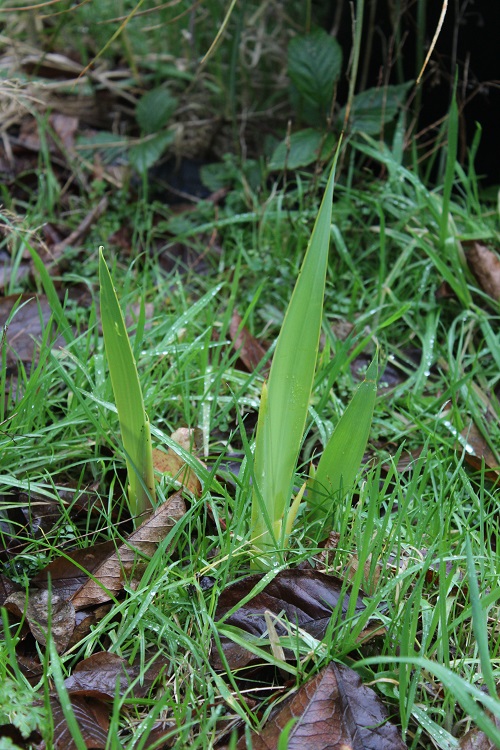
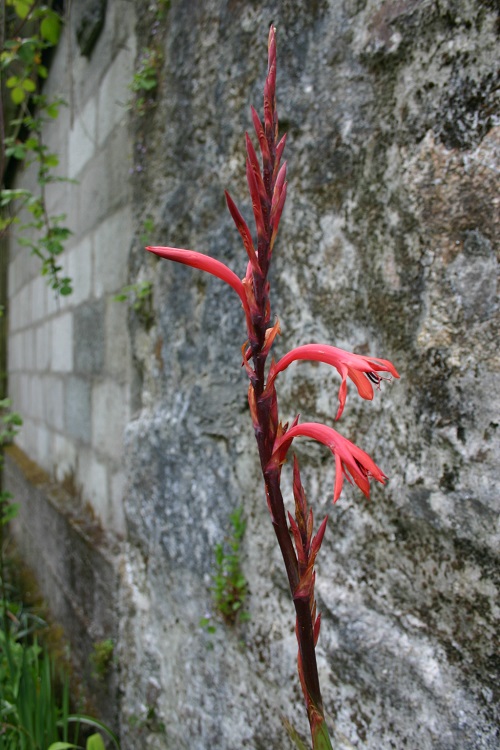
I have two forms of this species. this is the more distinctive of them, with
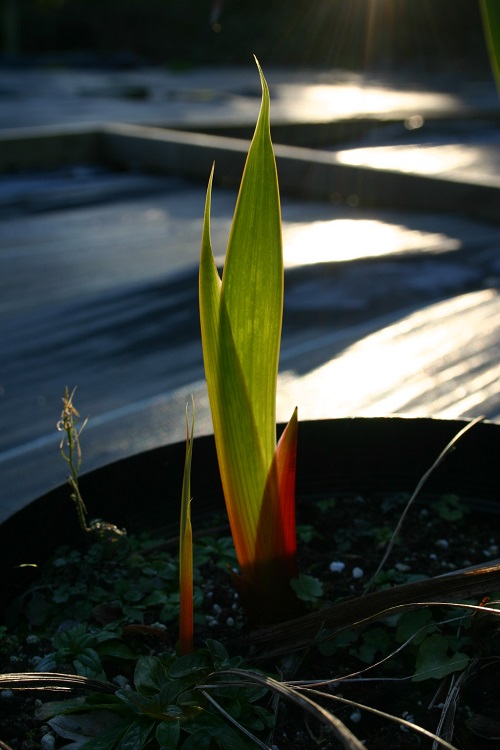
narrow petalled curved flowers and astonishing broad leathery leaves.
Unfortunately it hasn't been all that hardy. The hardier form is much duller. I got the broad leaved form from Chris Osbourne when he was running Churchtown Nurseries in Penzance. The narrow leved form came from Proper Plants in Lotwithiel but I understand that they got it from Gary Dunlop. Their label says: "Perennial (corm) 4-5ft. Striking spikes of bright orange-red flowers, summertime. Reasonbly hardy in warmer parts of the UK. Well drained soil in sun. Good in big pots." Plantzafrica says: "Watsonia vanderspuyiae is a robust geophyte with bright red tubular flowers. It attracts sunbirds and is an ideal candidate for large fynbos gardens, parks, office block landscapes and traffic islands, and is deserving of a more prominent place in ornamental horticulture. Watsonia vanderspuyiae has the largest corms, broadest leaves and tallest spikes of all watsonias. Watsonia vanderspuyiae occurs from the Nieuwoudtville district of the Northern Cape to Piketberg and Ceres in the Western Cape. It is always associated with mountainous terrain and its niche is mid- to high altitude slopes in fynbos, the corms securely wedged in clefts of sandstone boulders. The plants are usually encountered on east- and south-facing slopes. Temperatures can hover just above freezing for short periods in winter, but daytime temperatures can rise to 40 ºC or more at the height of summer. The species is suited to cultivation in areas with winter precipitation and summer drought, and where prolonged frost and high humidity are not experienced. The Dane C.F. Ecklon and the German C.L. Zeyher were the first to record W. vanderspuyiae in the mountains near Tulbagh in the 1820s, but it was only formally described in 1926 by the Cape Town botanist Dr Louisa Bolus. She named the species for Mrs Melt van der Spuy, a resident of Piketberg, who provided flowering material for the botanical description. The corms of W. vanderspuyiae are relished by Chacma baboons and Cape porcupines, and evade these predators by wedging themselves as deeply as possible into rock crevices." |
|
| 11th June 2005 | ||