 |
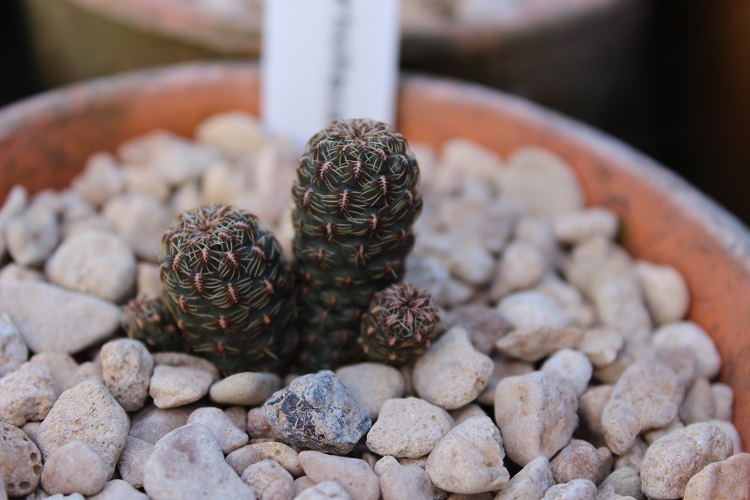
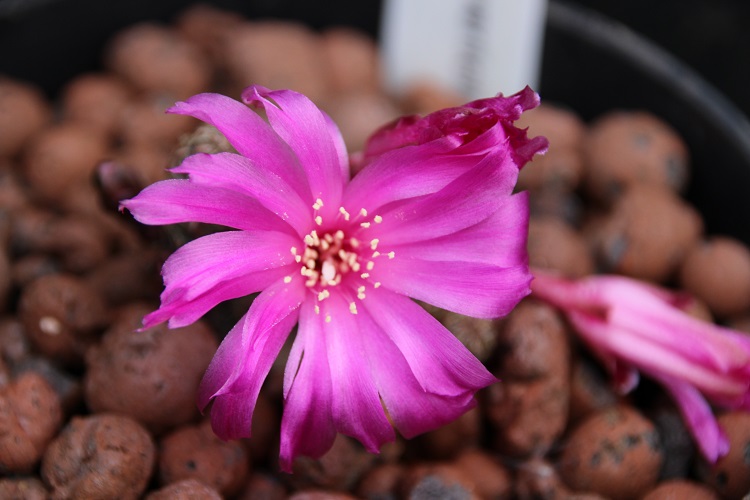
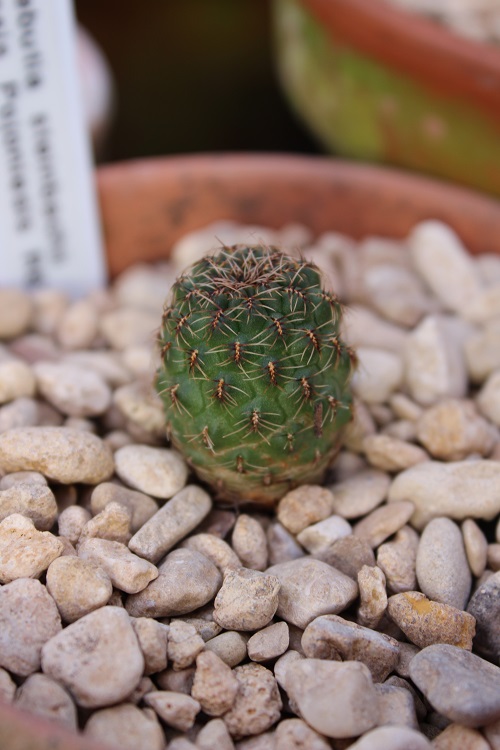
Obtained under the number R.671. A tiny little plant obtained as Sulcorebutia steinbachii taratensis 'Pojoniensis'. Given the convoluted contortions currently going on
in the naming of the 'Rebutia' group of plants, it is a welcome simplification to see this become Weingartia taratensis. The cultivar name 'Pojoniensis' probably isn't valid. The Cactus and Succulent Field Number website says that it was collected by Walter Rausch in Cochabamba, Bolivia under the name Sulcorebutia cochabambina. Plants of the World online says: "The native range of this species is Bolivia. It is a succulent subshrub and grows primarily in the desert or dry shrubland biome." The Llifle encyclopedia says: "Origin and Habitat: Cochabamba (Tarata, Arani, Cliza, Sivingani, Mizque, Anzaldo, Sacabamba, Rio Caine and adjacent area) Bolivia. 2000-3500 metres above sea level. Rebutia taratensis is one of the innumerable local form of the very variable Rebutia steinbachii . It distinguishes for its small, free clustering bodies. The flowers are bright purple and the spination of well-grown specimens is pleasing. It is one of the tiniest Sulcorebutia. Rebutia taratensis is apparently a neotenic variety of the species in which juvenile spination is retained throughout the life of the plant, while many of the other varieties are dimorphic (short spined juvenile forms transform at maturity to strongly spined forms). It is a clumping plant growing readily forming, especially in cultivation, clumps of hundred of heads from the base. Very difficult to find high quality plants of this species in cultivation, S. taratensis loves a very permeable, coarse mineral soil as well as to be strictly kept dry throughout the winter quiescent period since it is very sensitive to any moisture excesses, To prevent rottenness it is also advisable to surround its root neck by very rough sand or grit, this help a fast water drainage and an appropriate air circulation." |
|
| 24th October 2015 | ||