 |
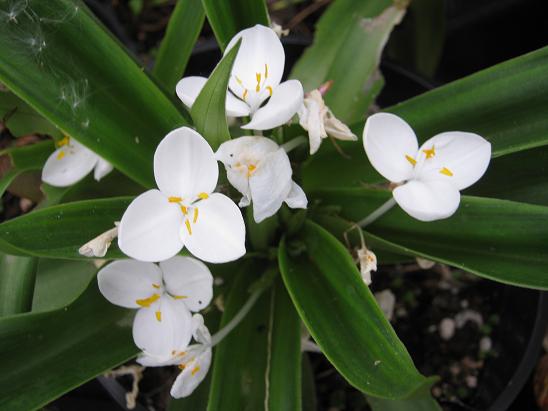
A delightful Tradescantia relative from Mexico and Guatemala. It has long been a favourite of mine,
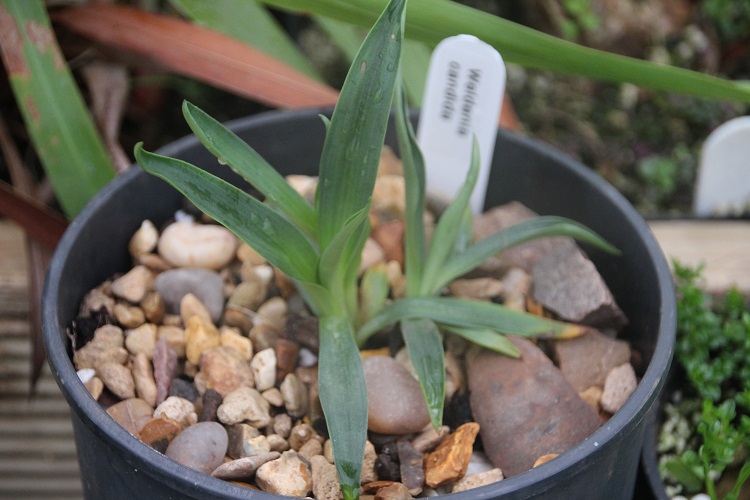
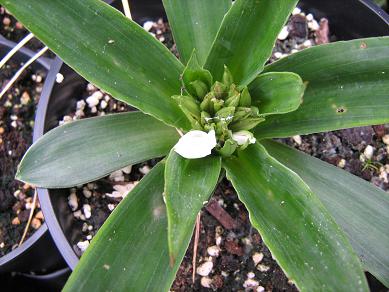
though I have only just obtained a plant, and the slugs beat me to the flowers. Grew the first one, killed it. Bought a second one, killed it. A problem species in my wet climate, I had failed to appreciate the magnitude of the problem. On 27th November 2020 Bill Dijk wrote on Facebook (New Zealand Alpine Garden Society): "Weldenia candida: this is a superb, rarely seen herbaceous, tuberous perennial from alpine altitudes, in Mexico and Guatemala, where it was first discovered in the crater of a volcano. It remains below snow and dry for half of the year, including winter, and seems reliably cold hardy in most temperate climates. Growth starts in spring and a strong rosette of thick, wavy edged leaves are produced simultaneously below a mass of bridal-white flowers of wonderful heavy texture. This exotic-looking plant is flowering at the moment in a pot, bearing a succession of upright, cup-shaped, pure glistening white flowers for many weeks, with mny more buds opening almost daily. A real treasure." Albiflora say: "This jewel of a few steep vulcano sloops in south America, growing above 3000 m has flowers of purest white contrasting brilliantly with yellow-golden anters. Many flowers emerge from a small rosette and one flower last only one day. But this is largely compensated by its number in this way that flower season lasts for months. Thick tuberous fleshy roots go straight down in deep containers with a slightly acidic mix of half pumice gravel and half organics . An organic cover in spring with some organic fertilizer gives plants necessary feeding for the growing season which lasts from March until end of October. Stop watering completely by end of October .The plant withers and roots will be taken out and stored cold and dry, no frost, until next spring. In March replanted roots with obvious shoots 8 to 10 cm deep in fresh mix and watered increasingly, complete the cyclus." |
|
| 7th June 2009 | ||