 |
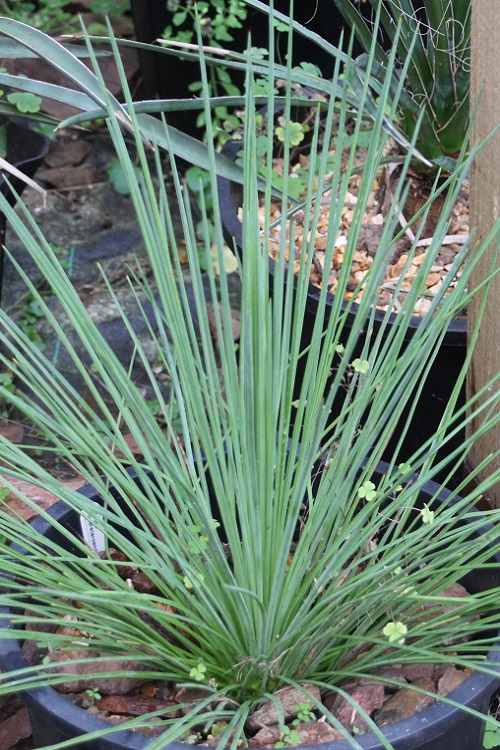
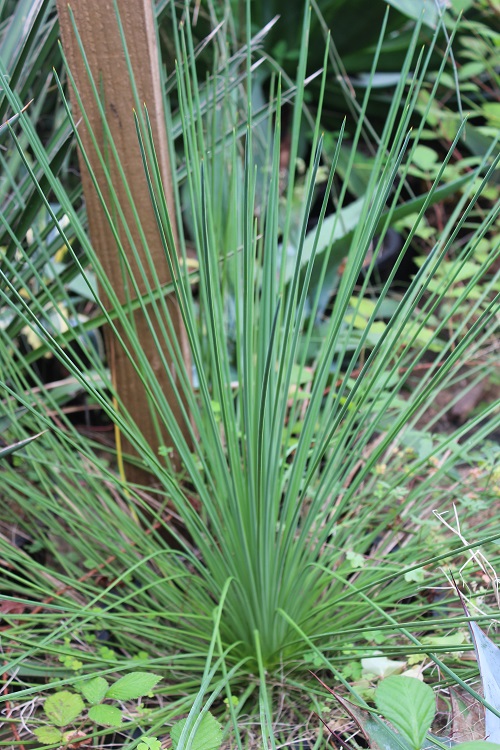
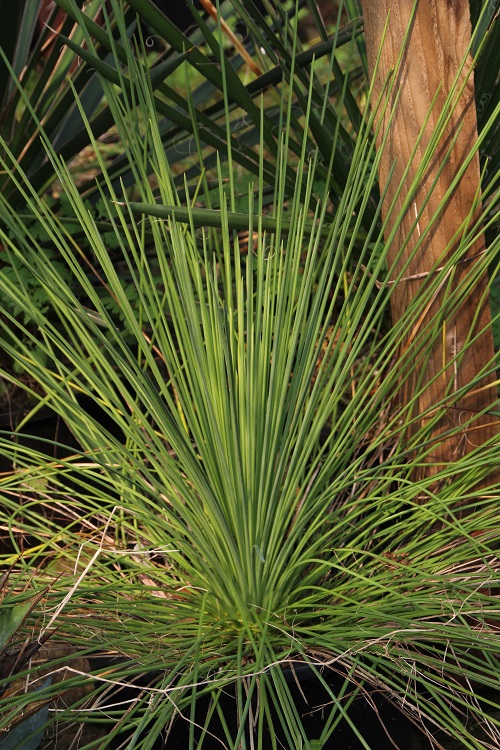
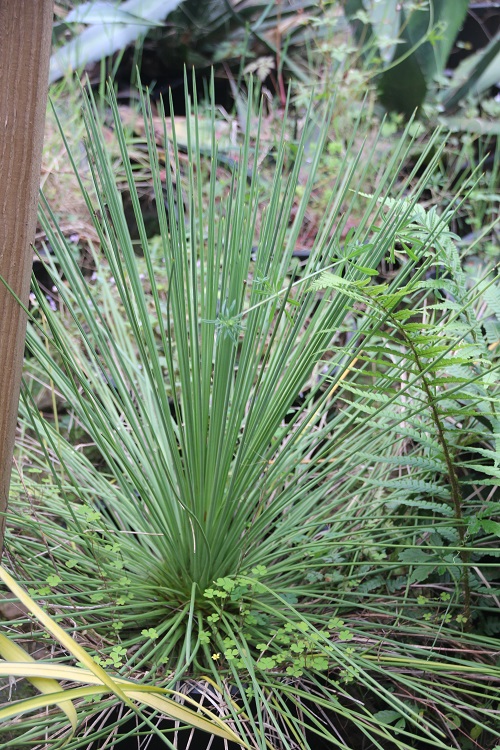
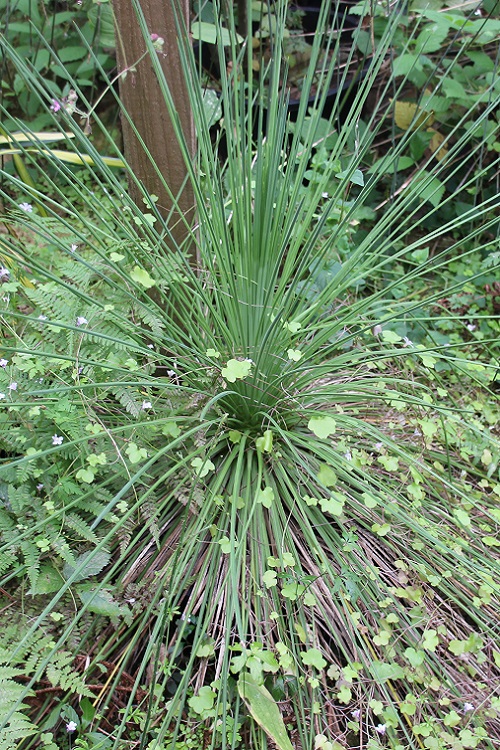
A large species generally growing on a single trunk, from Mexico (Hidalgo, Guanajuato and Queretaro) with narrow leaves.
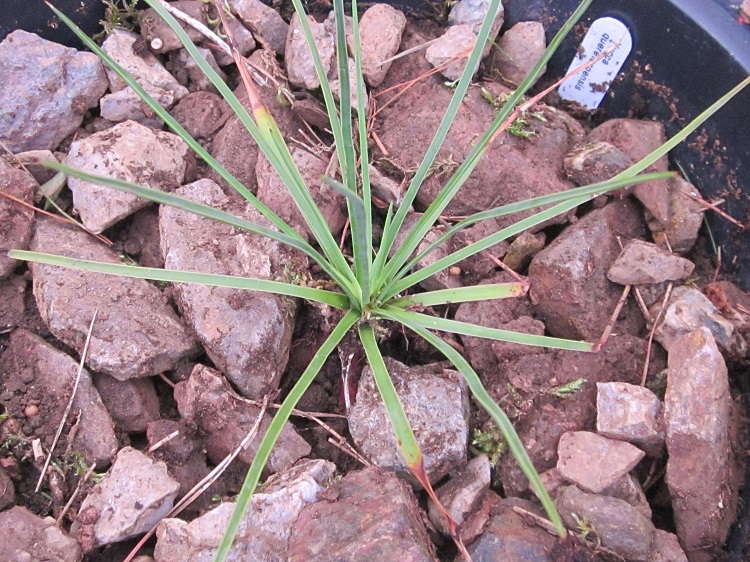
First described in 1989 so its behaviour in cultivation is not well known, I have it in the Agave house where it will
be warm in the growing season. It seems to be responding well. There is an astonishing specimen in the Princess of Wales Conservatory at Kew that delights everyone who sees it. A note in 'The Plantsman' for 2007 says: "On a recent visit to Royal Botanic Gardens, Kew, Nick Macer of Pan Global Plants nursery, Gloucestershire, made a surprising connection between a Yucca in the Princess of Wales Conservatory and a rare species he had seen in Mexico. He says, "The Kew plant was labelled as Y. radiosa (a synonym of Y. elata). It had grown to roof height, and had obviosly been there for years. But is was identical to the plant I knew as Yucca queretaroensis". " Only described in the 1990s, from a very limited area, it is totally distinct in leaf morphology alone." says Nick. "Floral characteristics and other details show a close relationship with Y. thompsoniana and Y.rostrata but visually it stands alone, with perfect crowns of exceptionally slim, 4-angled leaves radiating uniformly from the apex of a trunk clothed to the ground in leaf remains. Nick and a companion noticed Yucca queretaroensis at a new locality when on a visit to Mexico."They were there in huge numbers. Once we had seen a few we started to pick them out with binoculars, all over the mountainsides. It is arguably the most handsome of all yuccas." The species is extremely rare in cultivation. One or two seed-raised plants may exist in private hands in Europe, but as flowering is rare there are few seed collecting opportunities. Rafael Govaerts of the Kew Herbarium checked their database but there was no information as to the provenance of their specimen. There are some small plants in the Kew nursery, probably offsets from the base of the mother plant. Following consultations, the Kew authorities agreed with Nick's identification, and the plant has now been relabelled Y. queretaroensis". |
|
| 11th May 2013 | ||