 |
A Chinese species of cucumber with underground tubers and annual climbing stems. I bought it from Great Dixter and it did well in the Hedychium house, as it does outside in the heat of the eastern
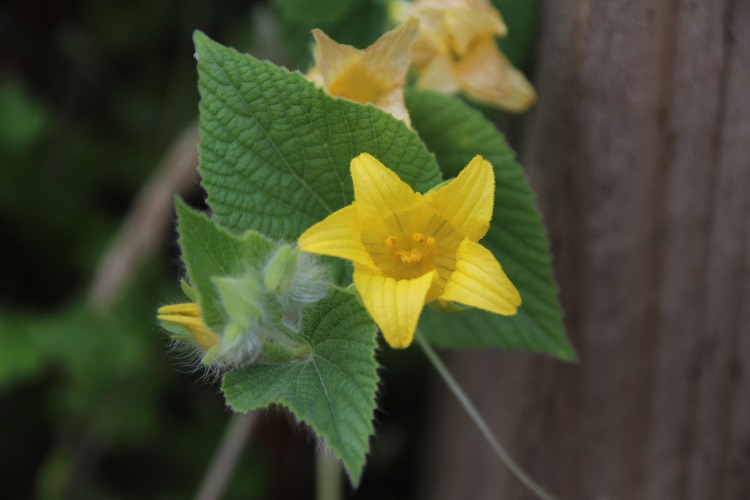
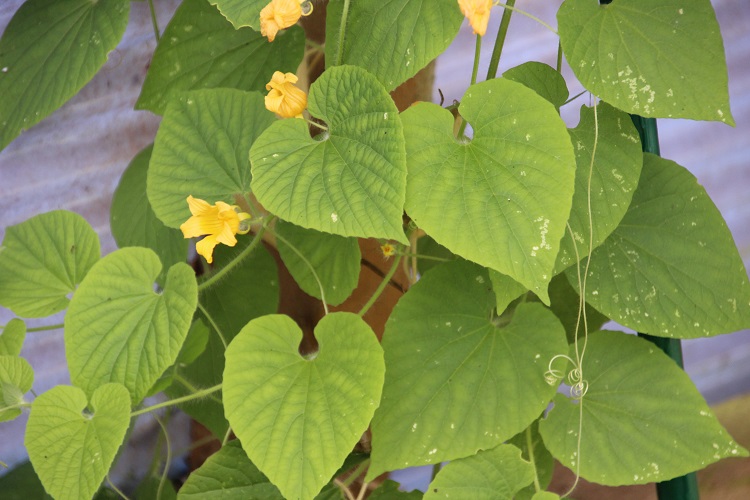
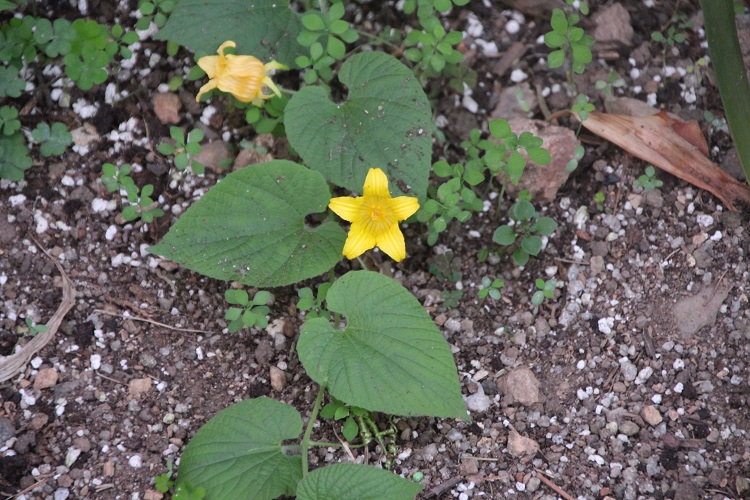
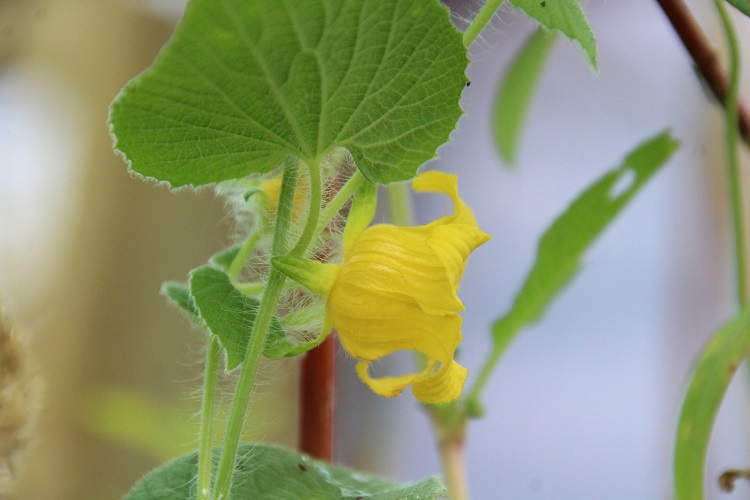
counties. I tried it outside under a shrubby Fuchsia but it grew weakly and did not survive the winter. Plants of the World online says "The native range of this species is Russian Far East to Central & E. China and Korea. It is a climbing tuberous geophyte and grows primarily in the temperate biome." Writing in the Journal of the Royal Horticultural Society in 2000, Peter Barnes says: "Mention of the Cucurbitaceae (gourd) family brings to mind cucumbers and melons, but there are some good ornamentals in the family too, of which Thladiantha dubia mwas successfulm on a fairly shady nwest wall at Wisley for some years. A Chinese species that climbs by tendrils, it has thin textured, broadly oval or heart-shaped leaves thickly carpeting the wall. In summer, funnel-shaped, deep yellow flowers 3-4cm (1 1/4 - 1 1/2in) across appear, giving way to oblong fruits 4cm (1 1/2in) long, which are red when ripe." Minnesota Wildflowers say: "This invasive species is new to Minnesota, first recorded in Stillwater in 2013 (the Cass County report shown on the national map cannot be confirmed). At the time little was known about the species; reports are that it was treated and thought to be eradicated. They were wrong. It silently multiplied over 5 years and became a massive infestation, not unlike kudzu, covering much of the ground and climbing 20 feet or more into the trees, smothering everything. Reports that it is hardy only to zone 6 and is shade intolerant are obviously incorrect, since the site where we photographed it is zone 4 in a fairly shady ravine. The population in Stillwater is entirely male, which seems to be the norm in North American infestations. While an all-male or all-female population won't produce above-ground fruit, they can spread far and wide by below-ground tubers connected by rhizomes. One report notes new tubers can be produced every 4 to 8 cm (1½ to 3 inches). I followed the trail from one tuber to another and measured close to 2 feet, but that was only one specimen. Tubers could have been much more abundant in other parts of the population. A report from Canada noted their attempts at chemically treating it failed and the most reliable control method was likely digging up all the tubers. If you see this thing in the wild, get rid of it while you can. At minimum, tell someone!" |
|
| 11th July 2020 | ||