JEARRARD'S HERBAL
15th November 2026
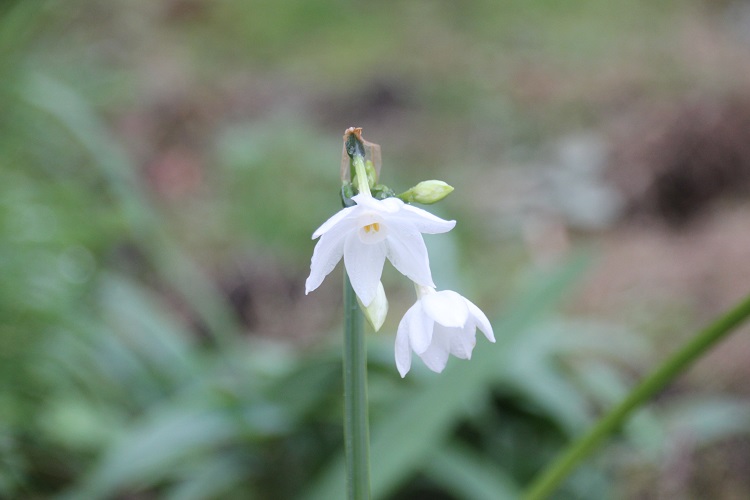
Narcissus papyraceus 'Paper White Grandiflora'.
An autumnal week culminating in the first cold night of the season. We didn't get a frost but it was close. Some of the bananas have darkened,
a sure sign that they have felt the cold. Some of the Hedychium suffered in the cold wind. The leaves have curled and dehydrated.
In front of the house, the first Narcissus papyraceus have flowered. It claims to be 'Paper White Grandiflora' but I have never been very clear about the differences.
I grew it for a long time in the Agave house, it may still be there lingering in the shade, but it has stopped flowering.
Last year I planted a few in the garden to see it they would survive so this is a very cheering appearance, growing just beside the last dahlias.
If it is stronger next year I will start to feel more confident.
15th November 2026
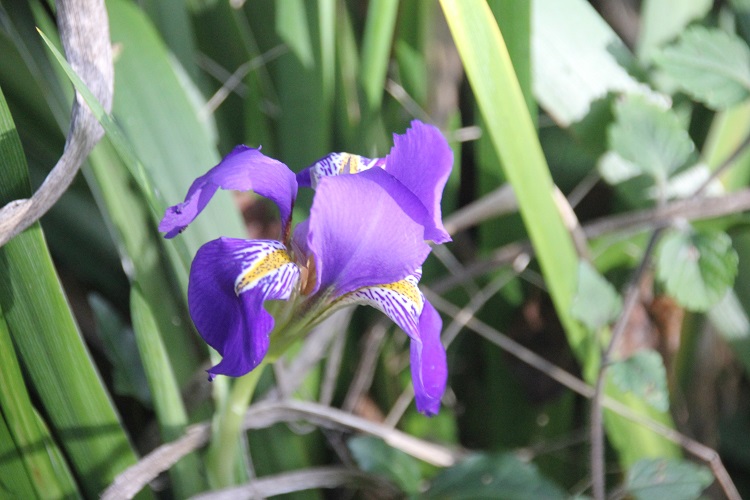
Iris lazica 'Turkish Blue' .
I was given a great clump of Iris lazica 'Turkish Blue' a few years ago and because it had come from a shady corner of someones garden , I put it in a shady corner of mine.
Contrary to my expectations it has prospered and flowers on and off from now until April. This is the darkest purple form I have seen and it is
much more successful here than the traditional I. unguicularis.
The garden is filling with camellia flowerrs and so this tiny splash of purple is very telling in the shade of an old hawthorn.
Surprisingly, the flowers have lasted for two days. These winter iris are the favourite food for slugs and the flowers rarely survive through the night after opening.
It isn't common for the flowers to survive the day undamaged but both this one and I. unguicularis 'Walter Butt' have produced long-lasting, undamaged flowers this year.
It may be that the hot dry summer reduced slug populations.
15th November 2026
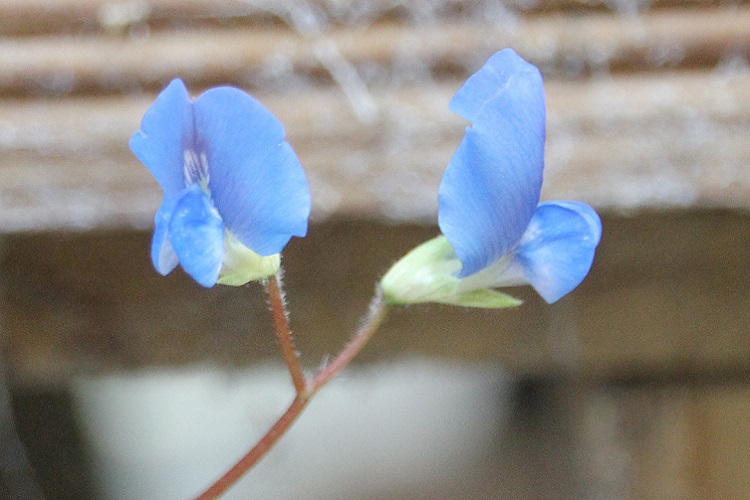
Parochaetus communis .
There are a few plants that hover on the fringes of cultivation locally. Alpinia japonica is one, lingering in the most protected gardens.
It does well, and spreads out a bit in a string of mild years, but it is knocked back in a hard winter to a few sheltered havens.
Parochaetus communis is another example. I have grown it a few times and it is wonderful for a few years before cold weather gets to it, even in the greenhouse.
Fortunately little fragments seem to survive in some places and it recovers very rapidly. It goes through cycles of popularity every decade or so as a consequence.
I was delighted to be given a fragment again, handed on by a friend down a chain of enthusiasts. It has grown rapidly and is flowering in tiny magnificence
in the greenhouse. I really must take more care of it this time and ensure a small piece comes inside as insurance against a cold year.
15th November 2026
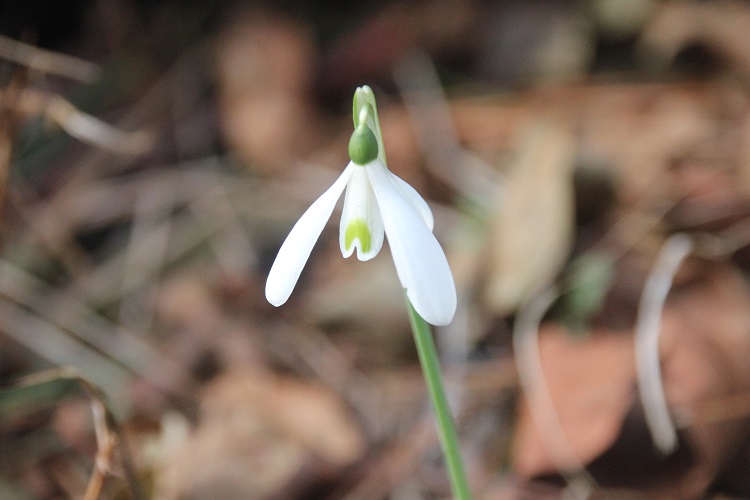
Galanthus corcyrensis .
It is a simple fact of botany (and subsequently horticulture) that plant names change. It isn't convenient but it is inevitable. We learn more, we understand better,
and the nomenclatural innocence of ignorance has to be put aside. In essence, we learn more and discover our earlier naivety.
In general I support the process, the price for learning new things is that old ideas have to be abandoned however comforting and secure they seemed.
So I welcome new names and there is a 'but'. Poor old Galanthus corcyrensis. I know it is really G. reginae-olgae but I can't
quite let go of the old name. It is wrapped up in personal history, threaded through the decades in this garden.
So I call it Galanthus corcyrensis with the obstinate defiance of a child who has just discovered they really don't know everything after all.
It has come into flower this week, the first of the snowdrops outside and the start of a parade of tiny white nodding flowers that will lead the garden
through the dangers of winter, to the first cuckoos.