 |
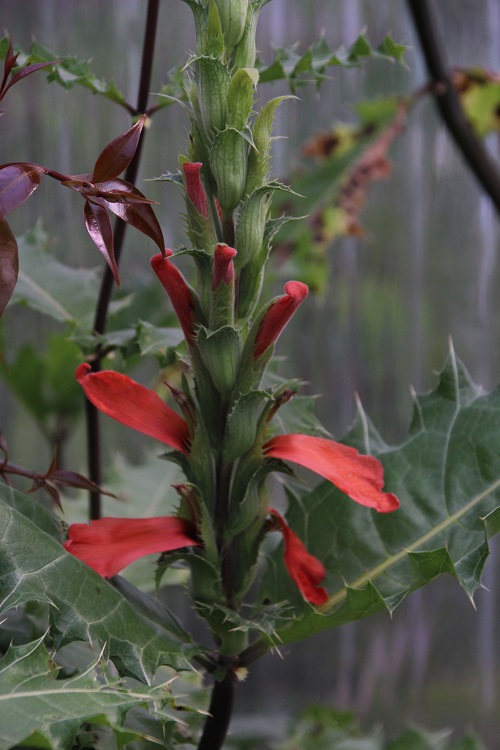
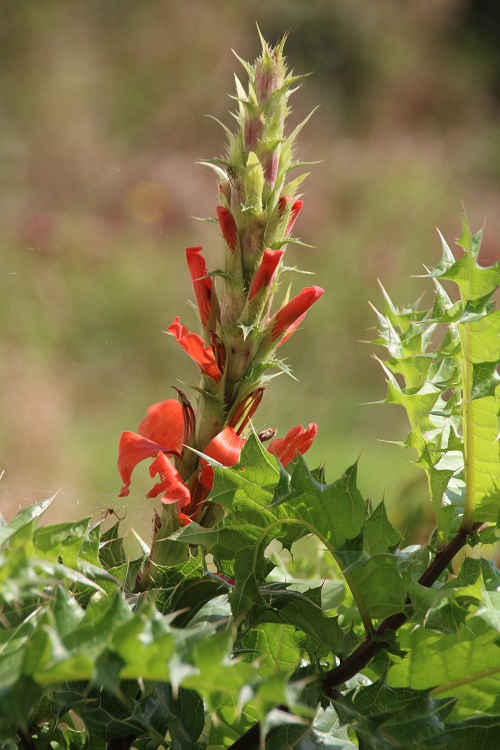
A spectacular species from Ethiopia. Where it prospers it makes a small shrub. In summer
the stems are topped with long heads of bright red flowers. It is quite spectacular
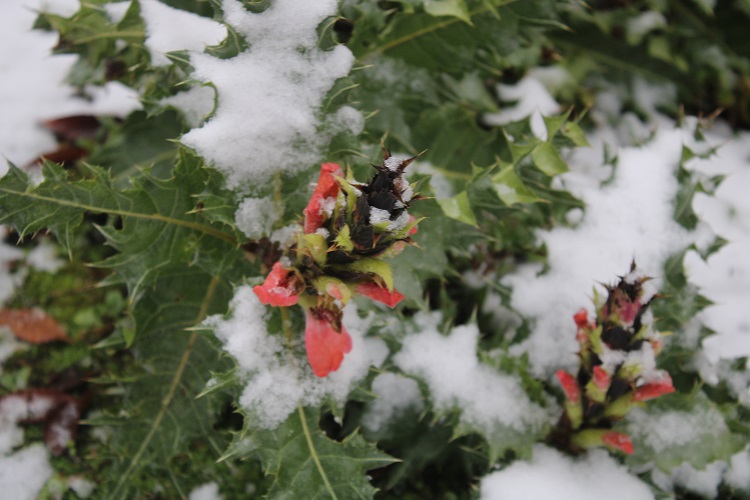
and has become much sought after in recent years, but a series of cold winters have
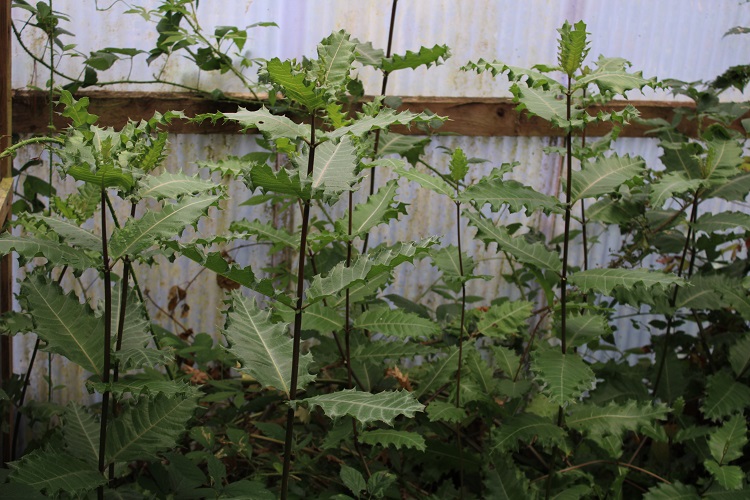
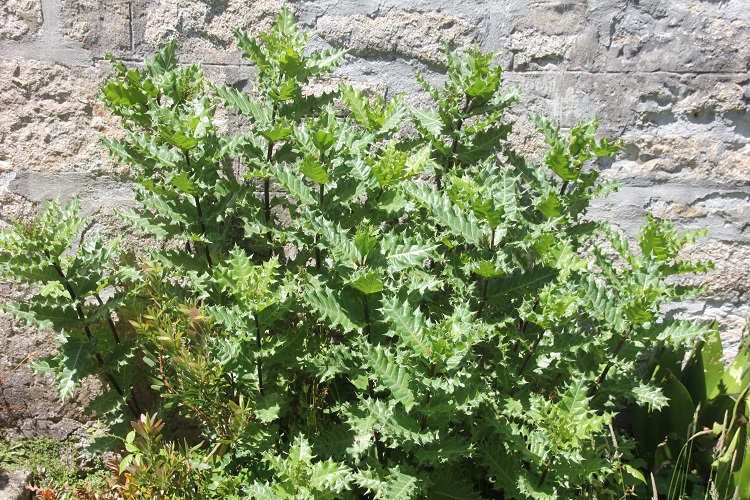
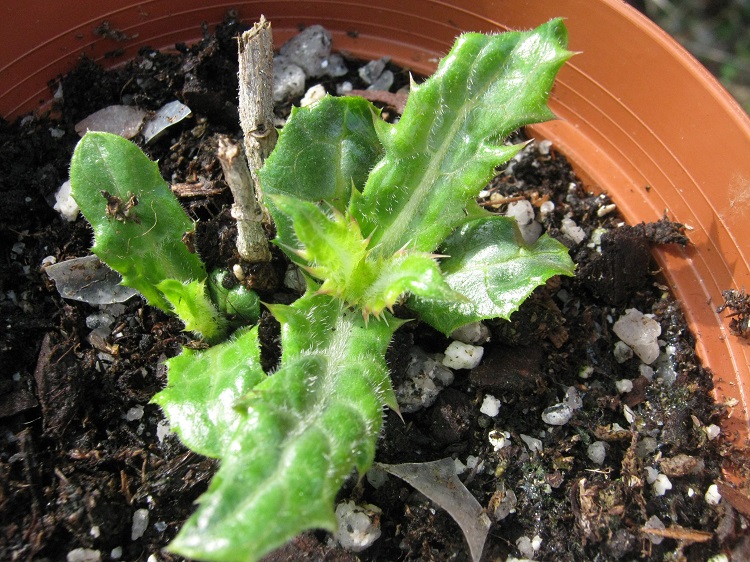
caused some damage. I was first turned on to it by a plant in the walled garden at Wisley which was astonishing for a couple of years but rather badly set back by last winter. Fortunately it has survived, and it will return to magnificence. I bought a young plant in spring and have grown it in a very big pot in the greenhouse. I am hoping that if I can get it large enough, it will stand a better chance when it finally has to go outside. Hopefully I will also manage to root some cuttings before then as an insurance. Large prickly leaves along the stems, which are upright outside, but have flopped a bit in the greenhouse. I bought it from Desirable Plants, their catalogue says: "Very different. In our climate, this makes beautiful clumps of stiff, spiny leaves, more like a greyish herbaceous holly than any other Acanthus, and reaching a bit less than 1m. In very sheltered gardens, such as the Chelsea Physic, it’s taller and you get the dark red flowers. But it cuts the mustard purely as a foliage plant. Hardier than sometimes thought." Trees and Shrubs online says: "With its bright red flowers Acanthus sennii is unmistakeable in bloom, and probably so in leaf as well, since nothing else has quite so viciously-spined opposite leaves. It is unusual in many ways, especially for those for whom Acanthus is a familiar herbaceous genus: the habit, foliage and flowers set it apart, and it is one of very few cultivated Ethiopian endemics. There it often grows in disturbed places, forming large clonal patches that resist all browsing, and although usually scarlet in flower occasional salmon-pink inviduals occur (pers. obs.). How it reached cultivation is unknown, but it was cultivated at the former London University Botanical Supply Unit at Royal Holloway College,in Surrey by the late 1980s, from which it was distributed when that garden was abandoned, reaching inter alia the Oxford Botanic Garden in the early 1990s (pers. comm. C. Sawyer, c. 1992). It seems as if all cultivated material in the UK derives from this source and is probably clonal: whether material grown in western North America is from the same source is unknown." |
|
| 27th March 2011 | ||