JEARRARD'S HERBAL
That's enough introduction - on with the plants!
To navigate this site use the links above or the detailed links at the bottom of this page.
... out in the garden.
25th October 2026
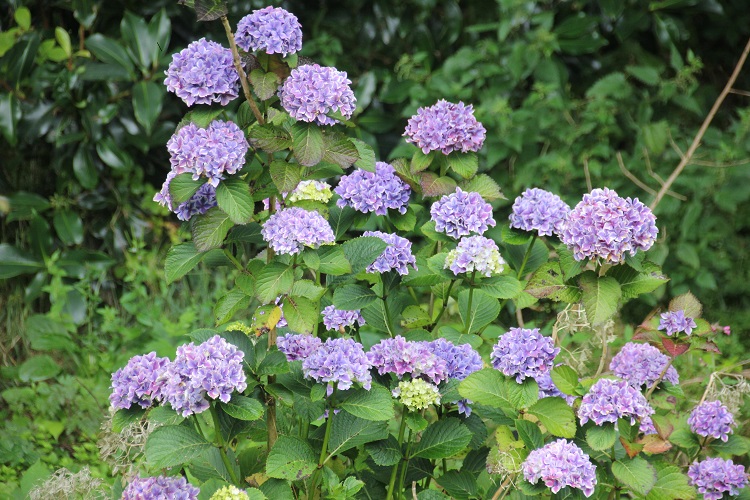
Crinodendron hookerianum 'Ada Hoffman' .
The first storm of the season blew through the garden on Friday. Fortunately it wasn't as bad as the forecast suggested. It tracked straight over the house
but there were only a few hours of strong wind and the rainfall was moderate. More fell on Saturday, so the garden is now thoroughly soaked.
There hasn't been much damage, I have had a few small branches brought down and a piece of rotten timber in the greenhouse has fallen out
but neither seem to be large problems at the moment. The greenhouse may be trickier than it looks but I'm staying calm.
As well as the return of stormy weather that caused so much trouble at the start of the year there has been a return of Crinodendron
which is more welcome. 'Ada Hoffman' has produced a handful of flowers and 'Alf Robbins' has a bud or two. The large plants of the red flowered
Crinodendron hookerianum are plastered with immature buds for next year but not showing any sign of colour.
25th October 2026
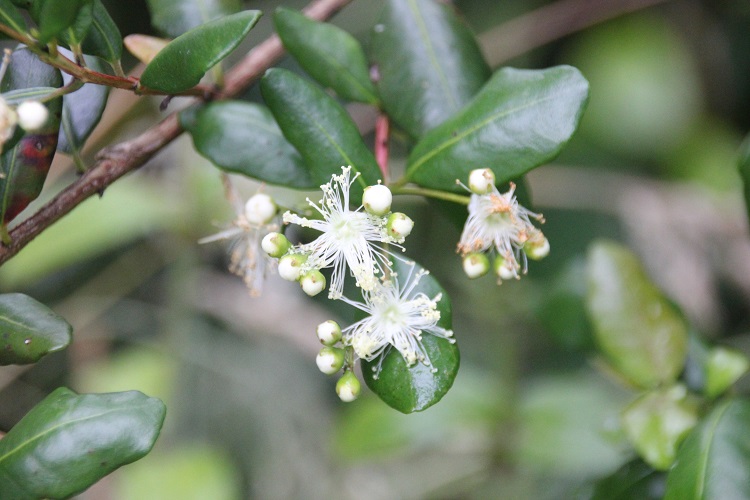
Camellia sasanqua 'Paradise Vanessa' .
In storm Goretti at the start of January, a lot of trees came down in the garden. Clearing them up is a slow process.
The big Leyland Cypress that fell on the meadow have been removed (except for the bits I can't carry) and I have started to clear around the big pine
that missed the Agave house by about a metre. It was a fortunate, unfortunate fall, it missed the greenhouse and it missed the snowdrop bed, falling
on some alders and a couple of camellias - one of which is the hideous 'Scented Sun' which is growing back, although it woudn't have been missed.
Further down in the garden a large Leyland fell along the length of a path, almost missing a row of Camellia sasanqua cultivars.
Almost missing, it has squeezed them a bit but they are poking out around the side.
It makes the arrival of C. sasanqua 'Paradise Vanessa' especially welcome in her "blustered but not squashed" state.
25th October 2026
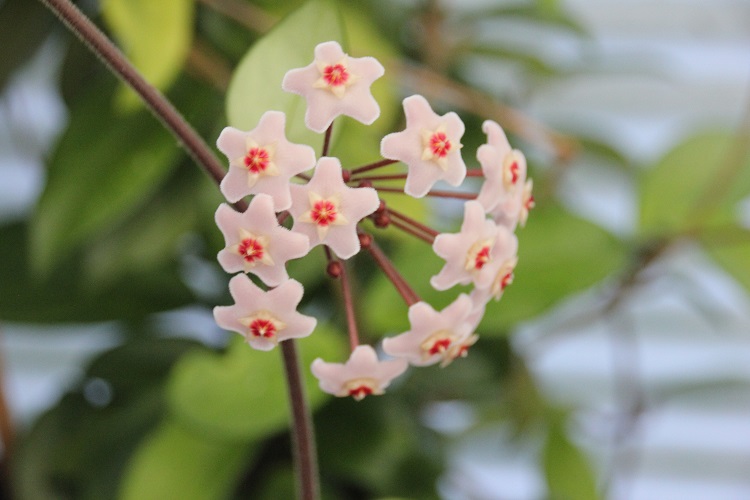
Galanthus reginae-olgae 'Foursome' .
I was sure that the wind would rob me of autumn colour for the year. The big Liquidambar had just reached scarlet in its annual
journey from green to burnished purple. A deep-pile carpet of scarlet leaves would have been a celebratory adornment to the just-cleared meadow
(those daffodils are on the way) but it wouldn't have lasted for long. On the tree I might have another four weeks.
The big surpise was the leaves of a Buddleja seedling which have been torn off and deposited in the greenhouse, on top of the autumn snowdrops.
I can see how it happened but it was unexpected.
Freeing the snowdrops from protective Buddleja leaves revealed 'Foursome' exposing its numerically awkward identity.
This is the first time it has produced parts in fours and it has a distinctively odd look.
25th October 2026
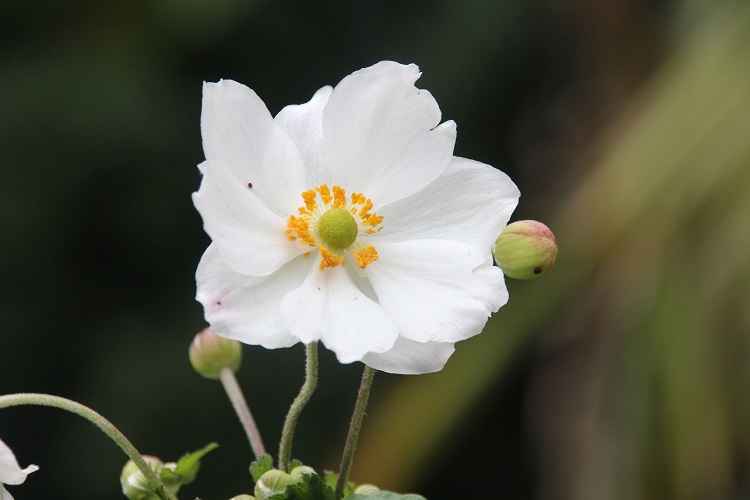
Hedychium 'Tai Golden Goddess'' .
It seems like an age away but we had a long, hot summer. It is amazing how little rain has to fall to change perception. Yesterday the house was dank and cold.
I lit the stove for the first time because my skin was feeling clammy and uncomfortable. This morning the sun has come out but it feels like the winter sun,
laughing nervously about its thermal impotence.
Last week I stumbled through the Hedychium bed to inspect the flower buds. There were plenty of them. This week I pushed through cautiously, the stems were
slippery with water and cold. Flowers have opened but the weather could cut the show short at any moment.
'Tai Golden Goddess' hasn't flowered for a few years and I think last time it was in the Hedychium house. Now she's out in the garden,
growing vigorously and flowering occasionally. We have all got through the week.
And now I should really go and look at the rot in the greenhouse. A stitch in time and all that...
To find particular groups of plants I grow, click on the genus name in the table above. Click on the "Index" box at the top of the page for the full list.
I have a lot of good intentions when it comes to updating this site, and I try to keep a note
about what is going on, if you are interested.
If you want to contact me, the address is incompetentjohnMONKEYjohnjearrard.co.uk
When typing the address in, please replace MONKEY with the more traditional @ symbol! I apologise for the tiresome performance involved, but I am getting too much
spam from automated systems as a result of having an address on the front page.
Perhaps my MONKEY will fool them.